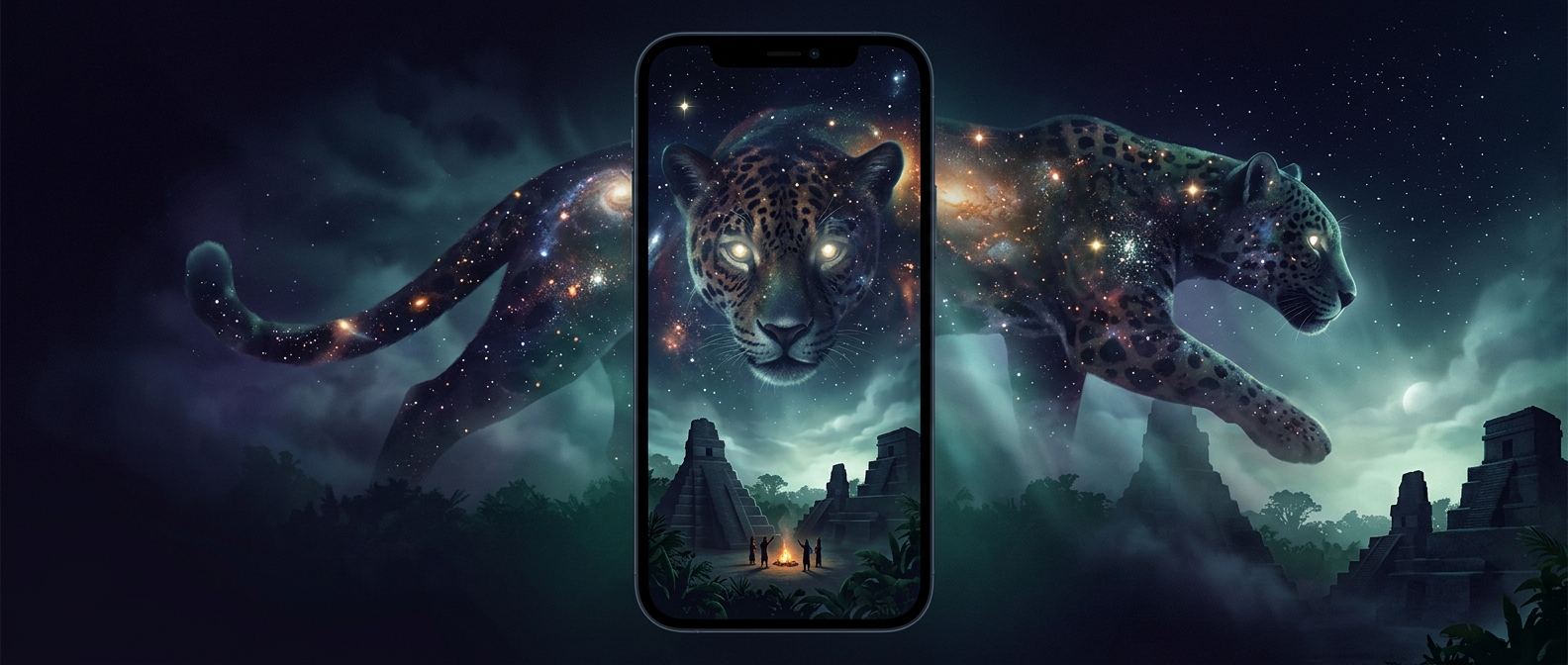
A spotted predator in the darkness
The image turns a familiar sight into an animal: against the dark sky, stars appear like bright spots scattered across a jaguar’s coat. It makes the night feel less like empty space and more like a living presence overhead.
That comparison draws on the jaguar’s forceful place in the world around the Maya. A powerful predator active in darkness, it could evoke danger and strength—qualities that made it a compelling figure for imagining the night. The sky’s scattered lights supplied the visual pattern; the jaguar gave that pattern a body and character.
A way of making the sky meaningful
This kind of image was more than a description of how stars looked. It connected what people saw above them with animals and dangers they knew on earth. When night fell, the familiar landscape changed: visibility shrank, and a predator could be near without being seen. Imagining a great jaguar in the sky gave that darkness a recognizable form.
The idea should not be treated as a single, uniform belief held by every Maya community across time. But as a piece of Maya sky imagery, it shows how observation and meaning could work together: the stars were not merely points of light; they could become the markings of a dangerous presence spanning the night.