When a bird’s breeding grounds were out of sight
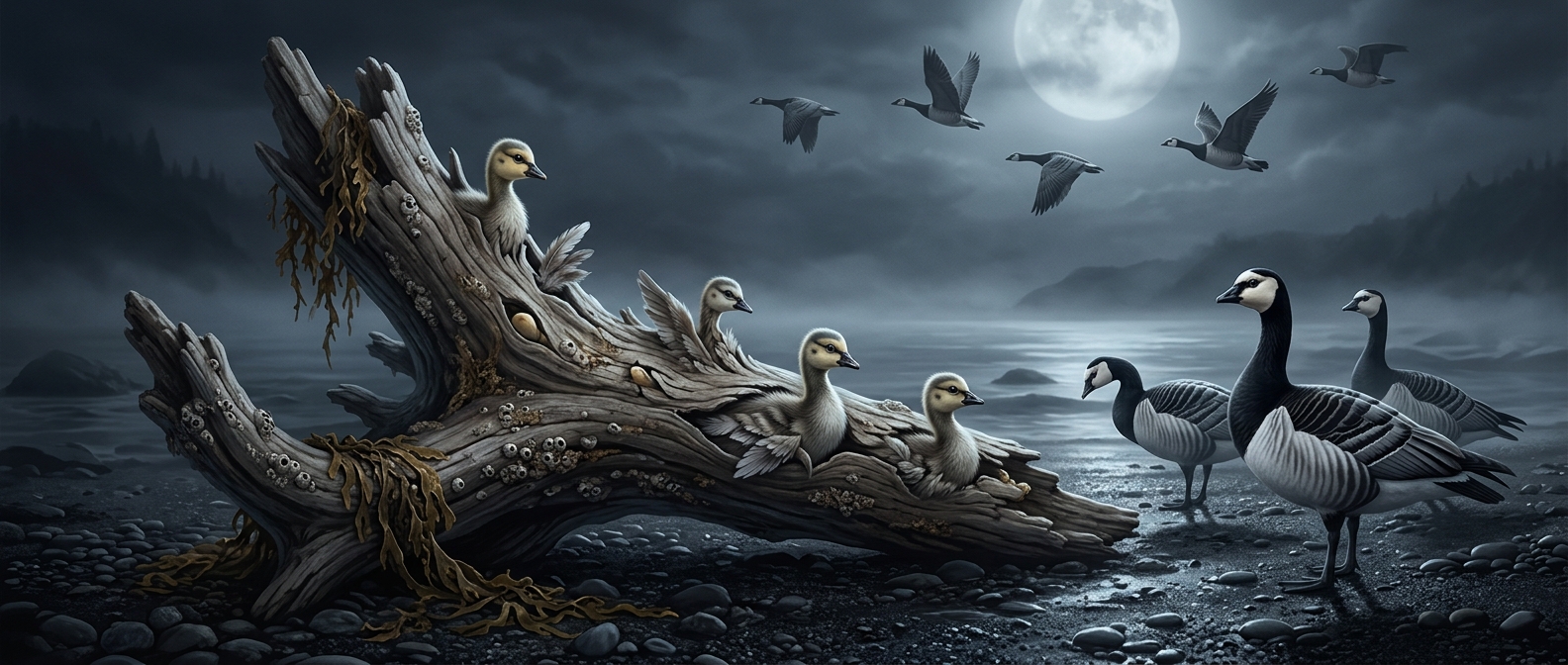
For people who saw barnacle geese in one season and then watched them vanish, the birds’ absence left a gap in their life story. Their remote northern breeding grounds were not part of ordinary observation. Meanwhile, barnacles clinging to pieces of driftwood offered a visible spectacle: shell-like animals attached to wood floating in from elsewhere.
The two observations seemed to fit together. If geese appeared to emerge from shells borne on logs, the story explained both where the birds came from and why nobody saw them hatch on land. It was an inference from a striking resemblance and a seasonal mystery—not a description of the birds’ actual life cycle.
A convincing story built from visible clues
Barnacles are marine animals, but their hard outer plates can look like shells. Once settled, they remain attached to a surface, such as driftwood, rather than moving around like a bird. To someone without a way to observe their development, a cluster of barnacles on a floating branch could resemble a batch of eggs or tiny creatures ready to emerge.
The geese, by contrast, were mobile and absent for long stretches. Linking the two made the unseen part of their lives seem understandable. The story turned a lack of direct observation into an explanation by joining two things that appeared at the right times: geese returning and barnacles growing on floating wood. Better knowledge of where the birds nested eventually replaced that imagined connection with an account of their migration and breeding.