Keeping the Sun in Motion
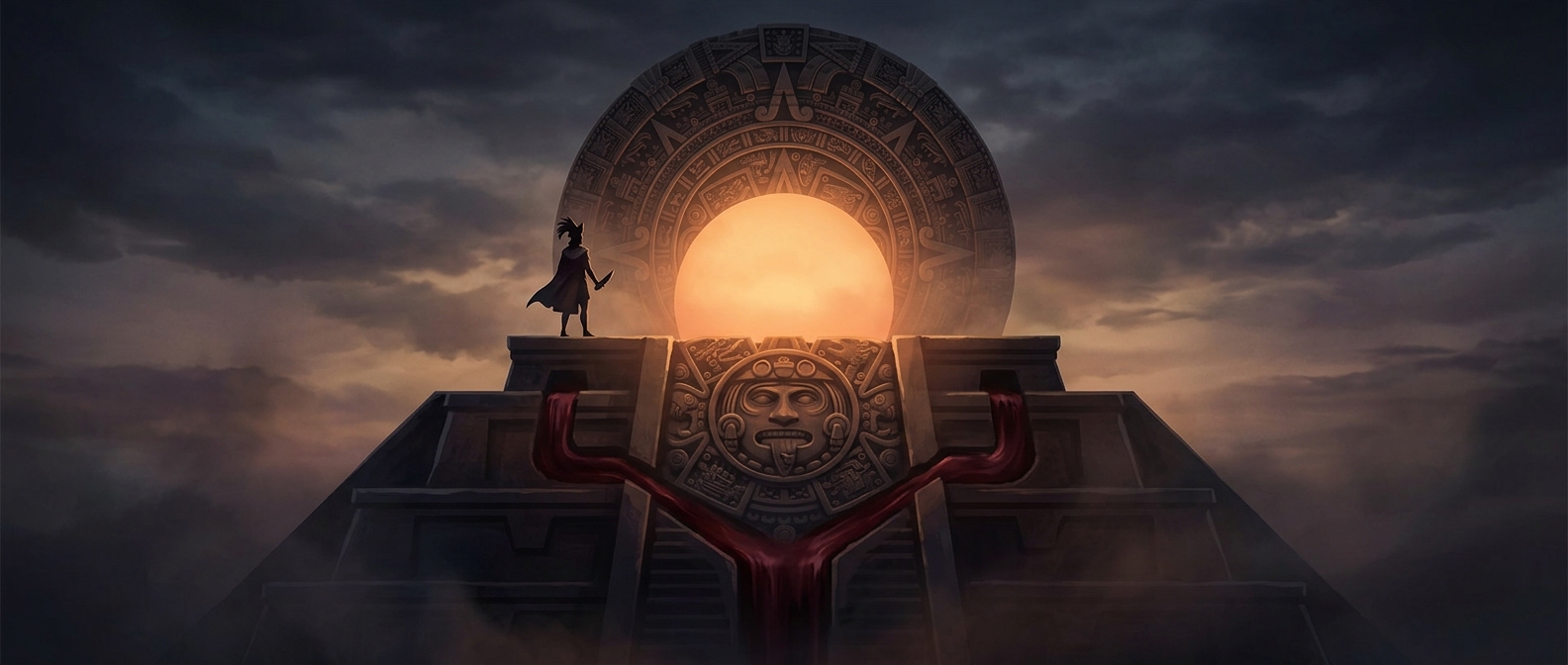
For the Mexica, often called the Aztecs, the sun’s daily journey was not an automatic feature of nature. It was part of a vulnerable cosmic order: night represented a real threat, and divine powers had to struggle against forces that could bring the world to an end. Myths about earlier worlds destroyed in succession reinforced the idea that the present one, too, could fail.
In this framework, human blood was a life-giving offering. Sacrifice—especially the offering of a captive’s heart in major public ceremonies—was understood as nourishment and repayment to the gods, who had made life possible. It was not merely symbolic theater: ritual action was believed to help sustain the conditions under which the sun could rise and move.
A Cosmic Duty With Political Consequences
The obligation was collective as well as religious. Rulers and priests organized ceremonies, while warfare could supply captives for sacrifice. Capturing enemies therefore had significance beyond military victory, though warfare also served political and territorial aims. The ritual system joined public power to a shared account of how the universe worked: the community’s survival depended on maintaining relationships with divine forces.
That belief made sacrifice consequential in a way a modern observer might miss. A ceremony was not seen as a performance about the sun; it was part of the work thought necessary to keep the world going. Each sunrise could be understood not as proof that the danger had never existed, but as evidence that the struggle—and the duty to answer it—continued.