Why a dog might accompany the dead
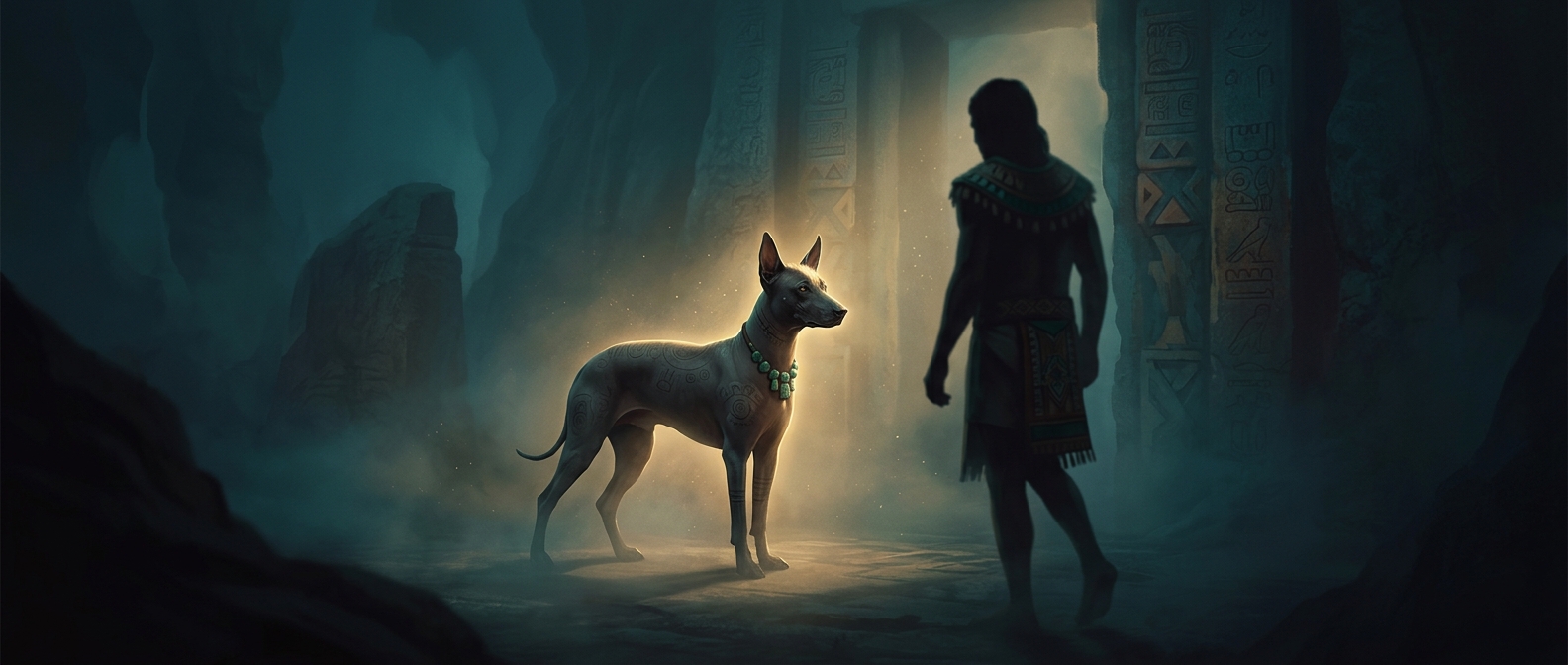
For the Mexica, whose empire is often called the Aztec Empire, death did not always mean an immediate passage to a final resting place. In one influential account of the afterlife, the dead traveled through Mictlan, a dangerous underworld journey with obstacles that included a river. A dog could serve as a guide across that crossing, helping its human reach the other side.
The Xoloitzcuintli—a hairless dog native to the region, though not every dog of the period was hairless—became associated with this role. The belief gave a dog more than symbolic value: it could be imagined as a companion whose help mattered after death, when the living could no longer assist.
Burial turned belief into a practical gesture
Burying a person with a dog made that imagined journey concrete. The animal was placed with the dead not simply as an emblem of affection, but as a possible guide for a perilous passage. Archaeological burials containing dogs show that some people were interred with them, though they cannot establish that every such burial followed the same belief or that all dogs were Xoloitzcuintli.
The idea also reveals how closely human and animal lives could be linked in death as in life. A dog’s role did not end at the grave: in this understanding of the afterlife, it might be the companion that got its owner across the river.