A bean that could settle a purchase
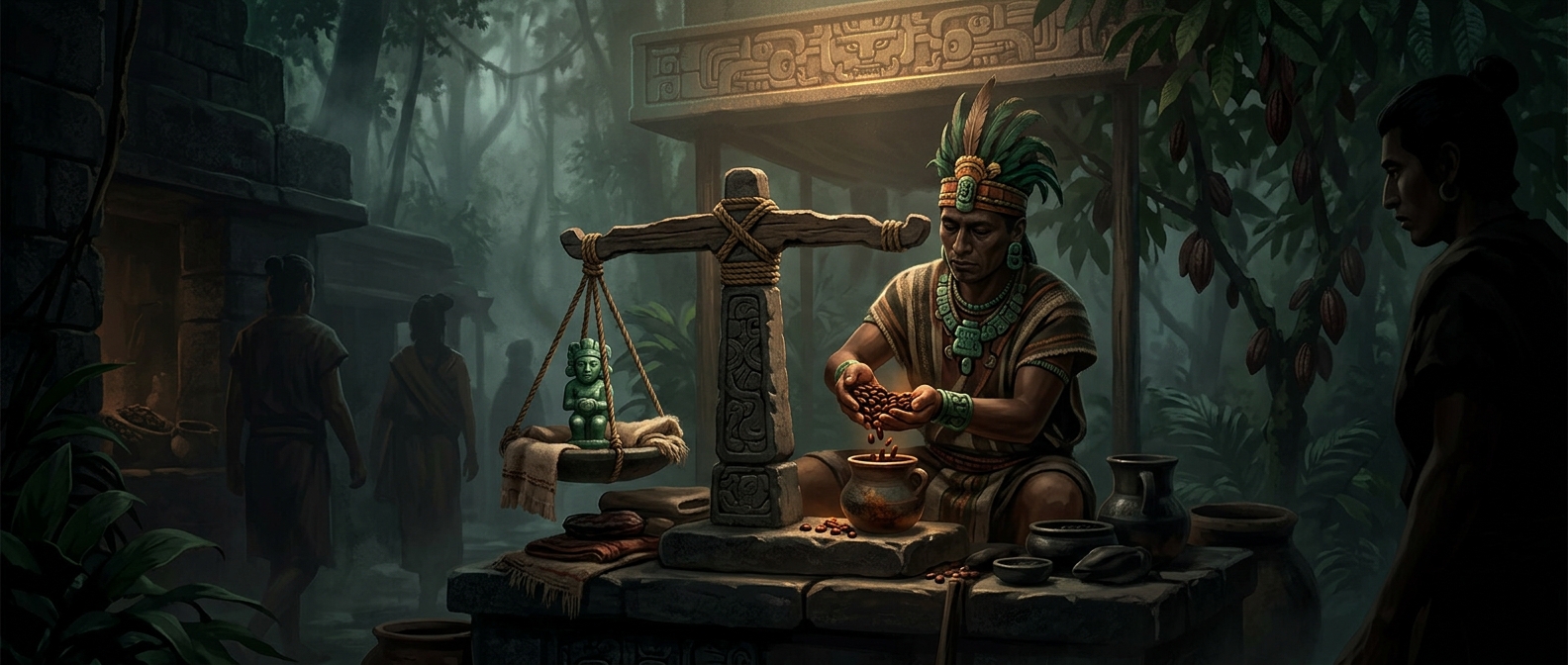
Cacao beans were more than an ingredient: in parts of Mesoamerica, they also served as money. The same small seed that could be ground into a prized drink could be counted out in payment at a market. For the Aztecs, cacao beans were a familiar medium of exchange; Maya communities also used them as currency in some periods and places.
Their usefulness came from being portable and countable. A buyer could carry a quantity of beans and hand over a portion rather than barter one object directly for another. That made cacao a practical way to trade for everyday goods, though it did not replace every other form of exchange.
Value came from both use and demand
Unlike a token valuable only because people agree to accept it, cacao had another appeal: people wanted to consume it. Beans could be turned into a bitter, often frothy drink, and cacao beverages held social and ceremonial importance. That demand helped make the beans worth keeping and trading.
Cacao was not equally accessible everywhere, either. Growing it depended on suitable conditions, so beans could travel from producing regions to places where they were harder to obtain. In Aztec society, rulers also received goods from subject communities as tribute, including cacao in some contexts. Trade and tribute together moved the beans through the economy.
Money with a shelf life
Cacao’s usefulness had a limit: beans could spoil, and their quality mattered. They were therefore not a perfect store of wealth, but they could still be valuable in immediate exchange. The striking twist is that a food people prized for its flavor could also function as a kind of pocket money—valuable enough to spend, but tempting enough to drink.