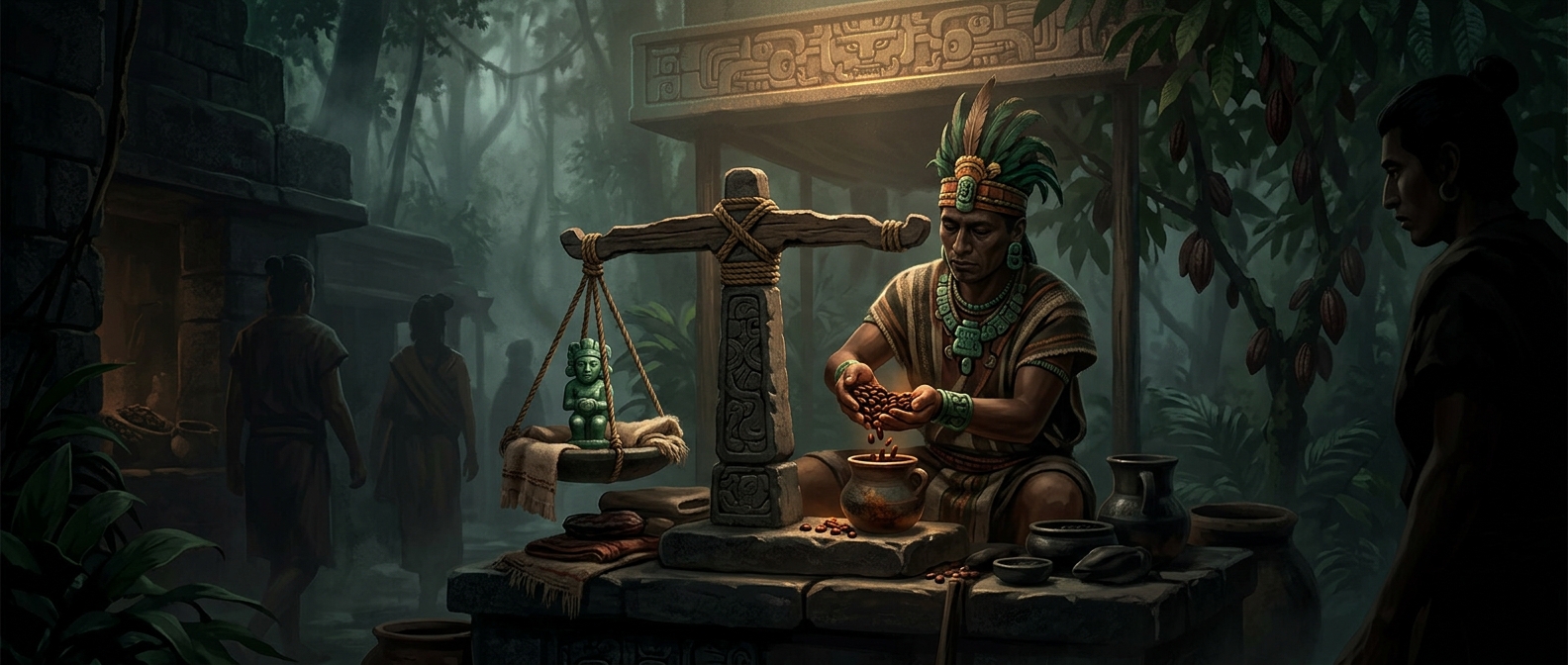
Why cacao could serve as money
A cacao bean was more than a future ingredient for a drink. It was a compact, recognizable good that people wanted to consume, which gave it value in exchange. In Maya trade, beans could help settle transactions without requiring two traders to want exactly what the other had to offer—a problem known as barter’s “double coincidence of wants.” A seller could accept cacao and later trade it for something else.
The beans were useful for everyday exchange because they could be counted out in small amounts. Their worth rested on the work and land needed to grow and prepare cacao, as well as on demand for the food and drink made from it. Cacao did not replace every other kind of exchange; its use varied across places and transactions.
A fortune with a shelf life
For wealthy people, accumulating beans could turn small units of trade into stored wealth. But this was not money that could sit untouched indefinitely. Cacao beans were agricultural goods: dampness, insects, or decay could reduce the quality of a stockpile. And unlike metal or a durable coin, a bean could be consumed.
That gave cacao money an unusual double life. The same object could preserve purchasing power for a time, then become a drink or ingredient. Spending a fortune in beans therefore meant more than watching a number fall: it meant handing over something valuable that could literally disappear into the next meal.