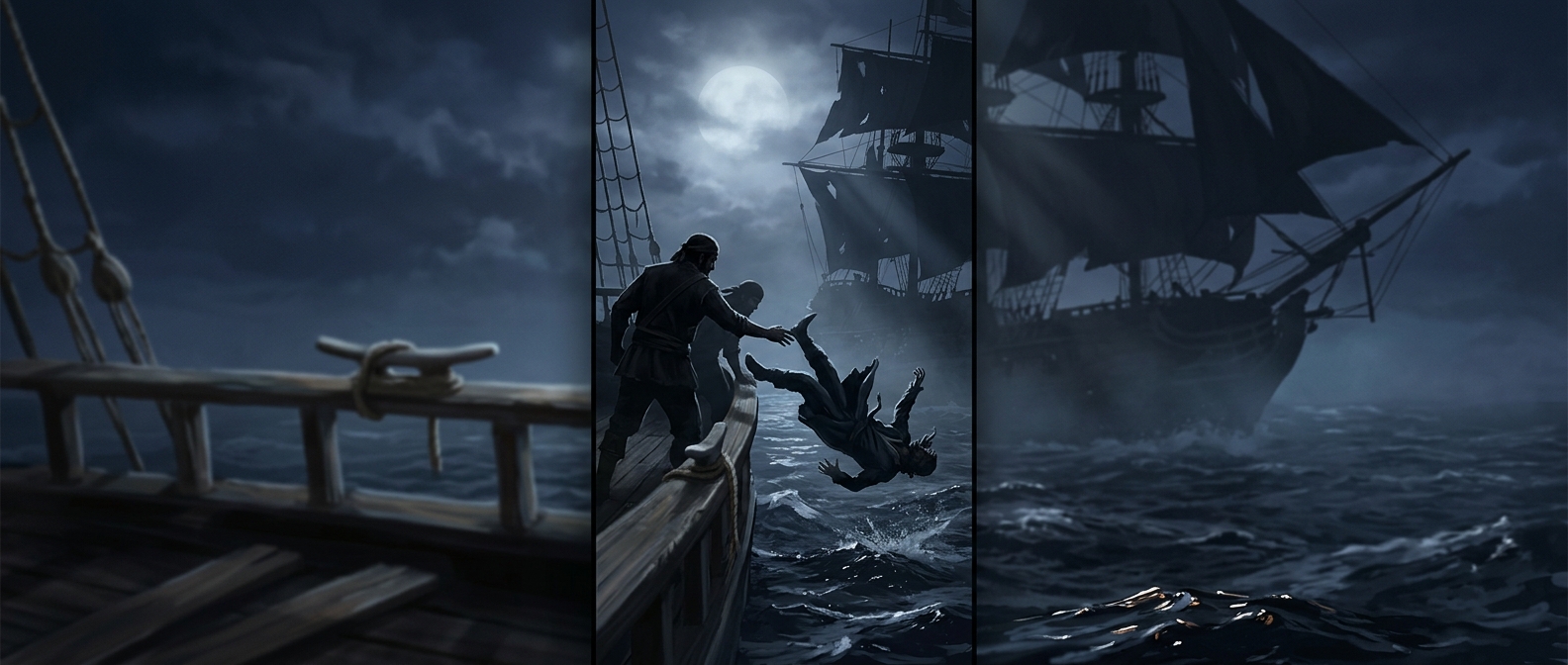
A Pirate Crew Could Pay You for a Lost Limb
A sailor in an 18th-century navy who was badly injured could face a grim prospect: lose the ability to work, and lose the wages and support that depended on working. Some pirate crews addressed that risk through written agreements that promised compensation for serious injuries—especially the loss of a hand, arm, leg, or eye.
These payments were a rough form of workers’ compensation: the crew agreed in advance that a sailor hurt in the dangerous work of piracy would receive a share of the proceeds. The amount depended on the injury and the crew’s rules. It was not modern insurance, and a promise was only as reliable as the crew’s ability and willingness to honor it. But spelling out compensation gave injured sailors a claim on the group’s gains rather than leaving them entirely to fend for themselves.
Why Pirates Had Reason to Make the Deal
A ship depended on every able body. Sailors handled weapons, climbed rigging, and worked in cramped, hazardous conditions. If an injury left someone unable to fight or sail, the crew lost labor—and the injured person might have little chance of earning a living elsewhere. A compensation rule helped share that risk and gave sailors a reason to accept dangerous work.
Pirate crews also often set down rules for dividing captured goods and managing shipboard conduct. Those agreements could limit a captain’s authority and give crew members a say in decisions. The arrangement was not equality in every respect: conditions varied, and coercion and violence remained part of pirate life. Still, compared with a navy where ordinary sailors generally had little control over discipline or pay, a written promise of injury compensation could look strikingly practical.
The memorable detail is not that pirate ships were humane workplaces. It is that some crews recognized a basic labor problem: when a worker is injured doing the group’s dangerous work, the cost should not fall on that worker alone.