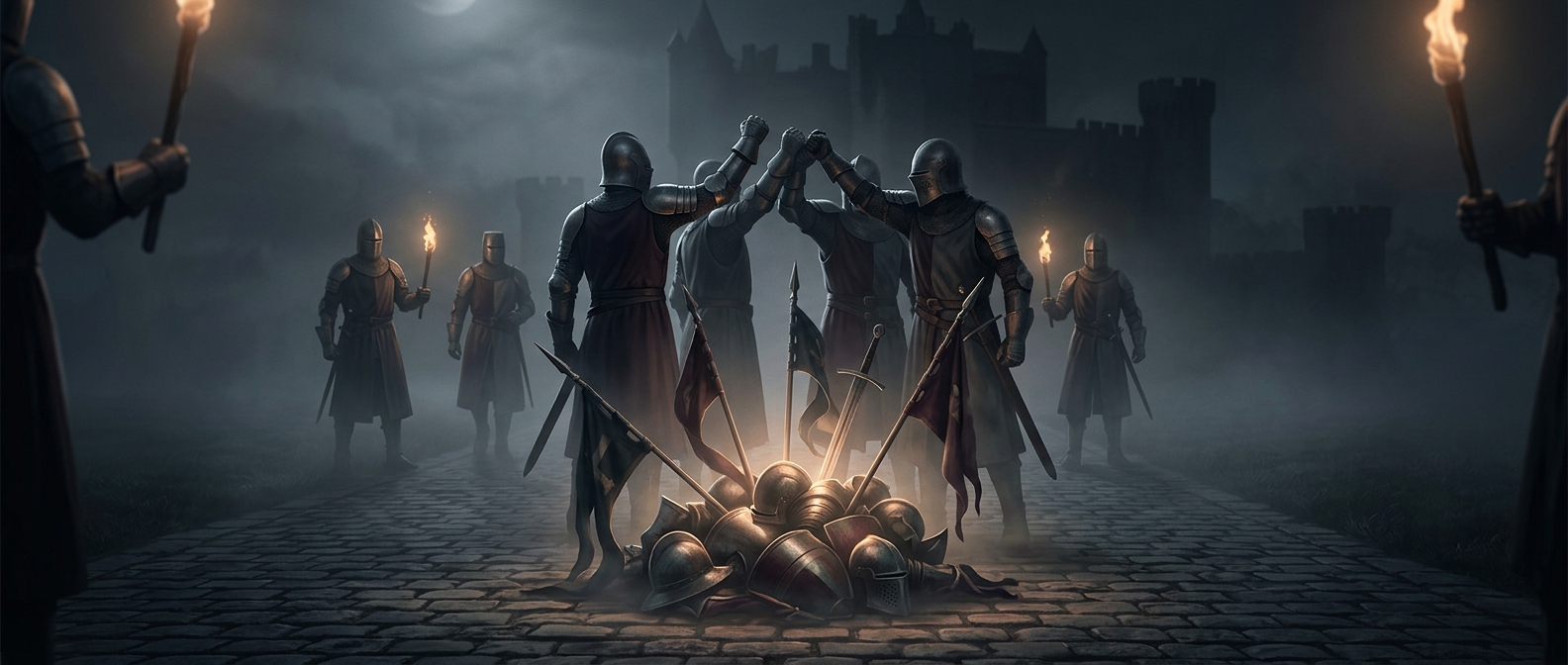
When Soldiers Could Bargain With Their Swords
Medieval mercenaries were often hired in companies: organized groups of fighters who served under a captain and expected payment for their service. Their relationship with a ruler was therefore not quite the same as that of a feudal subject obliged to fight. A company could make its labor conditional on the terms of its contract—and, if promised pay failed to arrive, refuse to keep fighting.
That gave the soldiers unusual leverage. A king might need them immediately, while replacing trained, armed troops could take time. When a company withheld its services, it turned a dispute over money into a military problem the employer could not easily ignore.
The Cost of Keeping an Army Ready
Pay was only part of the bargain. Fighters needed weapons and armor, and campaigns exposed them to serious danger. Companies could press for support with equipment or extra compensation for service in hazardous conditions. These demands resemble modern allowances and hazard pay, though medieval arrangements were made through contracts and negotiation, not a standardized labor system.
The threat behind the bargaining was not simply a walkout. Armed troops who were unpaid or dismissed could remain together, become difficult to control, and pose a danger to the territory they had been hired to defend. A ruler might therefore find it cheaper to meet demands than to face a company of experienced soldiers with no reason to obey.
Calling this an armed labor union is a modern analogy, not a claim that medieval mercenaries had formal unions. The striking parallel is the source of their power: by acting together, workers could make an employer’s failure to pay more costly than settling the dispute.