A Ship Was Already a Dangerous Place to Be
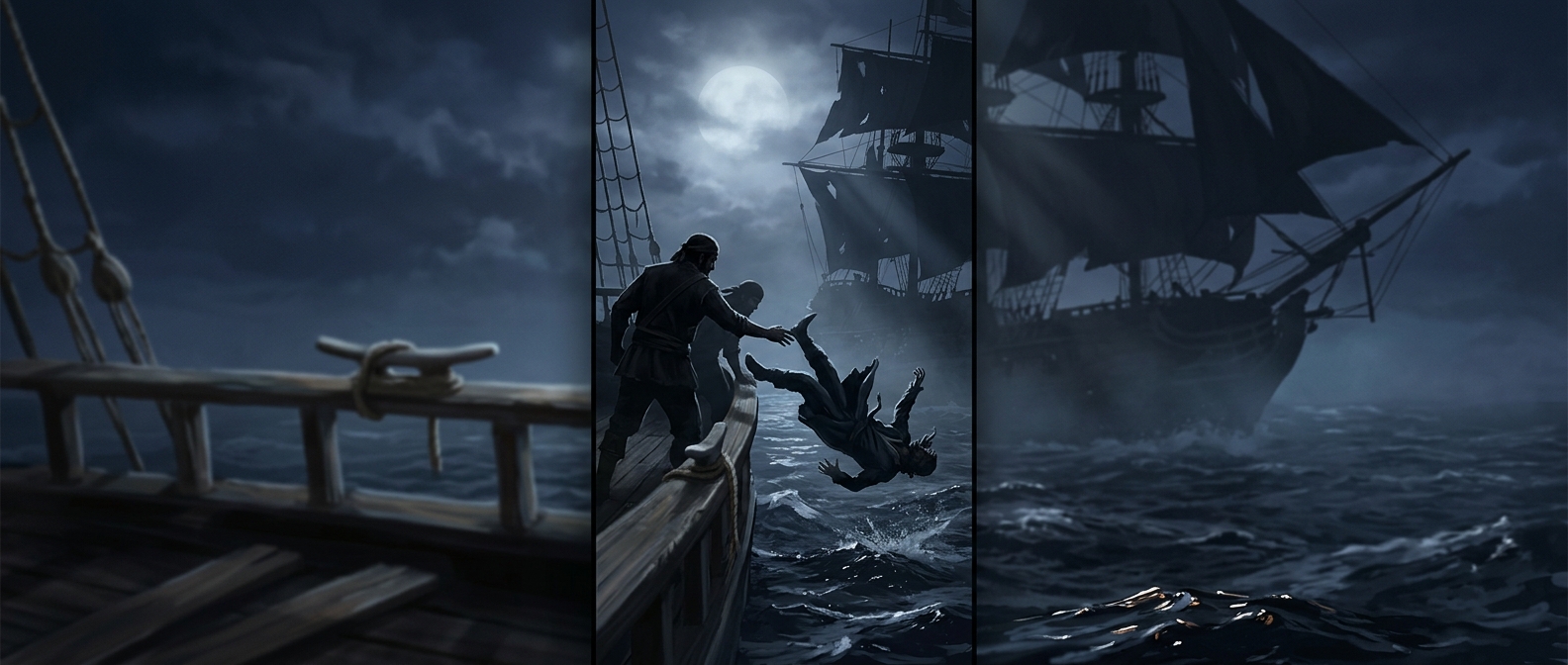
On a moving vessel, a prisoner did not need a specially built ramp to be forced into the sea. A shove at the rail—or being lowered or thrown overboard—could accomplish the same thing with less preparation. An anchor or other heavy weight could make escape from the water far less likely, though the details depended on what was available and what the captors intended.
A plank, by contrast, added a step without changing the basic outcome. Someone had to position it over the water and make the prisoner walk out along it. That could turn an execution into a visible, suspenseful scene, but it was not an especially useful piece of shipboard equipment.
The Plank Made Better Theater Than History
The familiar image works because it gives a violent act a clear sequence: the captive approaches the edge, hesitates, and falls. That staged suspense is easy to picture and reproduce in stories. A quick shove is less ceremonious and offers no drawn-out moment for an audience to watch.
The distinction matters: the plank is best understood as a dramatic embellishment, not a standard pirate procedure. Stories can make a rare or imagined method seem typical by repeating it, while more direct ways of putting someone overboard leave less memorable scenes. The enduring image tells us more about what makes a compelling pirate story than about what a crew needed to do at sea.