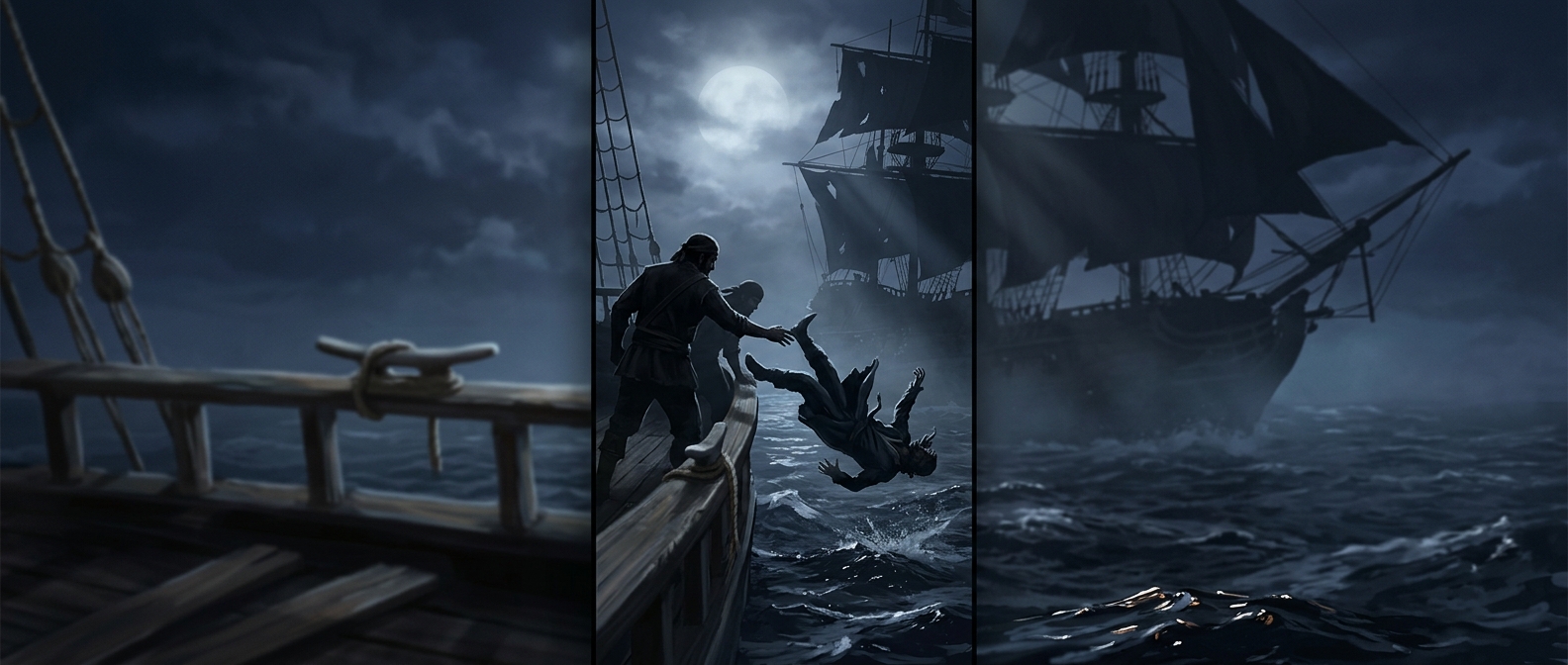
An Eye Patch Could Help Below Deck
A ship at sea could be dazzling on deck and nearly black below it. Sunlight overwhelms the eye’s sensitivity to dim light; after entering a dark space, the eye needs time to adjust. Covering one eye before going below would keep it shielded, so it could see sooner in the gloom. The other eye could stay open to the bright deck.
That is a practical explanation for why a sailor might use a patch, but it is not firm evidence that Caribbean pirates routinely wore one for this reason. The familiar image of the patch-wearing pirate is better established in popular culture than in surviving records of pirate life.
Injury Was Another Practical Reason
A patch could also cover an injured or missing eye, protect a sensitive wound, or reduce irritation from light. Such ordinary needs offer a more grounded explanation for an individual sailor’s patch than any special pirate custom.
The distinction matters: the dark-adaptation trick works, but a plausible use is not proof of a widespread habit. On a ship where a sailor might move from harsh sunlight into a poorly lit hold, keeping one eye ready for darkness could be useful—whether or not the wearer was a pirate.