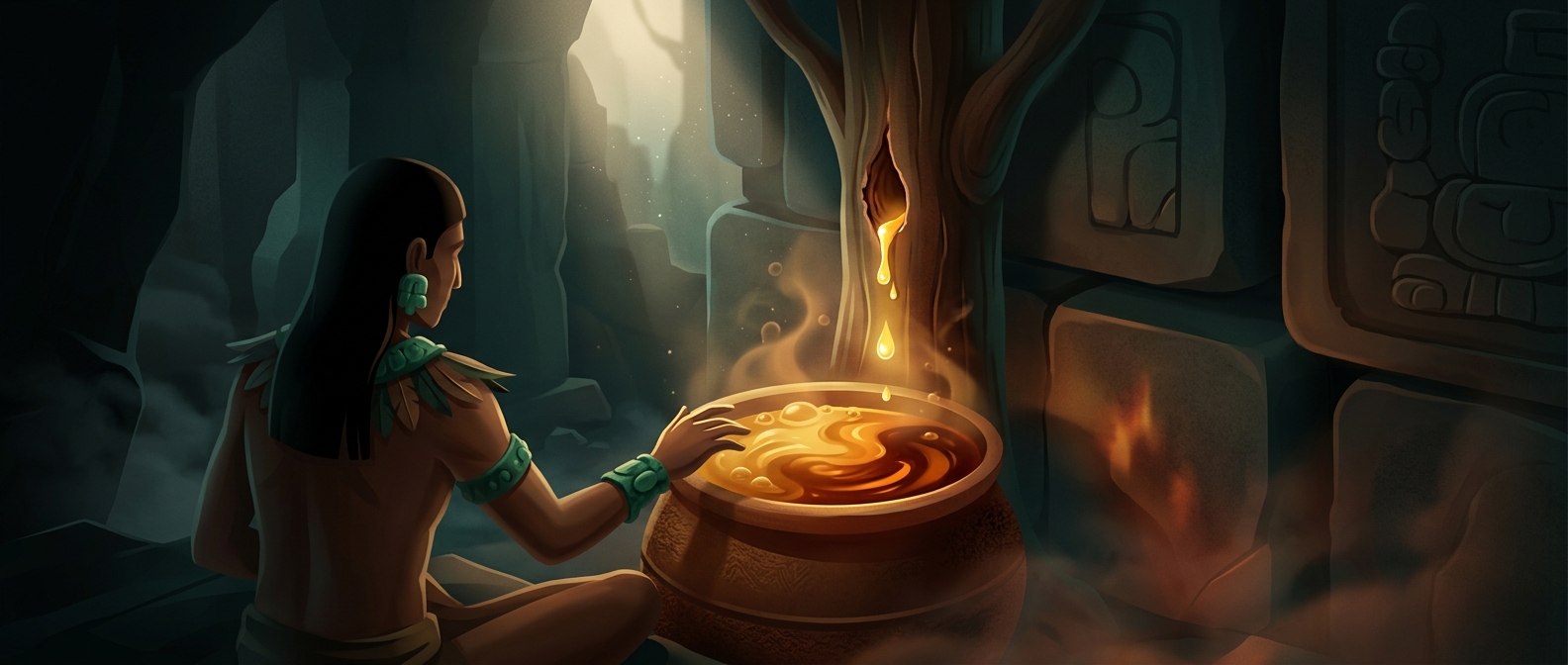
How bark, honey, and time made balché
Balché started as an infusion: Maya makers soaked bark from a legume tree in water and added honey. The honey supplied sugars that naturally occurring yeasts could consume. During fermentation, those yeasts turned some of the sugar into alcohol, producing a mildly intoxicating drink. Unlike a distilled spirit, balché gained its alcohol through fermentation rather than through a later process of concentrating it.
The bark was not just an unusual container or garnish; it was part of the drink’s defining recipe. The available description does not establish precisely how much flavor or other effect it contributed, so the clearest explanation is the combination itself: tree bark, diluted honey, and fermentation.
A drink with a ritual purpose
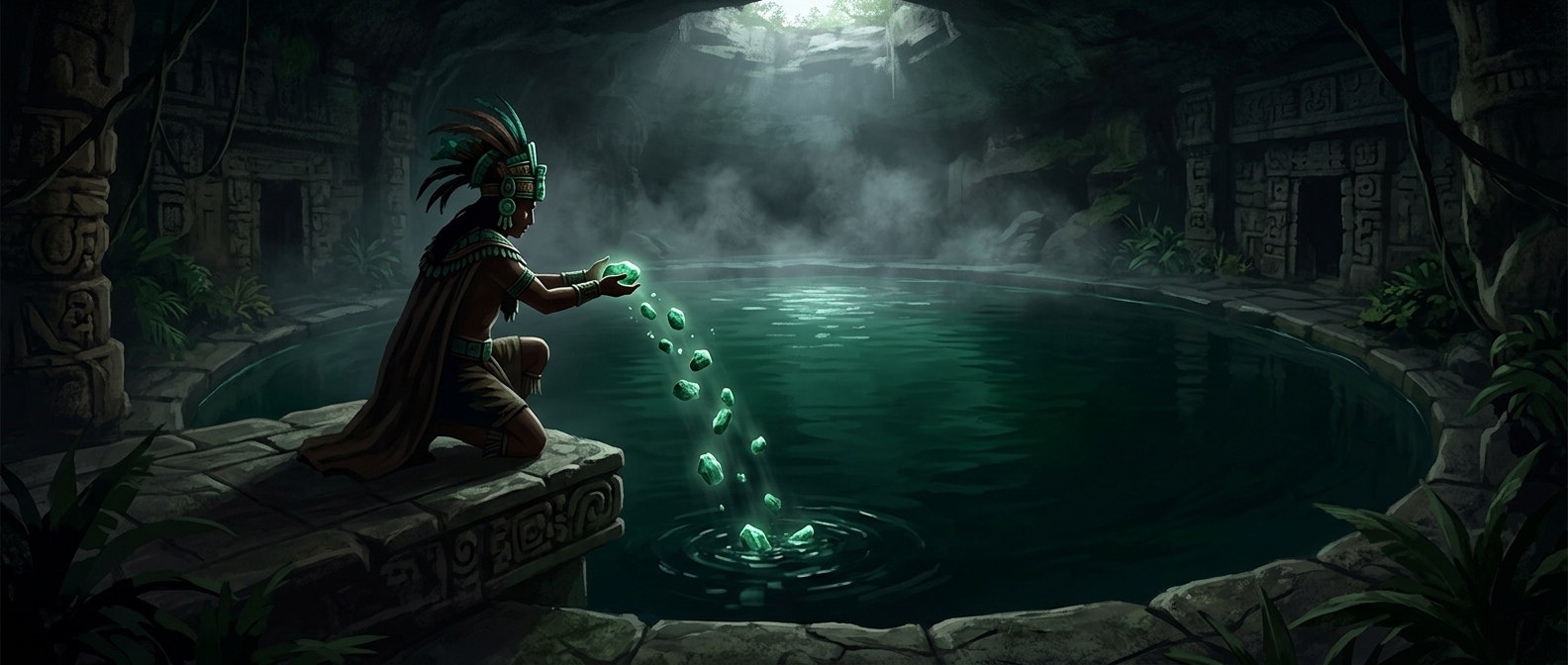
At Maya festivals, balché had a role beyond refreshment. Its place in spiritual ritual meant that making and drinking it belonged to a ceremonial setting, where a beverage could help mark an occasion and bring participants into a shared practice. Its mild intoxicating effect may have been part of the experience, but it should not be treated as proof that intoxication alone explains its religious meaning.
That combination is what makes balché memorable: an ordinary biological process—yeast consuming honey’s sugars—turned a local infusion into a drink that carried both physical effects and ceremonial significance.