Why cenotes became places of offering
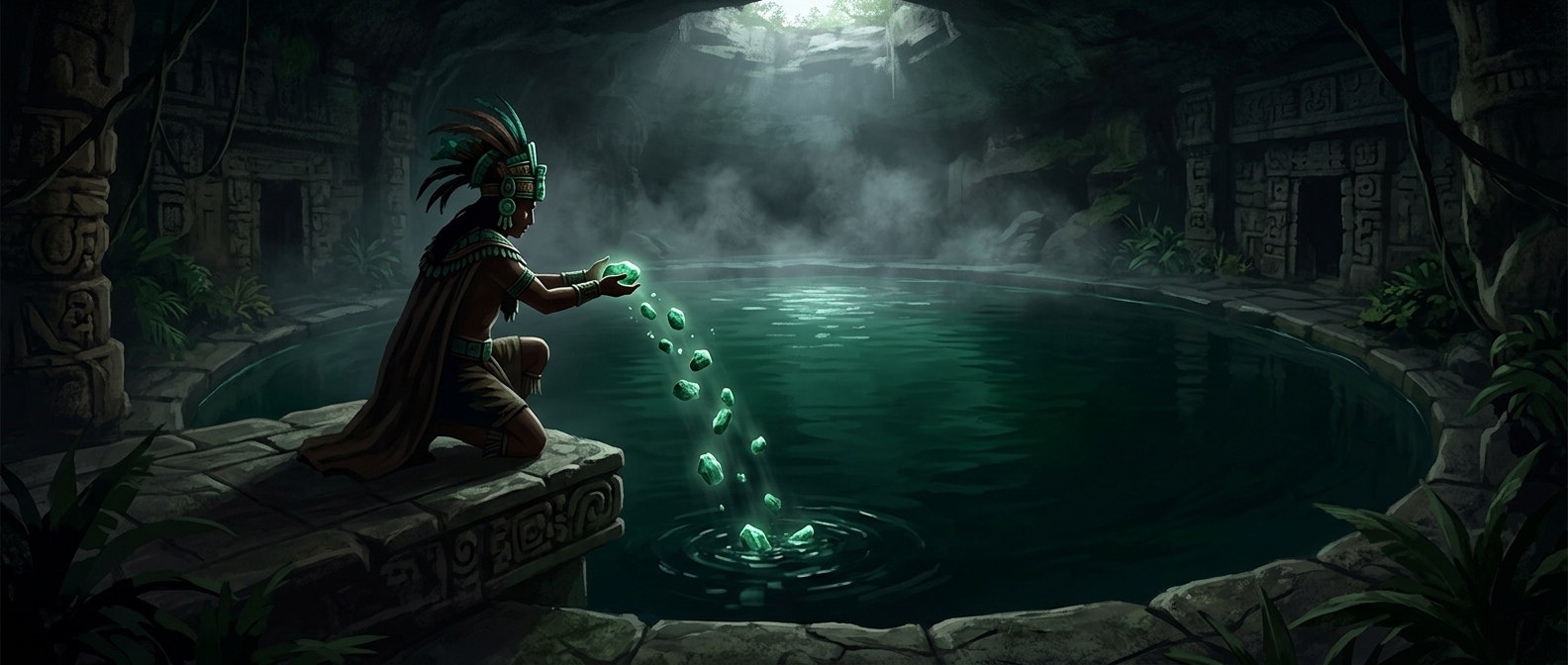
Across the Maya lowlands of the Yucatán Peninsula, porous limestone lets rainwater seep underground. In places where the rock roof collapsed, it exposed deep pools called cenotes—important sources of fresh water in a landscape with few rivers. Their depth and darkness also made them feel like thresholds into a hidden world, not simply convenient wells.
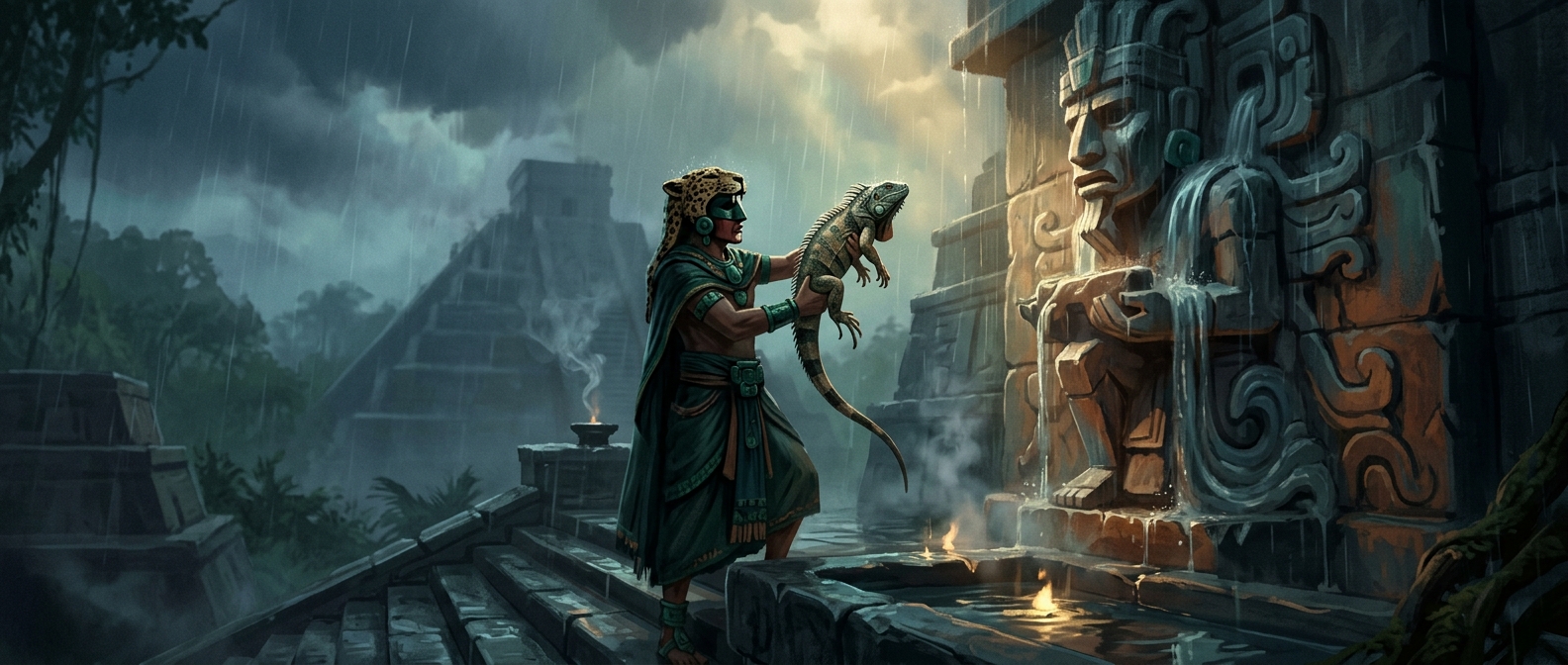
That practical importance and sacred meaning overlapped. Chaac, associated with rain and agricultural fertility, was linked to the forces that sustained crops and communities. Offering valuable objects in a cenote could therefore express a request for rain and a relationship with powers believed to govern it.
Why jade mattered
Jade was prized and difficult to obtain, so placing it in water meant surrendering something valuable rather than leaving an ordinary token. For the Maya, jade was also associated with life and vitality. Its color could evoke growing plants and water, making it meaningful in a ritual concerned with rain and harvests.
An offering did not have to be retrieved to fulfill its purpose: its destination was part of the act. Objects that settled into the pools could remain there, protected from ordinary use and sometimes preserved for centuries. Their later recovery gives archaeologists evidence of how people connected precious materials, water, and agricultural hopes—though an object alone cannot reveal exactly what any one person intended.