Why Roman weddings ended with walnuts
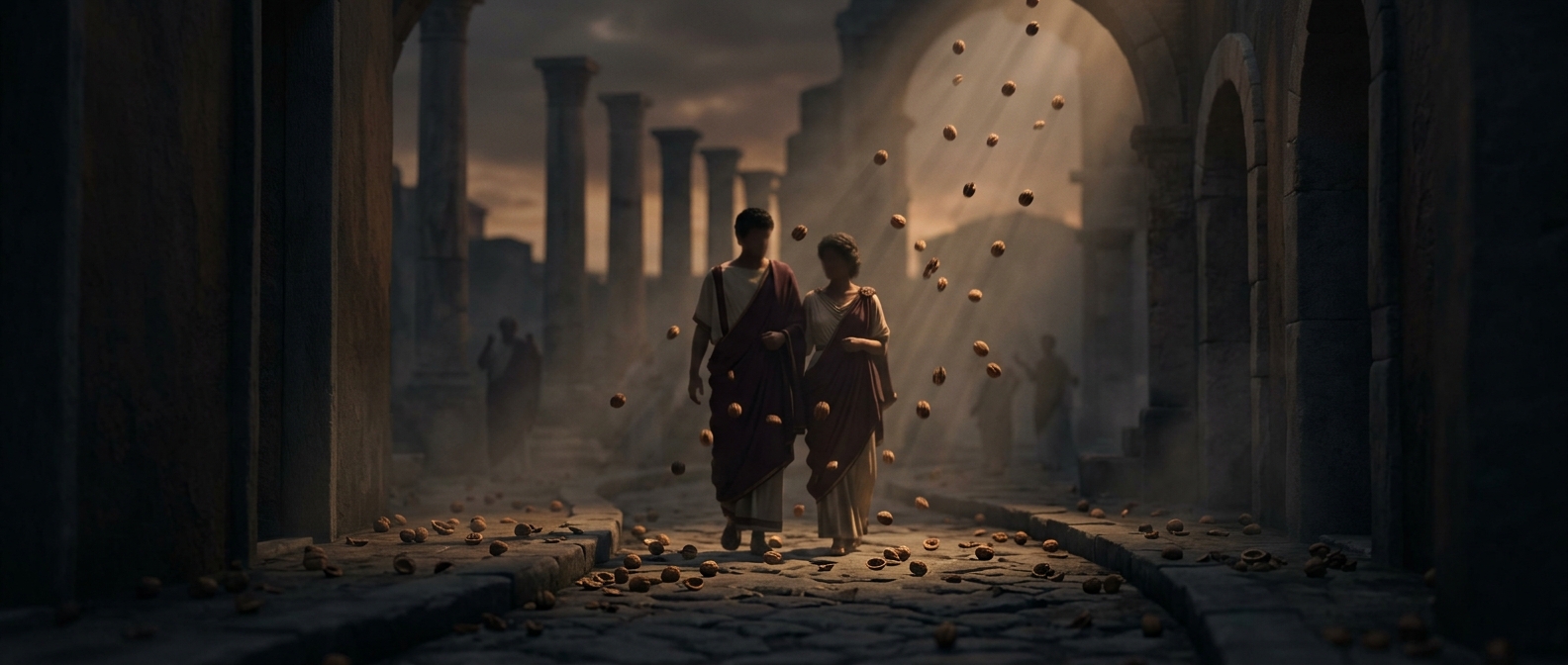
A Roman wedding could send its groom off with a shower of nuts. The gesture joined two ideas: walnuts suggested fertility, and giving up the childhood game of playing with nuts marked a passage into adult life.
A small object with two meanings
Walnuts were useful symbols because they could point in different directions at once. Their abundance made them a natural wish for a fertile marriage; their place in children’s play made them a fitting emblem of what the groom was leaving behind. The toss therefore worked as both a blessing for the couple’s future and a playful farewell to the groom’s boyhood.
The custom belonged to a wedding send-off, not simply to a random food fight. In Roman culture, important life changes were often made visible through familiar objects and public gestures. Here, a handful of nuts turned an abstract transition—boy to husband—into something guests could see and join.
The message in the mess
That combination is what made the ritual memorable: the same walnuts could stand for the family the couple hoped to build and the childhood the groom was expected to outgrow. A wedding exit became a public boundary between stages of life, marked by a symbol light enough to throw and rich enough to carry both meanings.