A ritual route with a practical purpose
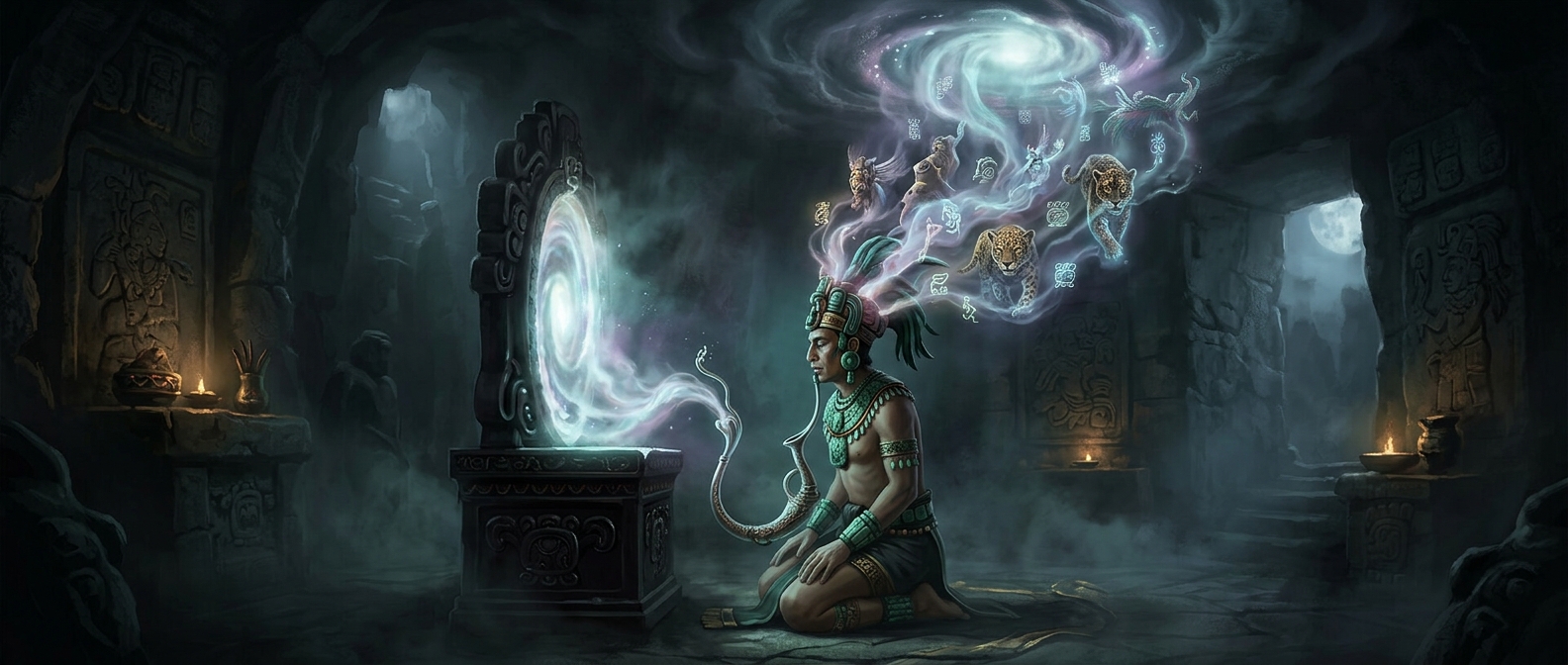
For Maya rulers, an intoxicating substance’s effect depended not only on what they took, but on how it entered the body. A drink had to pass through the digestive system before its effects became noticeable. An enema delivered liquid into the rectum, where substances could be absorbed through the body’s lining. That offered a more direct route to an altered state during a ceremony.
Fermented balché and hallucinogenic preparations could be used in ritual settings. Administering them this way was not simply a matter of convenience: a rapid change in perception could help shape the experience of a public rite, in which rulers’ actions carried religious and political weight.
The tools made the act visible
Hollow gourds and clay syringes gave people a way to introduce liquid into the body. Their presence in Maya imagery and material culture makes clear that enemas were understood as a deliberate practice, not just a medical procedure. The objects also point to a ritual that required preparation and assistance, rather than an ordinary drink taken casually.
The route did not make every substance act in exactly the same way; effects depended on what the liquid contained and how the body absorbed it. But it changed the timing and circumstances of consumption. Instead of sipping a beverage and waiting, participants could use an enema as part of the ceremony itself—making the means of intoxication part of the ritual performance.