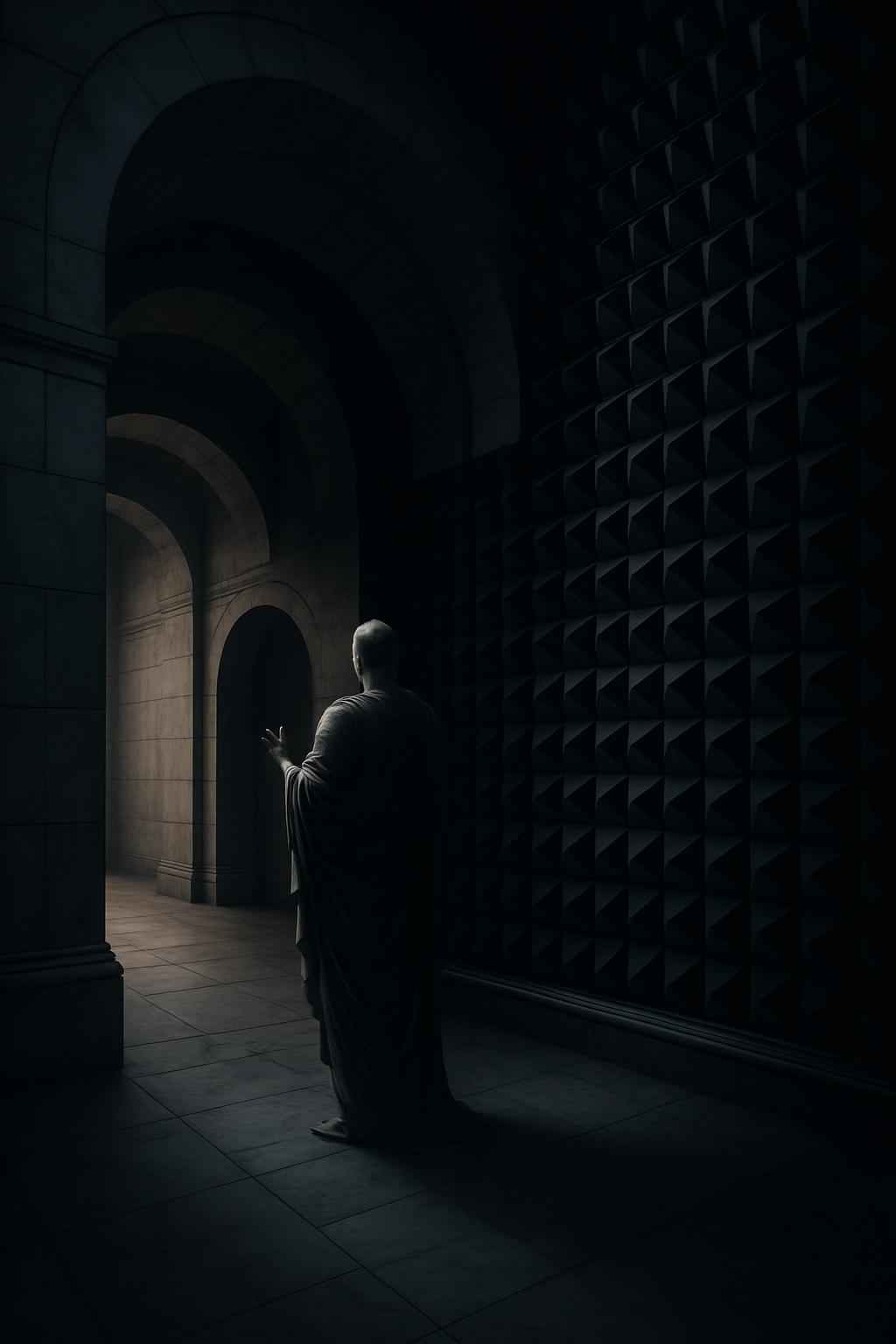
Why a Marble Corridor Could Make One Voice Stand Out
A corridor can make a speaker easier to hear without making the whole building quiet. Sound waves bounce off hard surfaces such as marble; in a long, narrow passage, reflections may travel along the corridor and help a voice carry farther than it would in an open, crowded room. The same surfaces also reflect other sounds, so this is not soundproofing. It is a matter of where sound travels and where listeners stand.
That distinction helps explain the appeal of a passage for rehearsing a speech. A speaker could project toward a small audience gathered along the route, while the corridor’s shape gave the voice a clear path. For generals and politicians, practicing aloud was practical preparation: a speech that worked in a resonant passage still had to be delivered clearly to a larger, noisier crowd.
Acoustics Could Not Make a Bathhouse Silent
Roman baths were social places, not modern quiet rooms. Water, footsteps, conversation, and activity all produced sound, and hard stone surfaces could make those noises linger. A corridor might lend a voice prominence, but it could not reliably erase the surrounding bustle. Its effect would depend on the passage’s dimensions, openings, furnishings, and the number of people nearby.
The useful idea is therefore not that marble silenced a bathhouse, but that architecture could shape attention. In a busy complex, a passage that carried speech gave a practiced speaker an advantage: listeners could hear the words more distinctly even when the building itself was far from quiet.