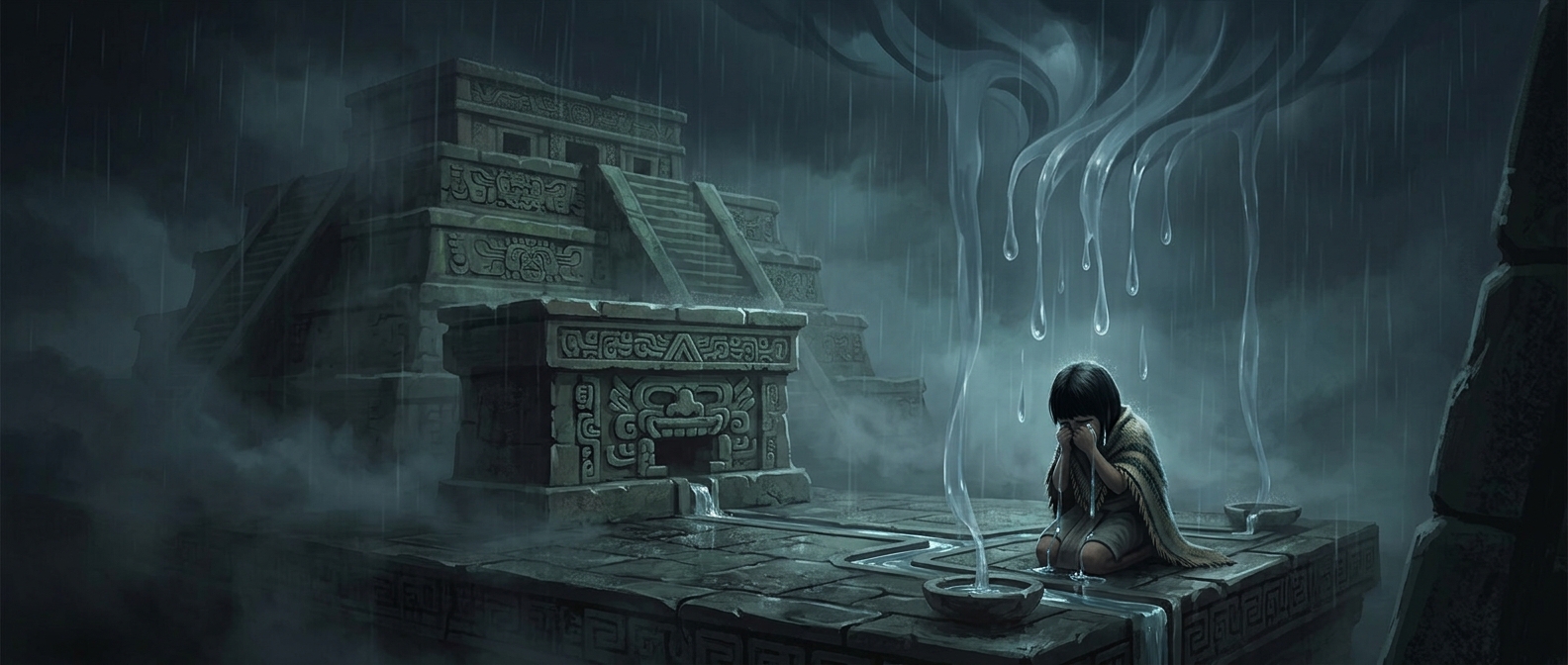
Why Tears Mattered in Tlaloc’s Rituals
For the Mexica—often called the Aztecs—and other peoples of central Mexico, rain was not simply a change in weather. It sustained maize, the staple crop, and a dry season could threaten the food supply. Tlaloc, the deity associated with rain and storms, was therefore tied to the conditions that made farming possible.
Children were offered in ceremonies connected with Tlaloc because their tears were understood as a sign of the rain the community needed. In this ritual logic, crying did not merely accompany the offering: it echoed the desired result. More tears could be interpreted as a stronger appeal for abundant rainfall.
A Costly Appeal to Uncertain Skies
The ceremony made the stakes visible. Adults entrusted a child’s welfare to a sacred appeal at a moment when the community depended on forces it could not control. The suffering was not a guarantee of rain; it was part of an attempt to persuade or honor a powerful deity whose response remained uncertain.
That uncertainty helps explain the ritual’s emotional force. A successful harvest could follow a plea, but people could not command clouds or reliably connect a particular sacrifice to the weather. The offering placed human vulnerability at the center of a request for life-giving water: the tears shed in the ritual stood for the rain on which fields—and the people who depended on them—also relied.