Sweeping as a ritual act of renewal
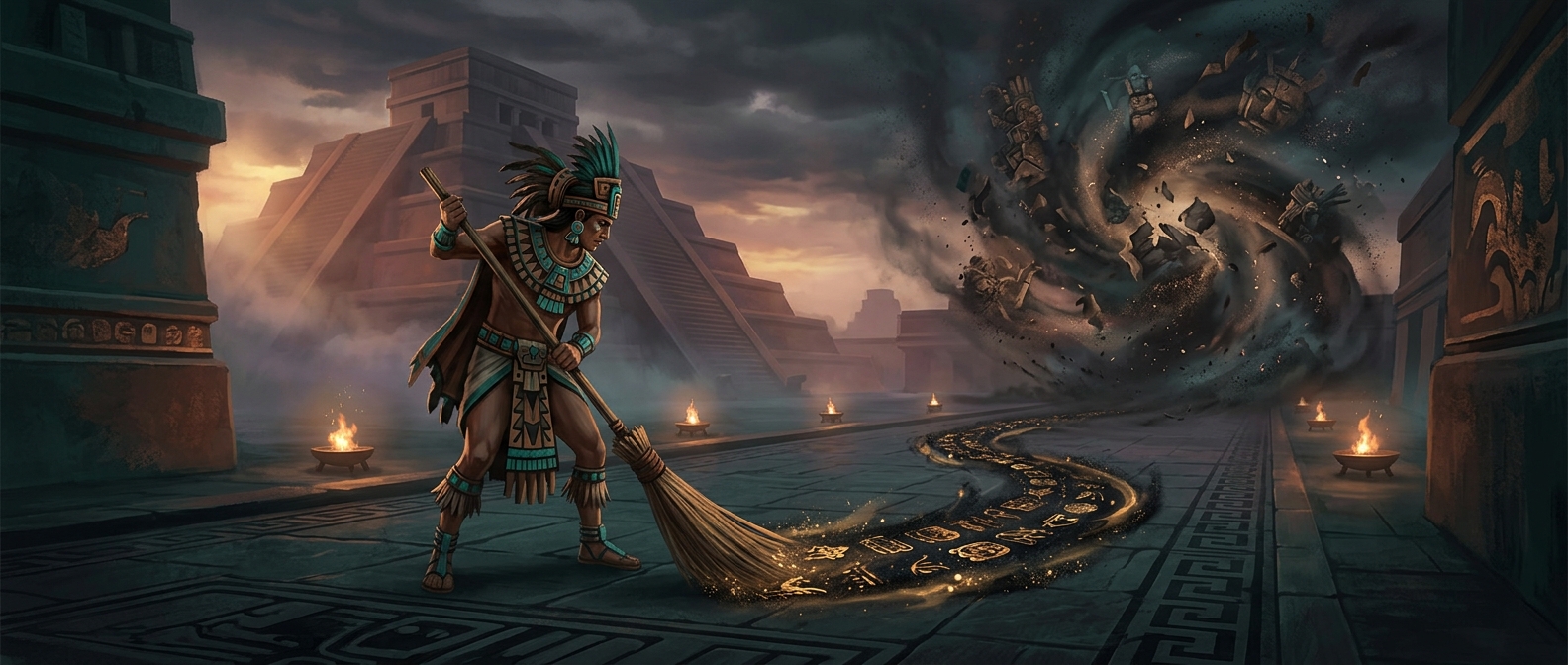
For the Mexica, often called the Aztecs, the world was not a stable backdrop that simply stayed in order. It depended on ongoing acts of care: people performed rituals, honored deities, and observed the calendar to sustain the relationships that made life possible. In that setting, sweeping could carry meaning beyond removing dust. It made disorder visible—and then actively put it right.
That idea appeared in Ochpaniztli, a festival whose name is commonly translated as “the sweeping.” The festival honored Toci, an earth and mother goddess, and involved ritual cleansing. Sweeping sacred spaces was therefore not merely preparation for worship. It could represent renewal: clearing away what had accumulated so that a fresh cycle could begin.
From the floor to the cosmos
The connection was practical as well as symbolic. A swept temple or home was visibly cared for; the act also echoed a broader religious duty to maintain order in a world understood as vulnerable to disruption. Dirt itself was not necessarily treated as a supernatural force. Rather, cleaning gave a familiar task a place within a system where human actions helped uphold sacred relationships.
Festivals made that connection communal and public. When people cleaned ritual spaces together, ordinary labor became part of the calendar’s religious work. A broom could thus mark a transition: the space was made ready, and the community performed its role in restoring order. The implication is strikingly concrete: in this worldview, keeping a floor clean could be one small, repeated way of caring for the world beyond it.