Why an iguana could matter in a drought
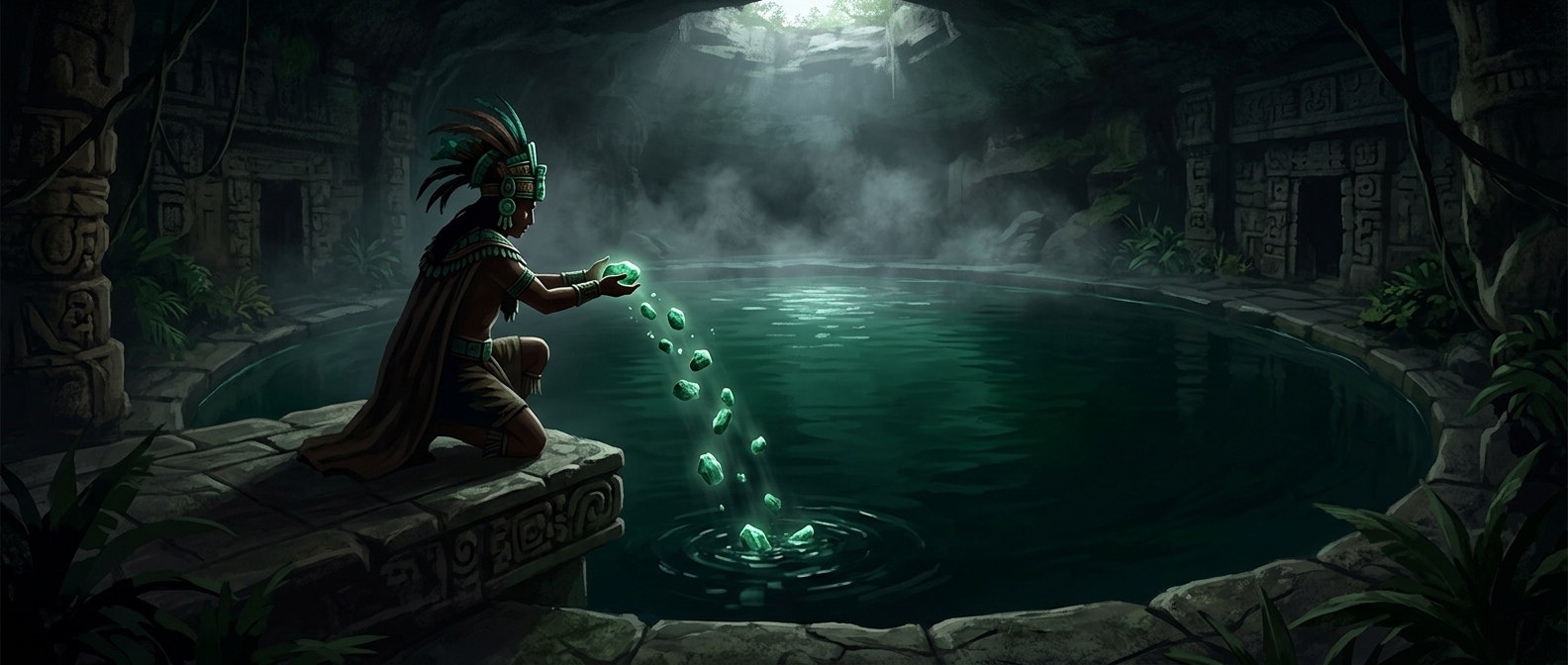
For Maya communities whose crops depended on seasonal rain, drought threatened more than a poor harvest: it put the food supply at risk. Chaac was associated with rain and storms, so an offering to him addressed the danger in religious terms. Priests presented iguanas because people linked the reptiles with water and the underworld—the powerful realm beneath the everyday world, not merely a place of death.
That connection made the animal meaningful as an offering. Its role was not just to stand in for food or wealth; it carried associations that linked the drought-stricken fields to forces believed to govern rain.
An offering as a request
The sacrifice was intended to persuade Chaac to provide the rain crops needed. In that sense, the ritual expressed a relationship between people and a deity: the community made an offering, and hoped the god would answer with life-sustaining weather. The priests’ action gave a crisis a shared, religious response when rainfall could not be controlled by human effort alone.
Maya beliefs and practices varied across communities and periods, so this should not be taken as a single, uniform ritual everywhere. But the underlying logic is clear: an animal associated with water and the underworld could serve as a fitting appeal to a rain god. In a drought, that symbolism connected a creature from the landscape to the rain the fields—and the people who depended on them—needed.