The Great Pyramid and the last mammoths overlapped
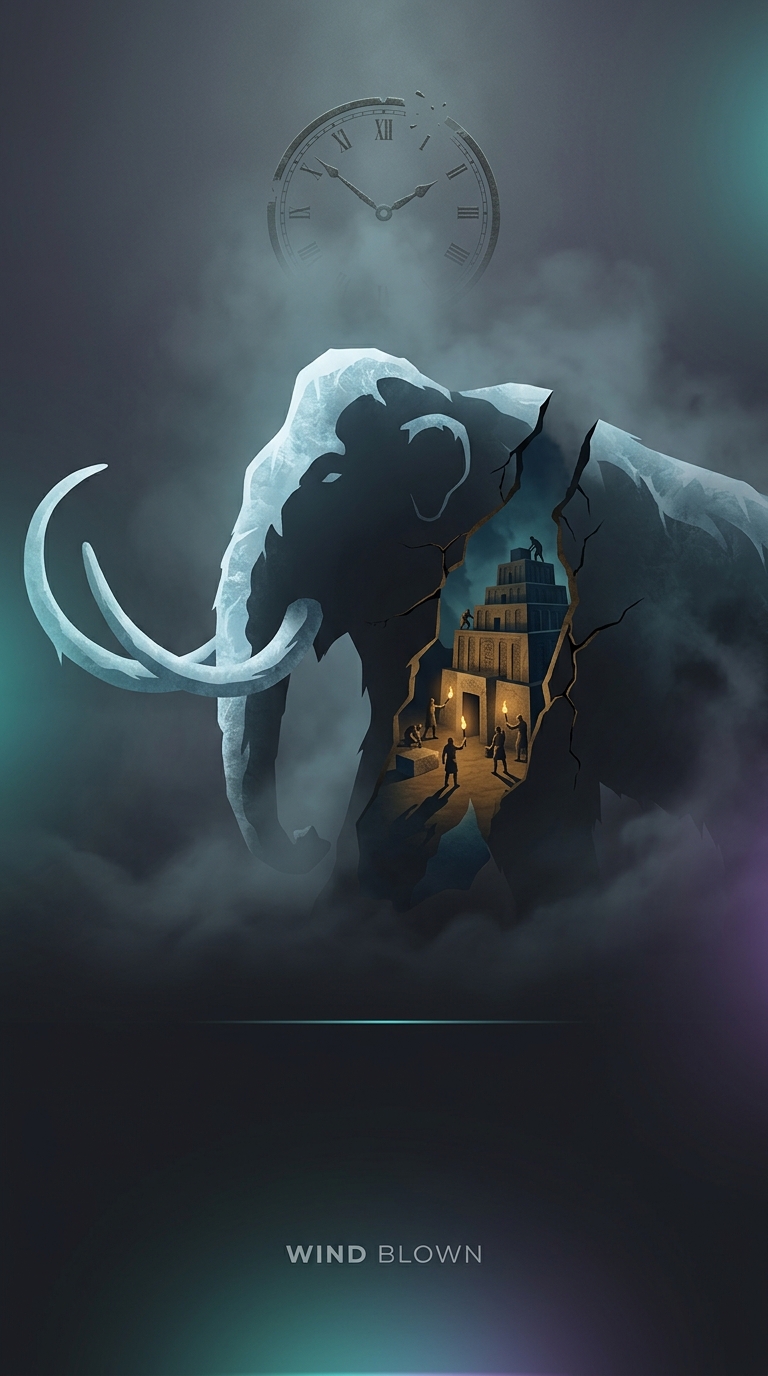
The Great Pyramid of Giza was built during Egypt’s Fourth Dynasty, around 2600 BCE. At the same time, a small population of woolly mammoths still lived on Wrangel Island, a remote island in the Arctic Ocean north of Siberia.
Most woolly mammoths had disappeared much earlier, near the end of the last Ice Age. But the Wrangel Island population survived for thousands of years after mammoths vanished from mainland Eurasia. That long survival is what makes the overlap startling: while people in Egypt were organizing the labor and materials needed for a monumental stone pyramid, mammoths were still living in an isolated corner of the Arctic.
A shared era, not a shared landscape
The overlap does not mean Egyptians encountered mammoths. Wrangel Island is thousands of miles from the Nile Valley, and the surviving herd was geographically isolated. The connection is chronological: two histories that feel separated by vastly different ages were unfolding at once.
The island’s mammoths persisted until roughly 1650 BCE—well after the pyramid’s construction, but still within the span of ancient Egyptian history. Their survival makes the past feel less like a sequence of neatly separated chapters: the age of mammoths did not end everywhere before the age of pyramids began.