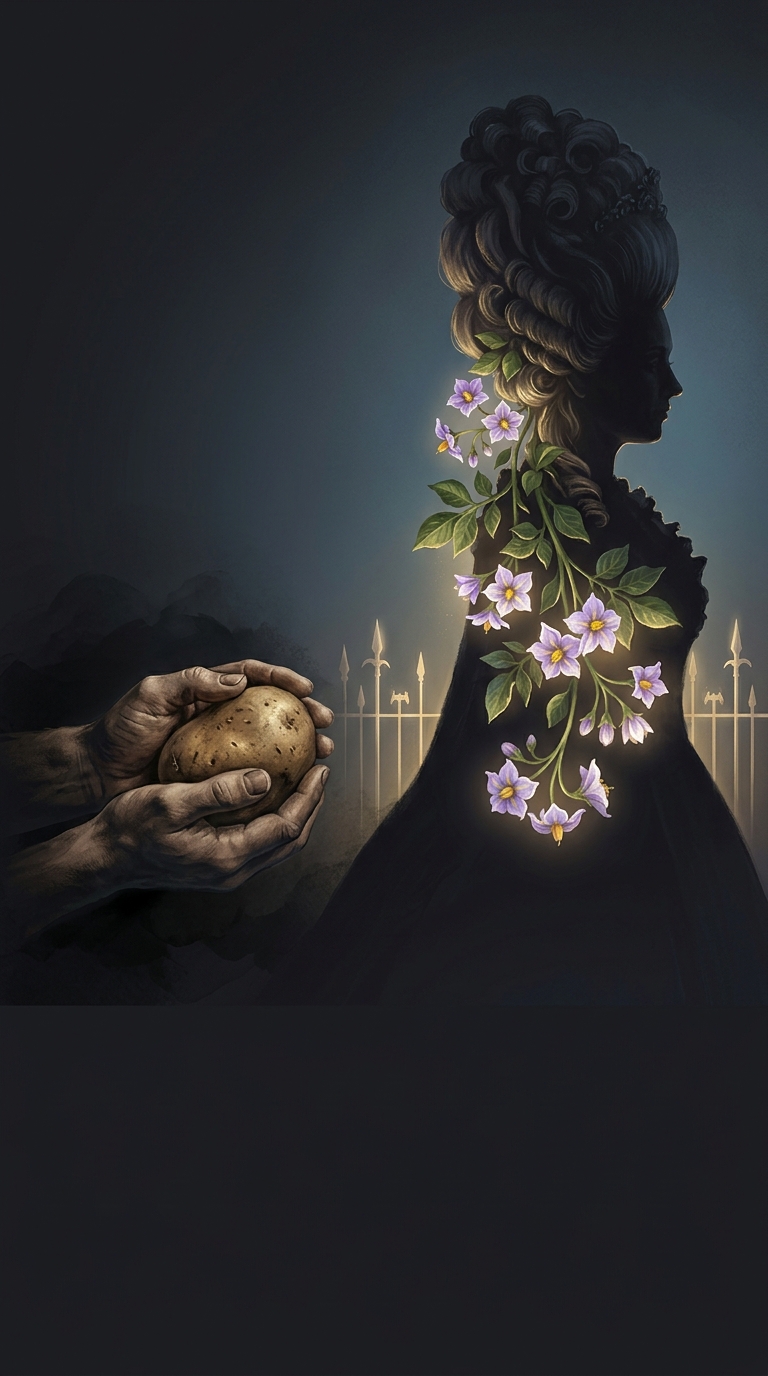
A royal flower changed the potato’s image
In 18th-century France, the potato faced a problem that good farming alone could not solve: many people distrusted it as food. Antoine-Augustin Parmentier, an agronomist who had encountered potatoes as a useful staple during wartime captivity, set out to make the crop respectable as well as practical.
The flowers offered a way to recast the plant. When Queen Marie Antoinette wore potato blossoms, the crop acquired a fashionable association at court. The gesture did not teach people how to grow potatoes, but it made them seem less like a suspect, low-status food and more like something worth wanting.
From guarded field to household crop
Parmentier’s guarded potato plots added a second kind of persuasion. Daytime protection suggested that the plants were valuable; leaving them vulnerable at night invited curiosity and theft. People who carried tubers away could plant them themselves. The field’s apparent scarcity helped turn suspicion into desire—and desire into cultivation.
That mattered because potatoes spread not just as a novelty but as a crop people could reproduce. Once planted, they could provide a dependable source of food, giving households a practical reason to keep growing them after the courtly fashion had passed.
Parmentier’s campaign therefore worked on two fronts: social approval made the potato easier to accept, while stolen tubers put it into new gardens. A flower worn at court could change the crop’s reputation; a tuber planted at home could change what was available for dinner.