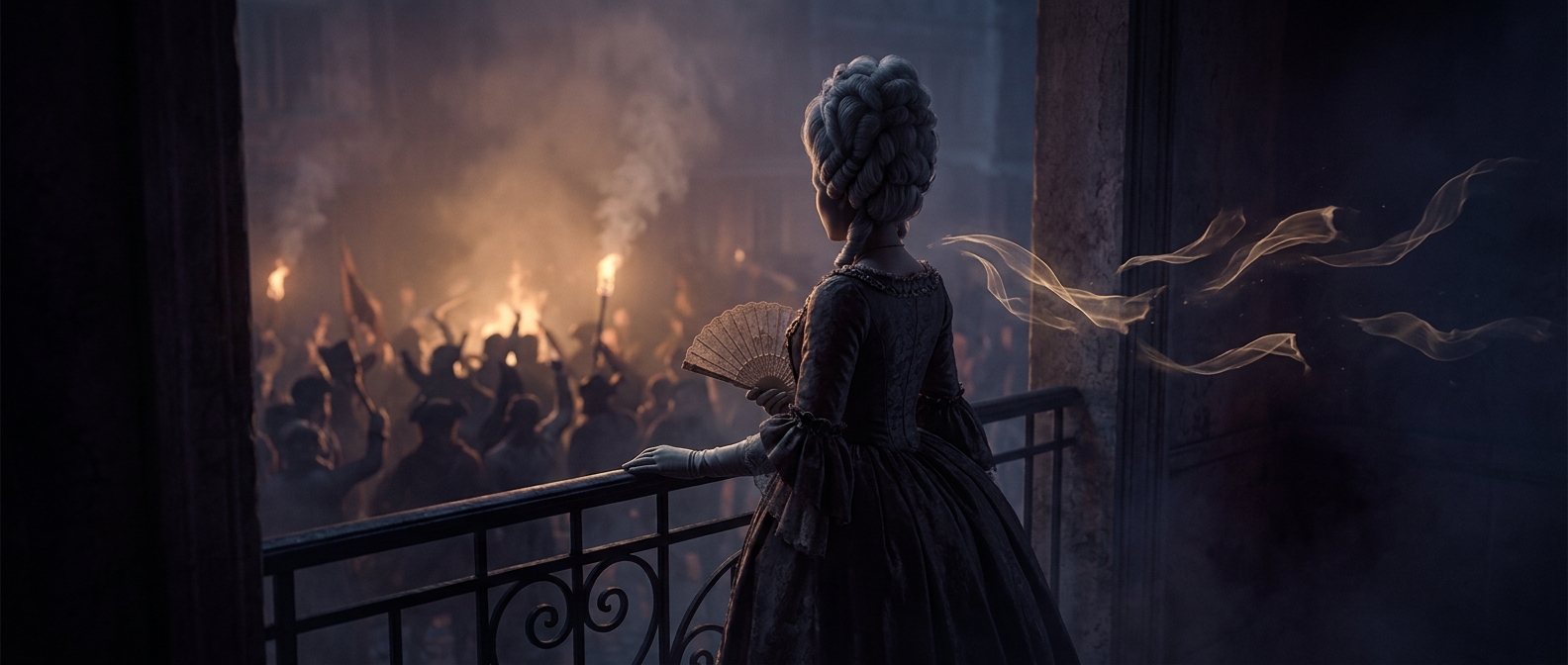
A royal insult with the wrong speaker
The phrase “Let them eat cake” was a sharpened political story, not a reliable record of Marie Antoinette’s words. Its French original, Qu’ils mangent de la brioche, refers to brioche, a rich, egg-and-butter bread—not quite the same thing as cake. The line suggests a speaker so detached from hunger that she offers an expensive substitute when ordinary bread is unavailable.
That image suited revolutionary anger at the monarchy, but the familiar attribution runs into a problem of chronology: Jean-Jacques Rousseau had already written a version of the remark years before the French Revolution, when Marie Antoinette was still a child in Austria. She was not even in France when the line first appeared.
Why the story stuck
A memorable sentence can compress a complicated grievance into a single scene. Food shortages and high bread prices made access to basic provisions an urgent concern, while the royal court stood for privilege and distance from ordinary life. The anecdote turned that contrast into a vivid, easy-to-repeat exchange—and made the queen its perfect villain.
Revolutionaries did not need to establish that she had actually said it for the story to work. Repeating the line helped portray the monarchy as indifferent to people’s hardship. Its apparent simplicity was part of its power: one cruel-sounding answer seemed to explain a whole political order.
What the attribution reveals
The saying’s later life shows how political memory can attach an existing phrase to a famous person. Marie Antoinette became so closely associated with extravagance and royal privilege that the line felt plausible to her opponents, despite its earlier appearance. The enduring story tells us more securely about the public image built around the queen than about anything she actually said.