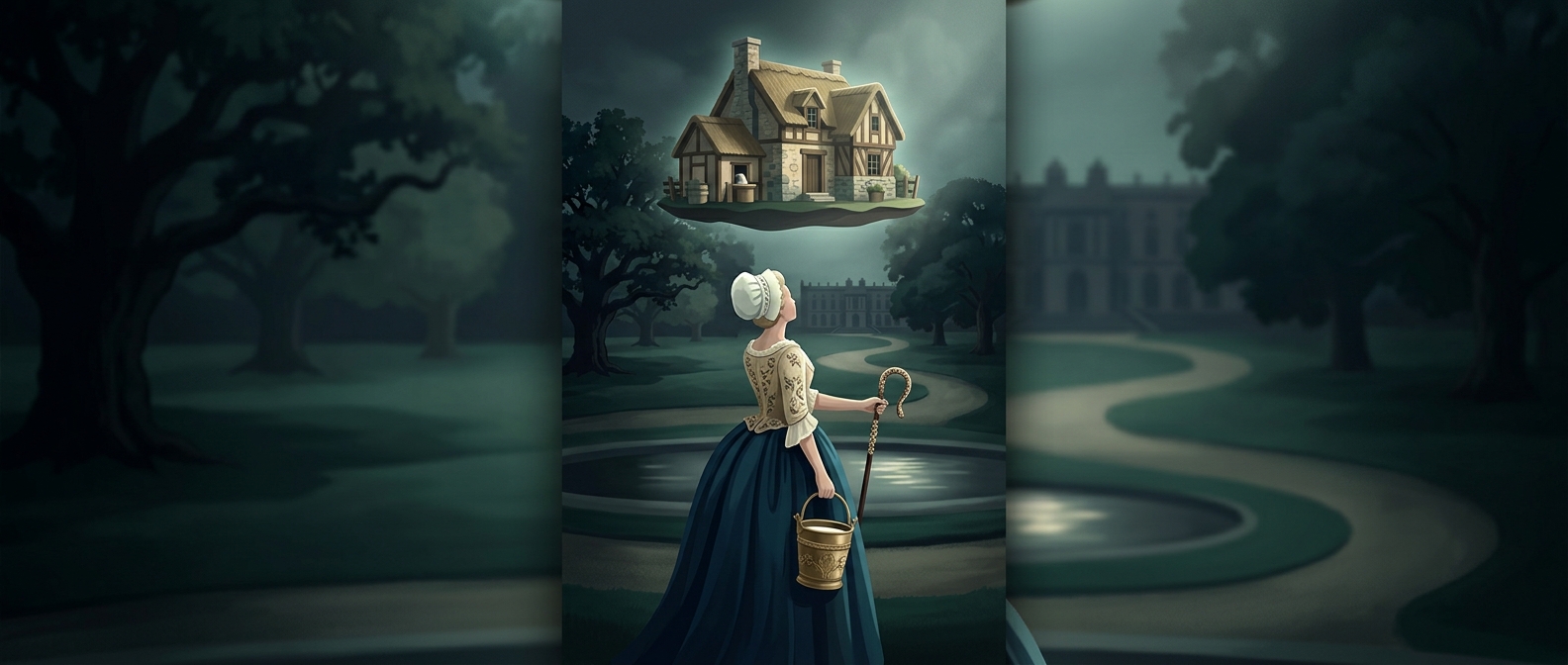
A rural world, carefully staged
The Hameau de la Reine—“the Queen’s Hamlet”—was created at Versailles in the 1780s as part of Marie Antoinette’s private estate near the Petit Trianon. Its cottages, mill, dairy and farm buildings were arranged to look like a picturesque country village. The design drew on the period’s fashionable taste for pastoral life: an idealized countryside imagined as simpler and more natural than court ceremony.
That did not make the hamlet merely a painted backdrop. Farm animals lived there, and the estate produced food. But its village setting was designed for royal use, with the Queen able to visit and withdraw from the tightly governed routines of palace life. Rural work could be sampled without the uncertainty, hardship or obligations that shaped ordinary farm labor.
The comfort behind the costume
The contrast was part of the appeal. Marie Antoinette could dress in simpler clothes and take part in activities associated with country living, such as tending the dairy, while remaining a queen with a private estate and servants. The cottages’ rustic appearance belonged to a composed landscape, not to a community built by villagers for themselves.
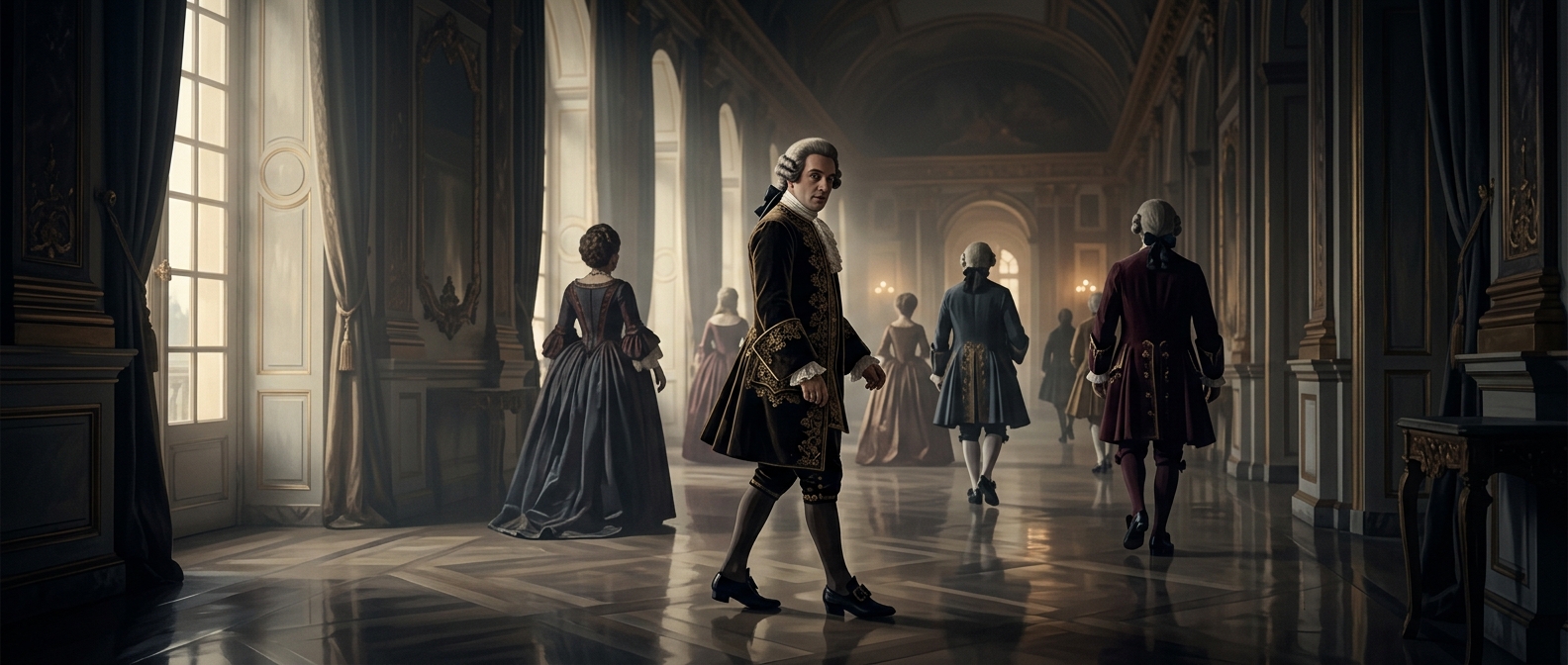
In the late eighteenth century, pastoral play was a familiar aristocratic fashion, not an invention unique to Marie Antoinette. Yet at Versailles it carried a pointed contradiction: the Queen sought relief from the public performance of royal life by entering a private performance of rural life. Her escape from ceremony depended on the same privilege that made the escape possible.