A royal delicacy with a dangerous reputation
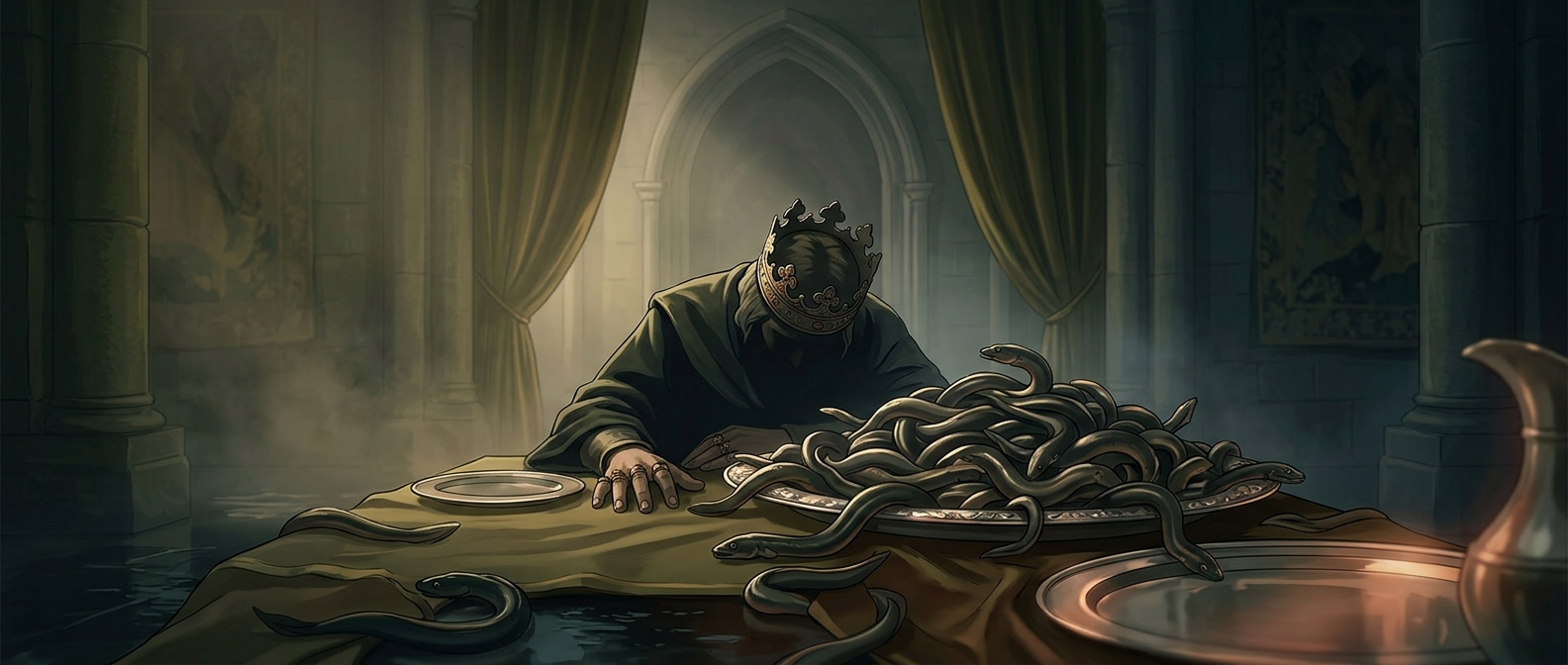
Lampreys are long, eel-shaped fish, and in medieval England they were prized food rather than an everyday catch. That made a dish of them a mark of status—but, as Henry I’s reported final meal suggests, a celebrated delicacy could still become a serious risk.
The story says his doctors had advised him not to eat lampreys. Henry ate a large serving anyway, and afterward became gravely ill. Medieval accounts linked his death in 1135 to the meal, though they could not identify food poisoning in the modern medical sense or establish exactly what made him sick. The tale’s force lies in that stark sequence: warning, indulgence, fatal illness.
The consequences reached beyond the table
Henry’s death mattered not only as a dramatic end to a reign. With the king gone, the question of who would succeed him became a struggle between his daughter Matilda and his nephew Stephen, helping usher England into a period of civil war known as the Anarchy.
A dish remembered as the cause of a king’s death thus became attached to a much larger political rupture. The lampreys were a last meal; the succession crisis was the lasting consequence.