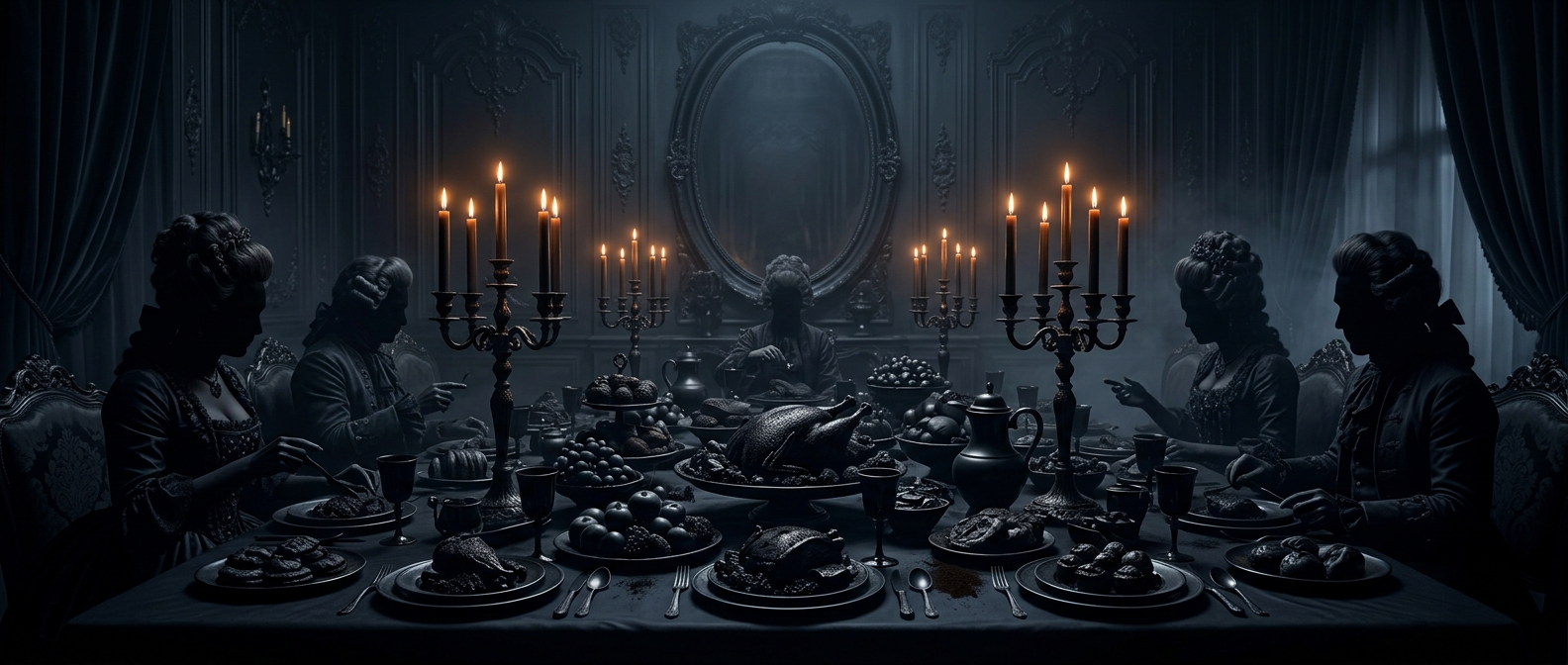
A meal designed to feel like a funeral
Grimod de La Reynière made dinner into a piece of theater. Crepe—a gauzy black fabric associated with mourning—covered the room; dim torchlight obscured its details, while servers dressed as clergymen gave the gathering the look of a funeral procession. Before guests tasted anything, the setting had already told them how to read the evening.
That staging changed the meal from a display of abundance into a sustained visual joke. A conventional grand dinner showed off bright colors, polished rooms, and lavish service. Here, the same attention to detail served a darker theme: the room, the staff, and the food all belonged to one imagined ceremony.
The menu carried the conceit to the table
Black bread and blood pudding made the theme immediately legible; truffles, caviar, and dark wine extended it through ingredients prized for their intensity as well as their color. The menu did not need every dish to be literally black. It needed each course to keep guests inside the scene the room had created.
That coordination was the point. A funeral-like meal could easily have been only a gloomy room or an amusing costume. By carrying the idea onto the plate, Grimod turned dinner into a sequence guests experienced with their eyes as well as their appetites. The memorable trick was making the feast feel like both a banquet and its opposite: a celebration staged in mourning clothes.