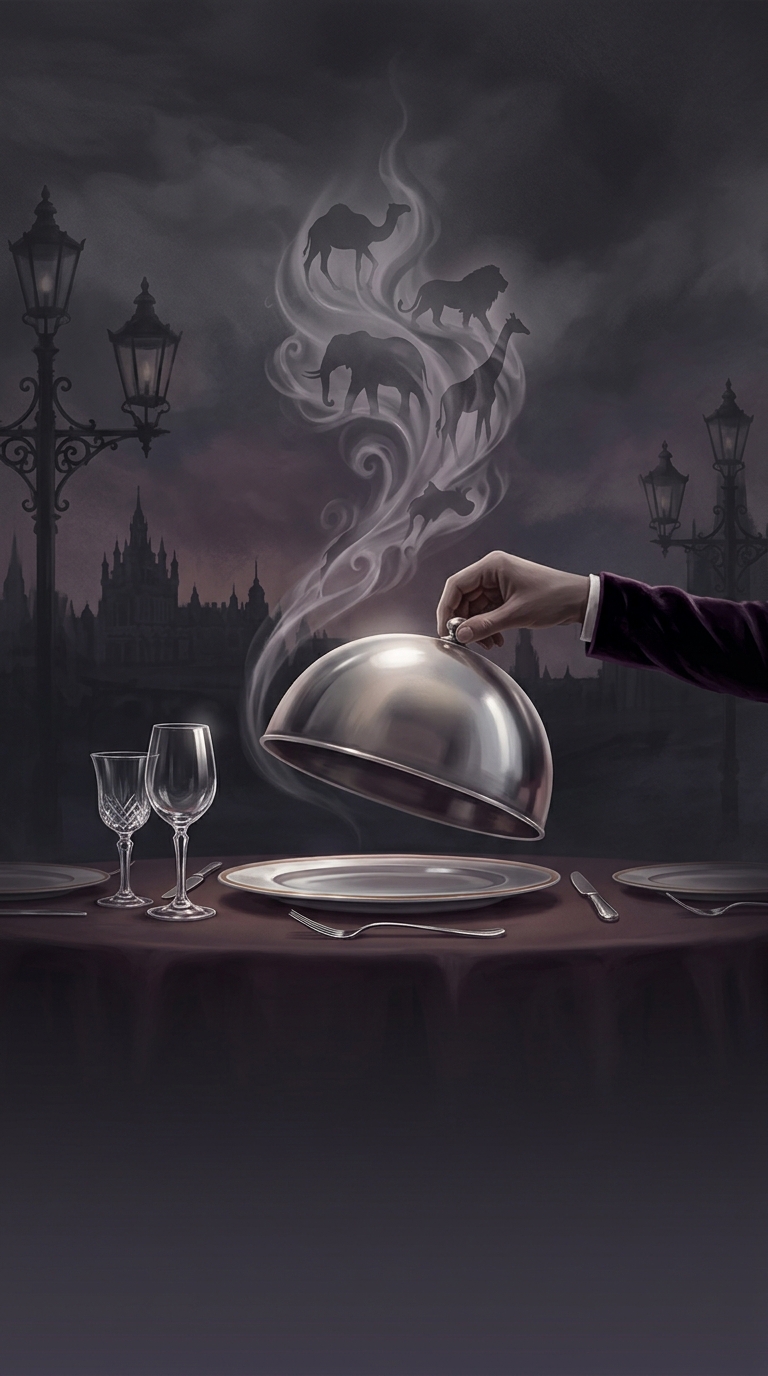
When the Siege Reached the Menagerie
The Prussian siege of Paris, which began in September 1870, severed the city from many ordinary sources of food. As the blockade dragged on, familiar supplies grew scarce and expensive. The animals in the city’s menagerie—the zoo—were no longer only attractions: some became an emergency source of meat.
Restaurants put unfamiliar animals on their menus, including camel, antelope, bear, and wolf. Their appearance turned the zoo’s inhabitants into a grim kind of luxury: food that was striking and unusual, but available because normal supply routes had been cut off.
From Enclosure to Butcher’s Counter
The elephants Castor and Pollux were among the most famous animals slaughtered. Their meat was sold to butchers, connecting the zoo directly to the city’s strained food market. This was not simply a matter of diners choosing an exotic dish. Under siege, the usual boundary between spectacle and food gave way to the practical question of what could be eaten.
The story is sometimes told as if Parisians consumed the entire zoo. The surviving details support a narrower picture: notable animals were killed and sold as the shortage worsened, but that does not mean every animal in the menagerie was eaten. The startling menu items and the elephants’ fate capture the deeper change. A place built to display living creatures had become, in part, a reserve of meat for a city cut off from its usual supplies.