A Pair of Boots Put an Ideal to the Test
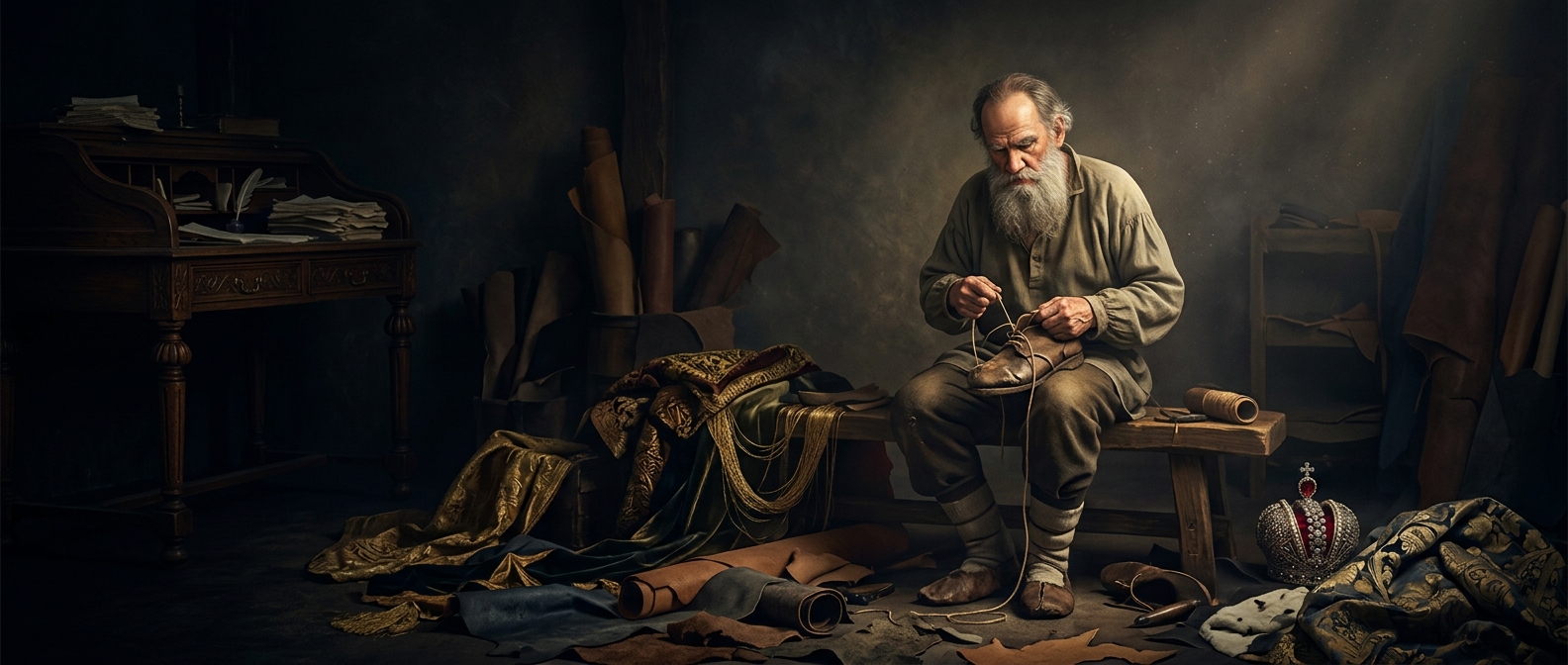
For Leo Tolstoy, making peasant boots was more than a practical chore: it fit an ideal of living simply and doing useful work with one’s own hands. But a finished pair had to serve a purpose beyond expressing that ideal. It had to carry its maker through the day.
Bootmaking depends on details that are easy to underestimate: the shape of the foot, the fit around it, and how the materials behave when someone walks. A boot can look serviceable and still rub or press painfully. Tolstoy’s reported discomfort exposed the gap between wanting to share ordinary labor and having the practiced skill to produce comfortable footwear.
What the Failure Revealed
The boots were a small, bodily measure of a much larger experiment in self-sufficiency. Good intentions could not substitute for experience: the test was not whether Tolstoy could make something that resembled a peasant’s boot, but whether he could make one that worked.
That is why the detail sticks. An abstract commitment to simplicity became a walk in badly fitting shoes—an everyday consequence that no ideal could smooth away.