A liquid medicine, not a smoked drug
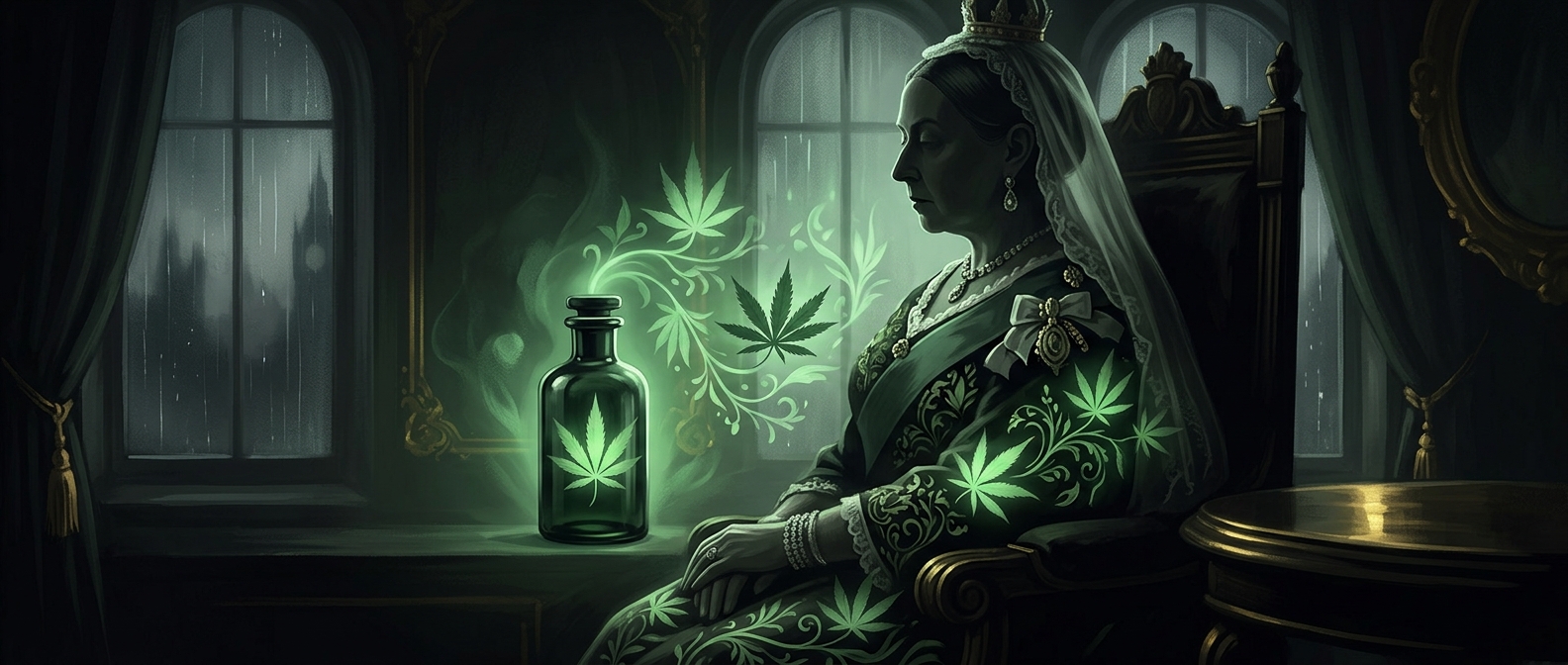
In Victorian Britain, cannabis could be dispensed as a tincture: plant material extracted into alcohol so a doctor could prescribe the liquid in measured drops. This was a familiar form of medicine, especially when a patient needed relief from pain or spasms and swallowing a preparation was more practical than using the plant in another form.
Queen Victoria’s physician, Sir John Russell Reynolds, treated cannabis as a legitimate remedy. Its use for menstrual pain belonged to a wider nineteenth-century effort to manage painful conditions with medicines that acted on the nervous system—the body’s network for sensing pain and controlling movement.
Why doctors took it seriously
Cannabis was not a standardized modern drug. Its strength could vary with the plant and the preparation, and physicians had no laboratory tests to identify its active compounds or measure their levels in the body. They relied instead on observed effects: whether a patient’s pain eased, whether the medicine caused unwanted effects, and how much seemed effective.
That uncertainty did not make the treatment unusual by the standards of the era. Many medicines were prescribed through clinical experience rather than today’s controlled trials and precise dosing. A tincture also made it possible to adjust a dose gradually, though not with the consistency expected of a modern pharmaceutical.
The episode shows how differently cannabis could be categorized before modern drug laws reshaped its status: in a royal medical setting, it was a doctor’s tool for treating pain, not a cultural symbol or novelty. A familiar bottle of medicinal drops could place cannabis inside mainstream Victorian medicine.