Why Victoria Went Back Out in the Carriage
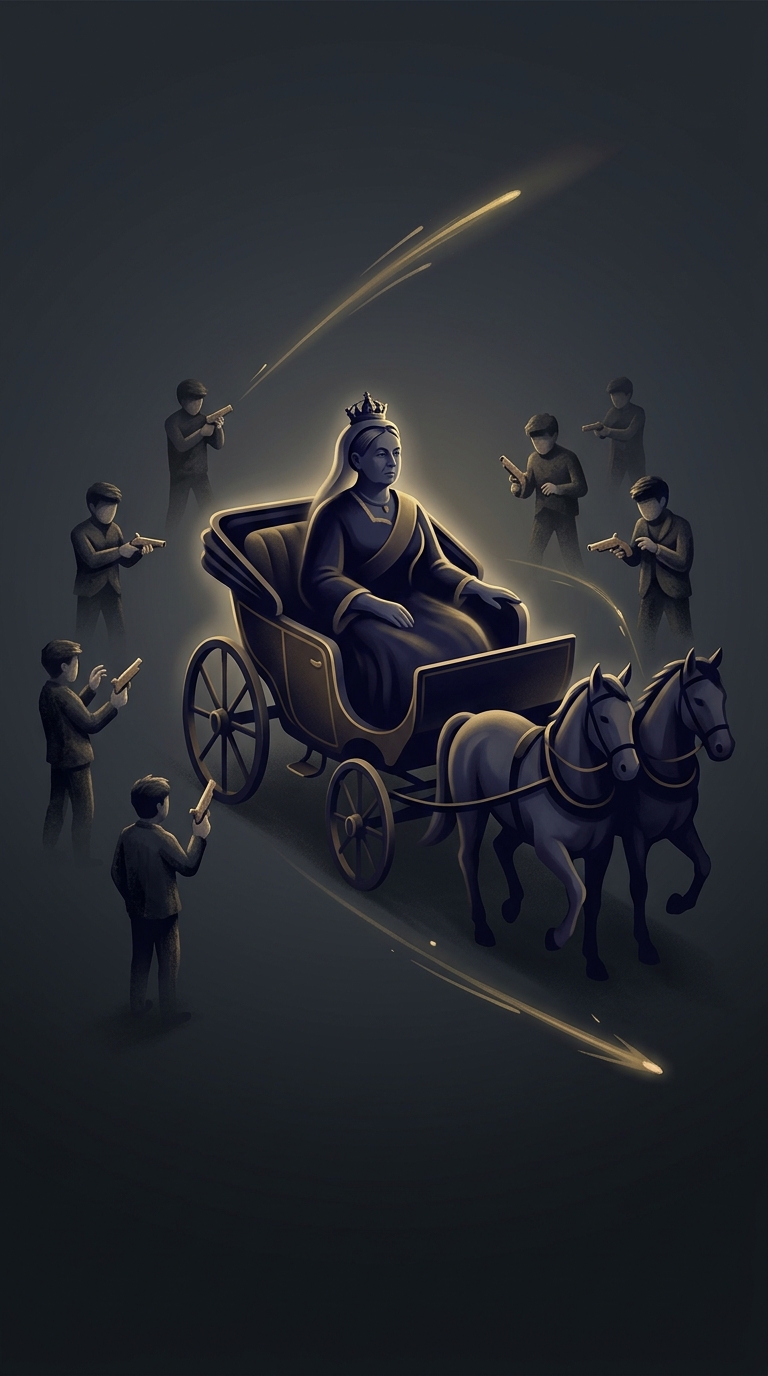
A monarch who vanished from public view after an attack would be safer in the immediate moment—but an attacker might remain unidentified, and fear could dictate the terms of royal life. In the 1842 attack by John Francis, Victoria’s advisers knew he had fired at her carriage once and might try again. She rode out the following day with Prince Albert. When Francis appeared and fired, police were ready to seize him.
The carriage made the danger visible, but it also made a suspected attacker easier to spot: Victoria’s familiar route and public presence could draw him into view. That did not make the ride safe. It meant accepting a fresh risk in the hope that police could catch the assailant in the act.
A Public Role, Not Just a Personal Risk
Victoria’s repeated appearances helped preserve the monarchy’s ordinary public life. Her carriage rides were a way for people to see their sovereign, and canceling them indefinitely could have allowed an attacker to disrupt that routine. The decision therefore carried a political meaning as well as a personal one: the crown would not retreat from public view simply because it had been targeted.
The attempts came across decades of her reign, and the people responsible were not all alike. Some were very young, and some used unreliable pistols; the broader danger was less a coordinated conspiracy than the possibility that an individual could approach the monarch in public. Victoria’s carriage was both a symbol of royal visibility and, at moments, a calculated way to bring a would-be attacker within reach of the police.