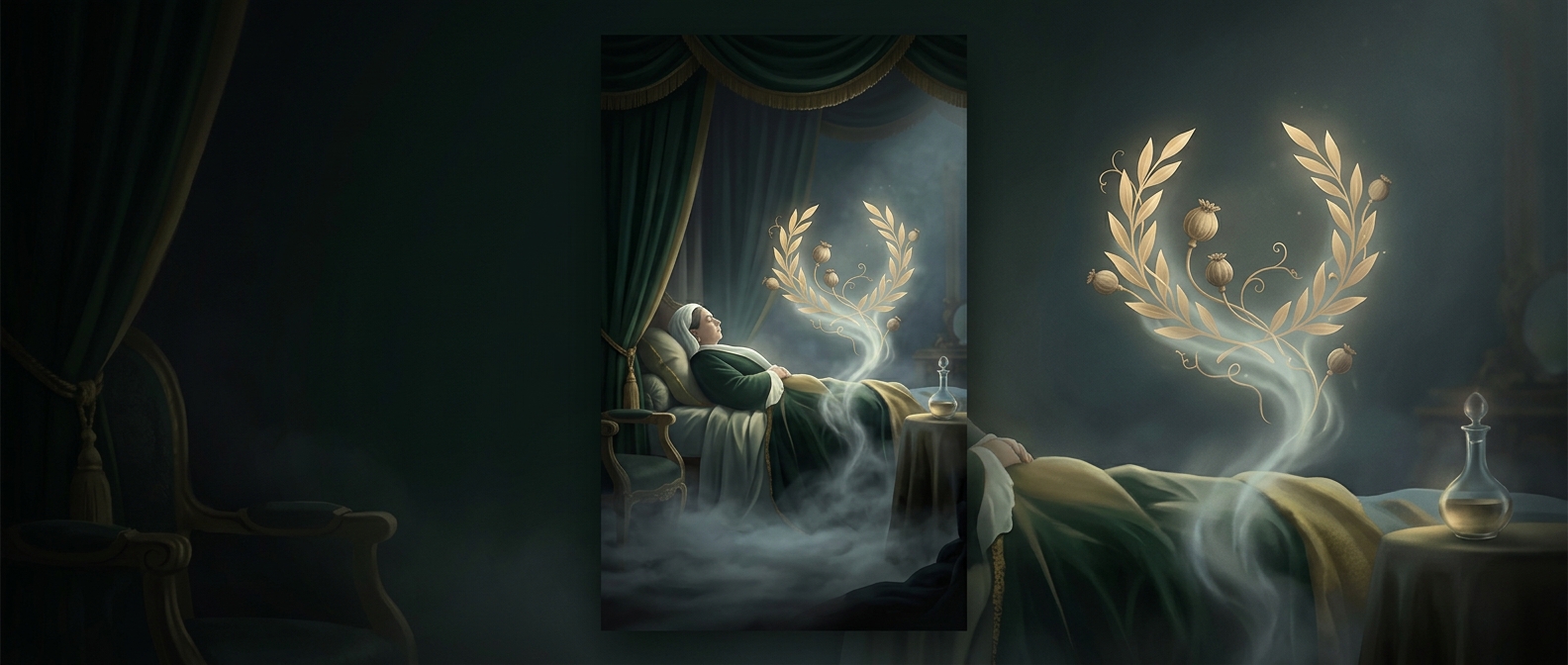
When a Gem Became a Remedy
Pearls were prized not only for adornment but also for what people believed they could do inside the body. In periods when medicine offered few reliable ways to treat dangerous fevers, a costly substance could seem worth trying—especially if it was associated with purity, rarity, or strength. Turning a pearl into powder made it usable as a dose rather than merely a jewel.
What the Vinegar Did
Pearls are made mostly of calcium carbonate, the same basic mineral found in chalk and limestone. Vinegar contains acetic acid, which reacts with calcium carbonate: the mixture can fizz as carbon dioxide escapes, while some of the mineral becomes calcium acetate in the liquid. Grinding the pearl first exposes more surface to the acid, helping the reaction along.
That chemical change could make the powder easier to mix and swallow. It did not, however, give it a proven ability to stop the underlying causes of fever, such as infection. The apparent transformation in the cup was not evidence that the remedy could control the illness.
The Price of Hope
The practice shows how early medicine could combine observation with assumptions that now seem misplaced. People could see a real reaction between pearl and vinegar, and they could regard the pearl’s rarity as a sign of special power, without having a way to test whether the preparation changed the course of a fever.
The striking detail is the labor built into the remedy: a valuable ornament was sacrificed, crushed, and chemically altered in pursuit of treatment. Its expense expressed the seriousness of the danger—and the limits of what medicine could offer.