How mineral became a sacred red
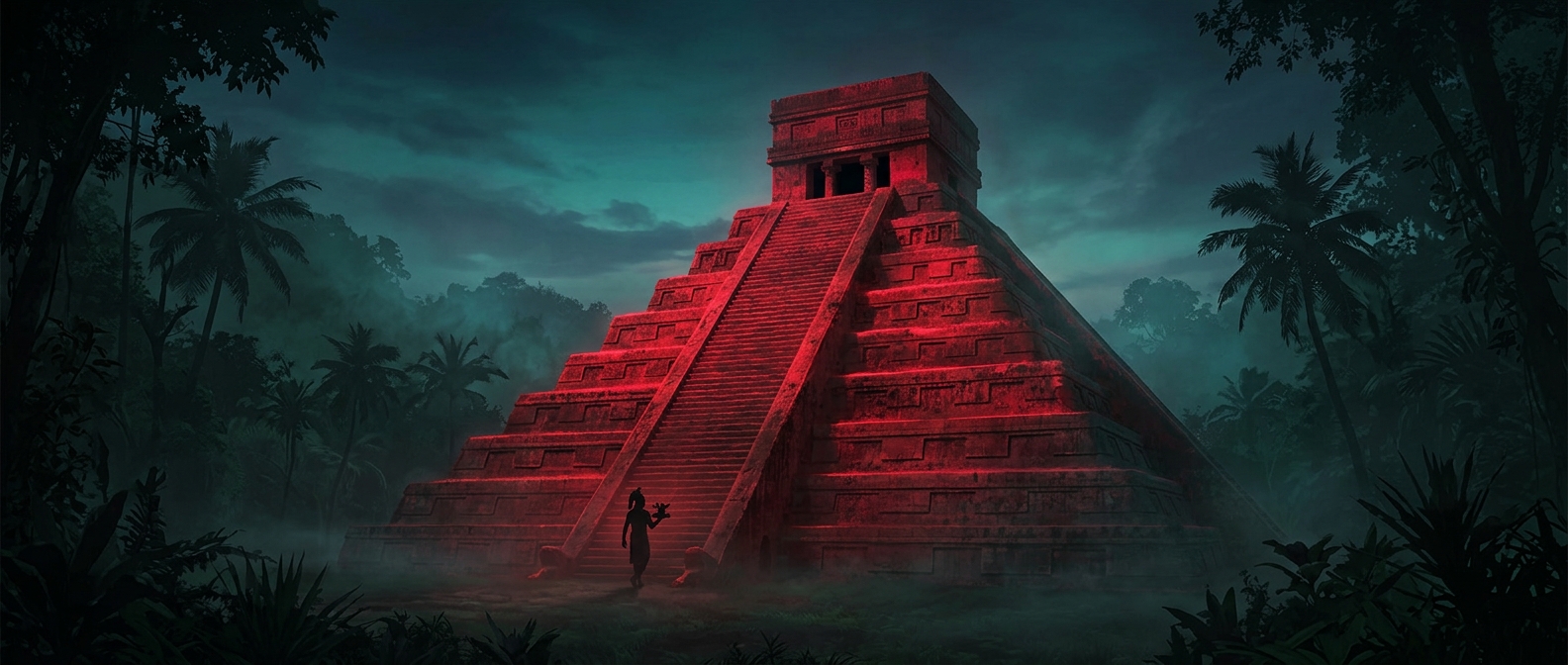
Cinnabar is a naturally occurring mercury ore. Ground into a fine powder, it produces a dense, brilliant red pigment—one that could make a temple surface or royal burial chamber stand out in dim light. Maya builders and craftspeople used it in important ritual and funerary settings, where color could help mark a place as sacred and set it apart from ordinary space.
Red carried powerful associations in Maya culture, including links to blood and vitality. Coating a tomb or placing cinnabar within it could therefore do more than decorate: it made the burial’s meaning visible, surrounding the dead with a color tied to life and sacred power.
The danger was in the dust
To make the pigment, workers had to crush the mineral. That could release fine particles, creating a risk of inhaling mercury-bearing dust, especially for people who handled it repeatedly or in enclosed spaces. Cinnabar is not the same as liquid mercury, and simply seeing a finished red surface does not mean someone is being poisoned; the concern lies chiefly in exposure during processing and handling.
The same powder that gave a royal tomb its enduring color thus carried a hidden cost. Its vividness made it valuable for sacred spaces, while the labor of preparing it put the people closest to the pigment at risk.