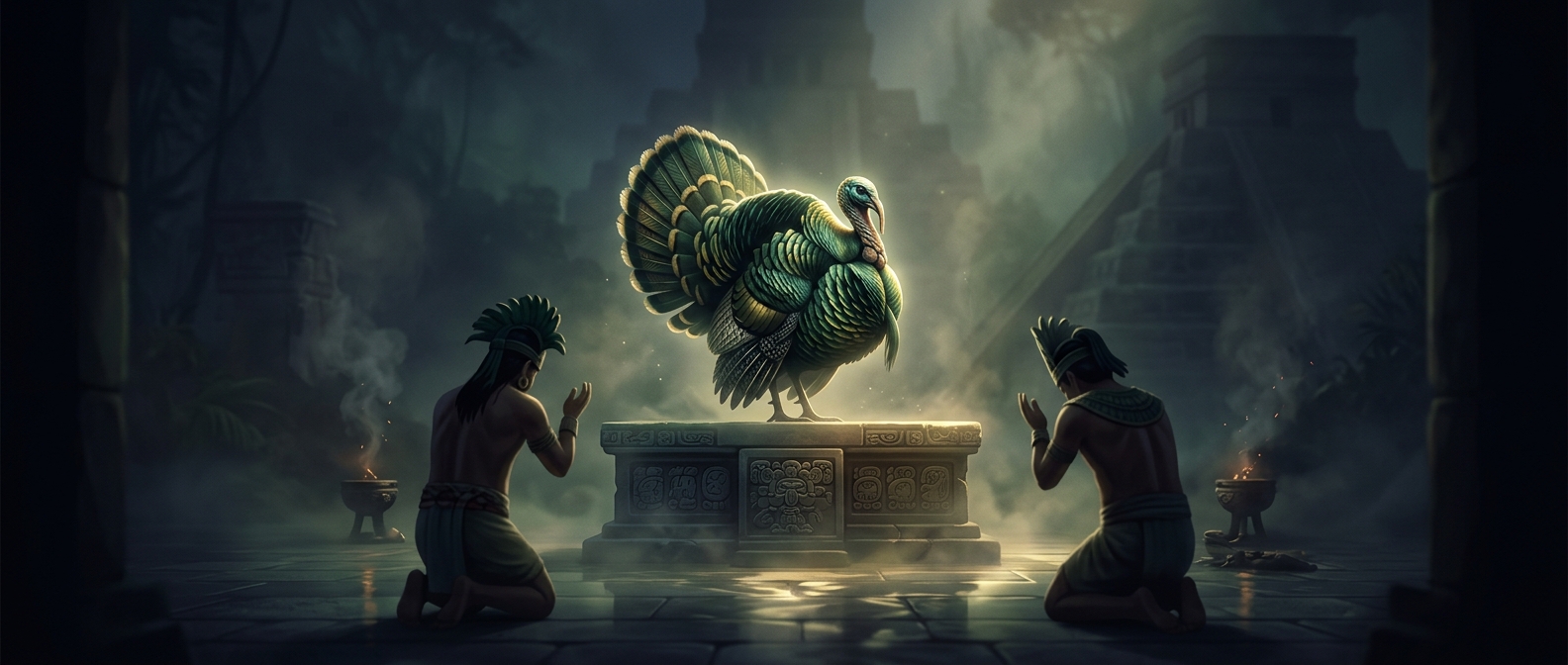
A bird that crossed the boundary between worlds
For the Maya, the natural world was not separate from the sacred. Animals could carry religious meaning because they moved through environments humans could not: birds rose into the sky, a domain associated with divine power. The ocellated turkey’s place in ceremony reflected that way of seeing animals—not simply as food, but as beings with a role in relationships between people and gods.
Calling the turkey a messenger captures this symbolic role. It does not mean the bird was thought of as a human courier. Rather, its presence in a ritual could help connect the human act with a divine recipient.
Why eating it could be taboo
A sacred animal was not interchangeable with ordinary meat. In a ceremonial setting, the turkey’s meaning depended on how it was treated: using it as part of a religious rite acknowledged its special status, while eating it casually could be understood as disregarding that status. That is the logic behind the idea that consumption could be blasphemous.
Maya communities and practices varied across time and place, so the taboo should not be imagined as a uniform rule followed identically by everyone. The important distinction is between the bird as a ritual participant and the bird as an everyday meal. Its sacred role made that distinction meaningful—and turned an ordinary act of eating into a question of religious respect.