A god of renewal made visible
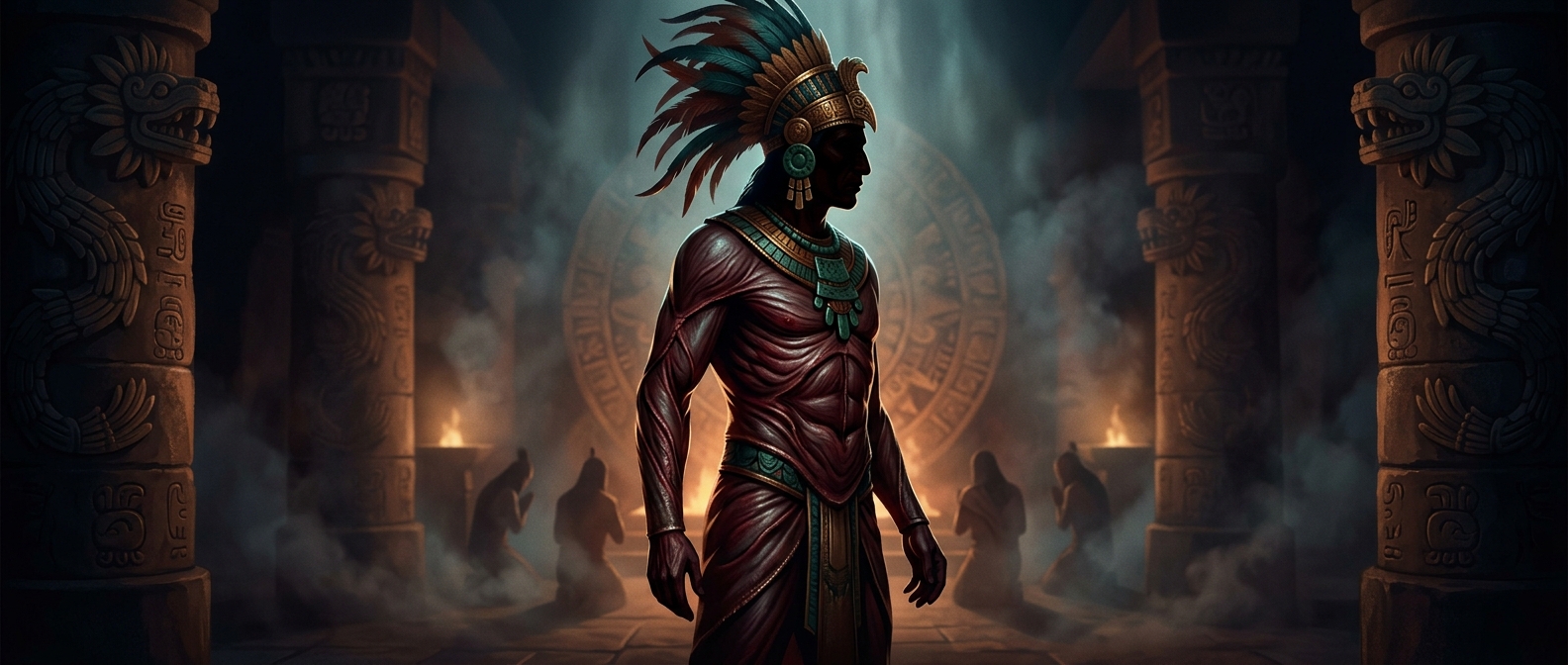
Xipe Totec—whose name is commonly translated as “Our Lord the Flayed One”—was associated with renewal and agricultural growth. The ritual honoring him made that idea physical: after a human sacrifice, priests wore the victim’s removed skin as part of the ceremony.
The image was not simply one of death. A covering that had belonged to a living person was shed, while the god’s rites pointed toward new growth. The skin could therefore evoke the way life seemed to emerge from what had been cast off, a powerful parallel in a society whose survival depended on crops returning each season.
Twenty days inside the symbolism
The priests kept the skins on for 20 days, turning a brief act of sacrifice into a sustained public ritual. For that period, the wearer’s body visibly carried the ceremony’s central transformation: human skin became a sign of the old layer being shed and renewal taking its place.
That duration mattered. Rather than treating the skin as a prop seen only at the moment of sacrifice, the ritual kept the symbol present over time. Agricultural renewal was represented not as an abstract promise, but as a change people could see embodied in the community’s religious life.