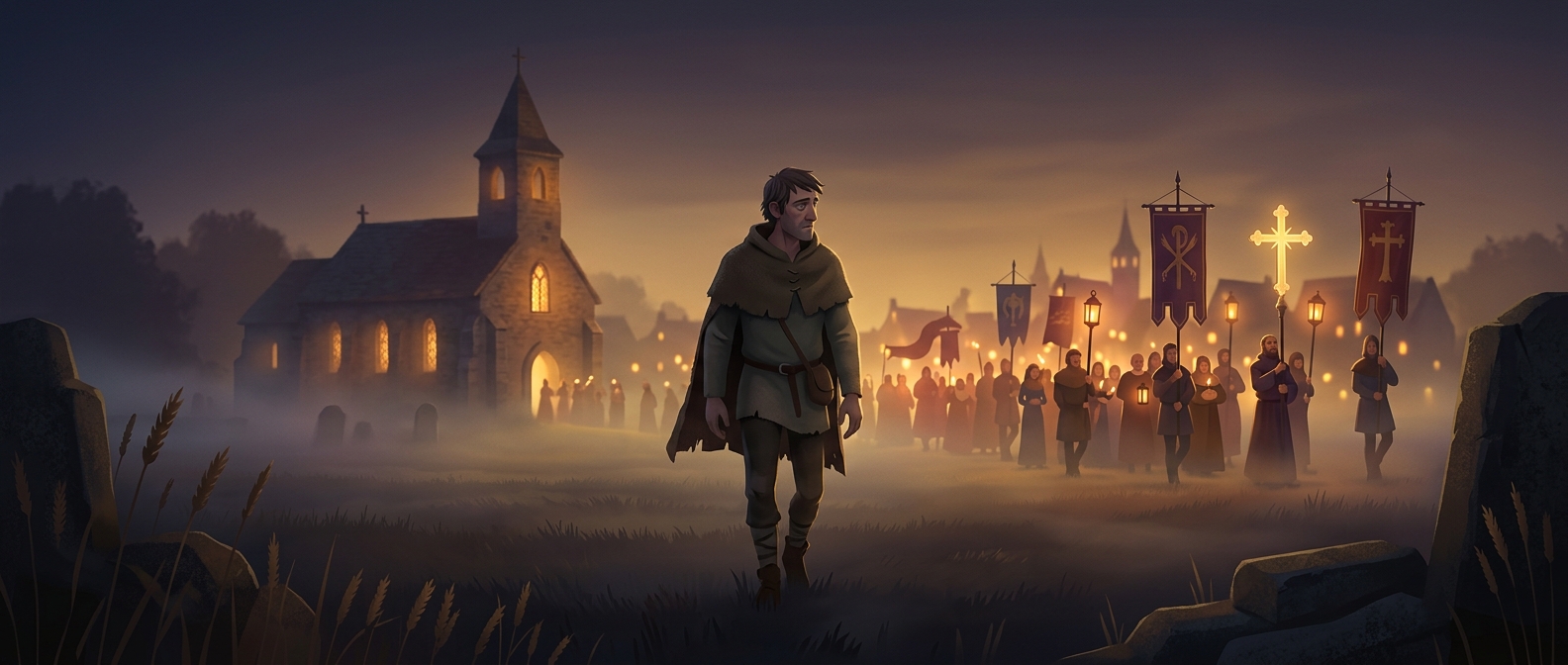
Why the medieval calendar made room for feast days
For many medieval Christians, the year was organized not just by seasons but by a repeating sequence of Sundays and holy days. Feast days honored events in the life of Christ or particular saints. They brought people to church, and some also meant that ordinary labor was supposed to stop. In a world without a standardized weekend or paid leave, religious rules helped define when work should pause.
That pause could be more than a break from tasks. A feast might bring people together for worship, a shared meal, or local celebration. The Church calendar gave communities a common rhythm: days for work, days for religious observance, and recurring occasions to gather.
A holy day did not make life easy—or equally free
The calendar was an ideal, not a universal guarantee of leisure. Which days were observed, and how strictly, varied by place and period. A farm household also faced the demands of the agricultural year: harvest could not always wait for a convenient date, and bad weather or a tight season could make a day away from work costly. Peasants’ obligations to landlords and the practical needs of keeping a household going further shaped what “a day off” meant.
So the notable feature is not that medieval peasants enjoyed modern-style vacations. It is that religious authority set recurring limits on work and created sanctioned pauses in the year. A feast day offered a recognized reason to stop, but harvest and hardship still determined how much rest a family could actually take.