Separate beds made discipline part of the nightly routine
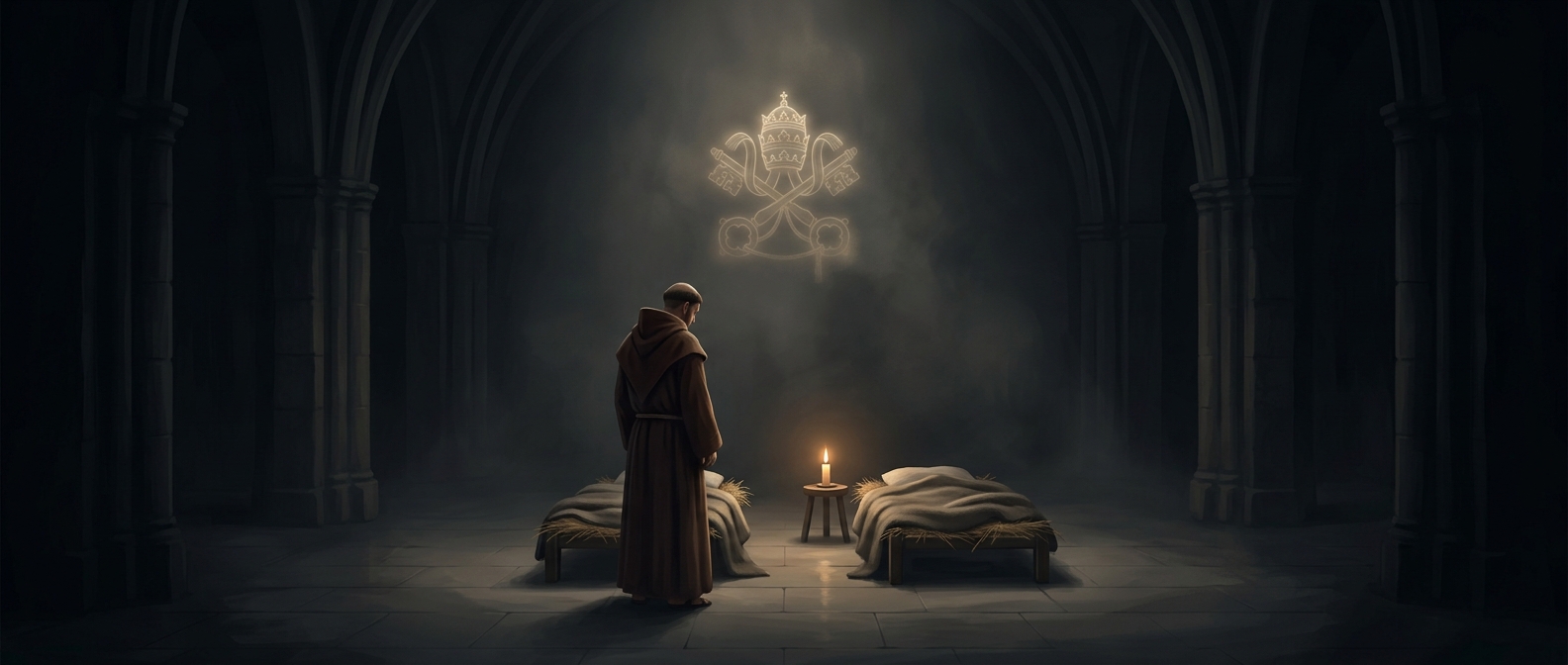
A monastery’s discipline did not stop when the day’s work and prayers ended. Monks were expected to live by rules of chastity and obedience, including in the dormitory. In 1228, the pope ordered monks to sleep in separate beds—a practical way to make those expectations visible in one of the least supervised parts of communal life.
A shared dormitory could still hold many monks; the order did not necessarily mean private rooms. The key distinction was that each monk had his own bed rather than sharing one. That arrangement set a clear boundary between members of the community and made the sleeping space more consistent with the conduct their religious vows required.
A small rule with institutional force
Monastic rules depended not only on personal intention but also on arrangements that supported it. Separate beds turned an abstract demand for religious discipline into a daily condition of communal life: the rule shaped where and how monks slept, not just how they behaved during worship.
The decree is a reminder that medieval religious authority reached into ordinary routines. A bed was not merely a place to rest; in a monastery, its arrangement could help define the boundaries of the community’s discipline.