Why the Albigensian Crusade Began
In the early 13th century, the papacy faced a growing religious movement in southern France, often called Catharism. Its followers rejected important Catholic teachings and institutions, and church leaders classified them as heretics. The conflict was not simply a debate over belief: local nobles sometimes protected dissenters, while Catholic authorities saw that protection as a challenge to church power and religious unity.
Pope Innocent III first pursued preaching and negotiation. After a papal representative was killed in 1208, the pope called for a crusade against the region’s heretics and their protectors. A crusade offered participants religious rewards while giving the campaign the force of an armed expedition. It transformed an effort to bring dissenters back under church authority into a war in which territory, loyalty, and faith became entangled.
From Religious Campaign to Conquest
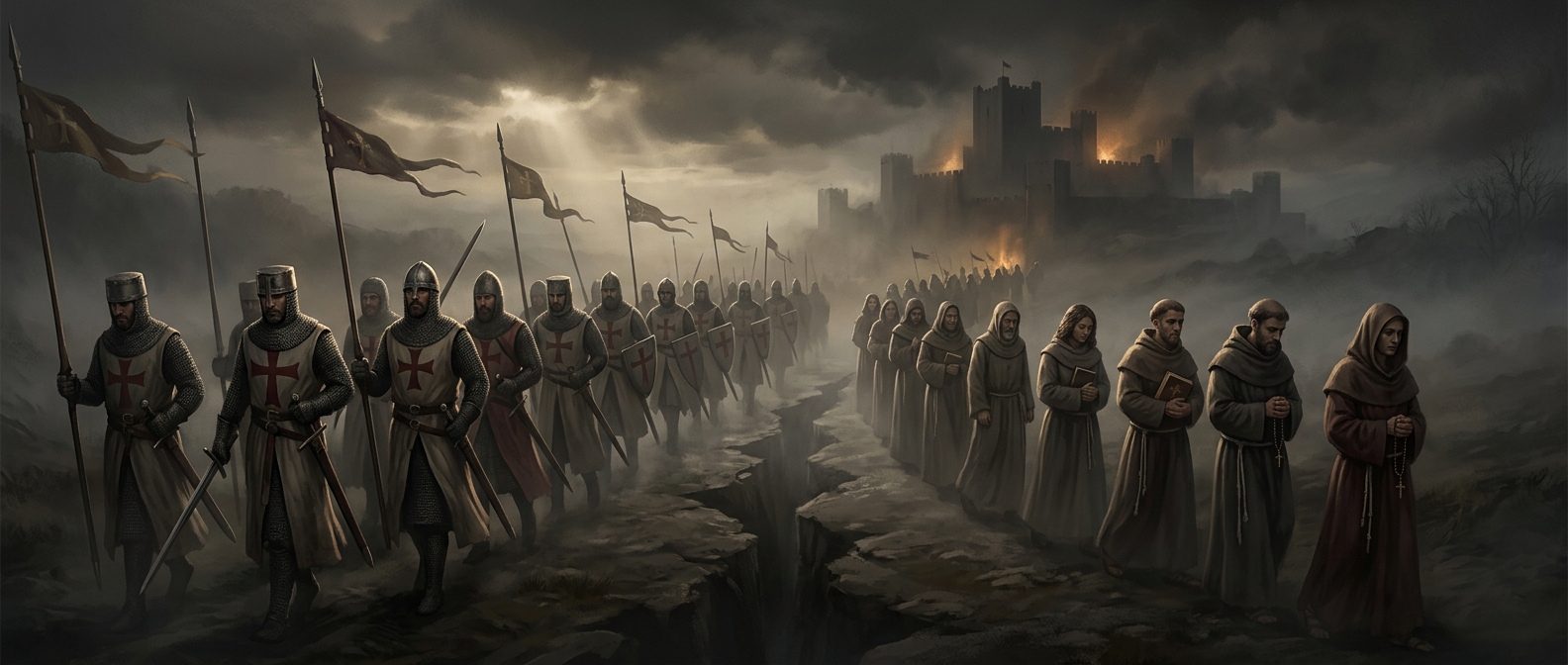
The crusaders attacked towns and strongholds across Languedoc, a region in what is now southern France. In 1209, they captured Béziers. When asked how to distinguish Catholics from heretics there, the papal representative Arnaud Amalric was later reported to have said, “Kill them all; God will know his own.” The wording comes from a medieval account, but the episode captures the campaign’s brutal logic: in a city under attack, religious identity offered little protection from mass killing.
The war also weakened the independence of local lords. The crusade’s leaders seized lands from nobles accused of sheltering heretics, and the French crown later extended its authority into the south. The campaign therefore served both a religious purpose and a political one, even though those aims were not identical.
A Crusade Against Christians
The people targeted were not outsiders to Christianity; they lived among Catholic neighbors and shared the region’s towns and villages. By defining heresy as a threat that could be answered with military force, church leaders made fellow Christians eligible targets and exposed whole communities to violence. The lasting consequence was not only the destruction of dissenting communities, but also a stronger political grip over southern France.