How a Single Die Roll Turns a Battle Into a Probability Problem
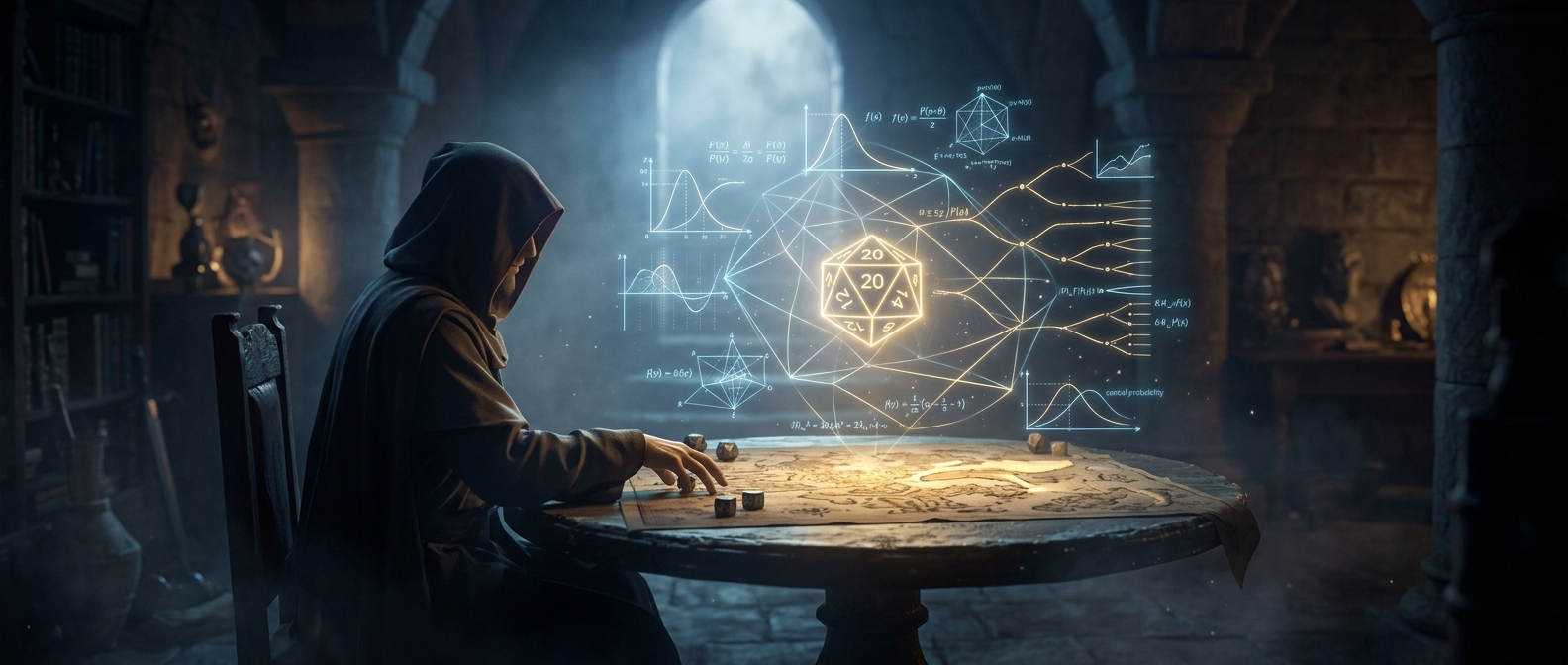
In many fantasy roleplaying games, a 20-sided die does not decide success on its own. The player adds a character’s relevant modifier—such as skill with a weapon—to the roll, then compares the total with a target number set by the game’s rules or the person running the campaign. The target represents how difficult the action is: a lightly protected goblin may be easier to hit than a shielded or unusually nimble foe.
That comparison converts a vague question—“Can I land this blow?”—into a range of outcomes. If a character needs a total of 15 and has a +5 modifier, any die result from 10 through 20 succeeds. That is 11 successful faces out of 20, or 55 percent. A small bonus or penalty can move the dividing line by one face, changing the odds by five percentage points.
Why the Math Matters Beyond the Dice
Players use those odds to weigh choices. A risky attack might be worth attempting if a success could end the fight, while a lower-risk action may be wiser when failure would leave a character exposed. Campaigns add complications: attacks may be easier or harder in particular situations, and some rules allow extra dice or rerolls. Each adjustment changes the set of rolls that can succeed.
The arithmetic is usually simple; the complexity comes from deciding which rules apply and what is at stake. A game master may need to set a difficulty, account for circumstances, and resolve the result quickly enough to keep the scene moving. Meanwhile, players make decisions with incomplete information: they may know their own bonus but not the exact target they must reach.
That uncertainty is part of the drama. A die roll does not merely measure a character’s skill; it gives the table a shared, visible chance of success. The same sword swing can be nearly certain for an expert or a long shot for a novice, and a single face on the die can turn either expectation into a different story.