What actually wears out on a drive
A hard drive stores bits as tiny magnetic regions on spinning platters. The magnetic pattern can remain stable for years, but the drive is a collection of materials and moving parts: its platter coating, protective layers, lubricants, motor, and read-write heads can all deteriorate or fail. Heat, moisture, corrosion, and ordinary mechanical wear can make it harder for the heads to read the pattern—or prevent the drive from working at all.
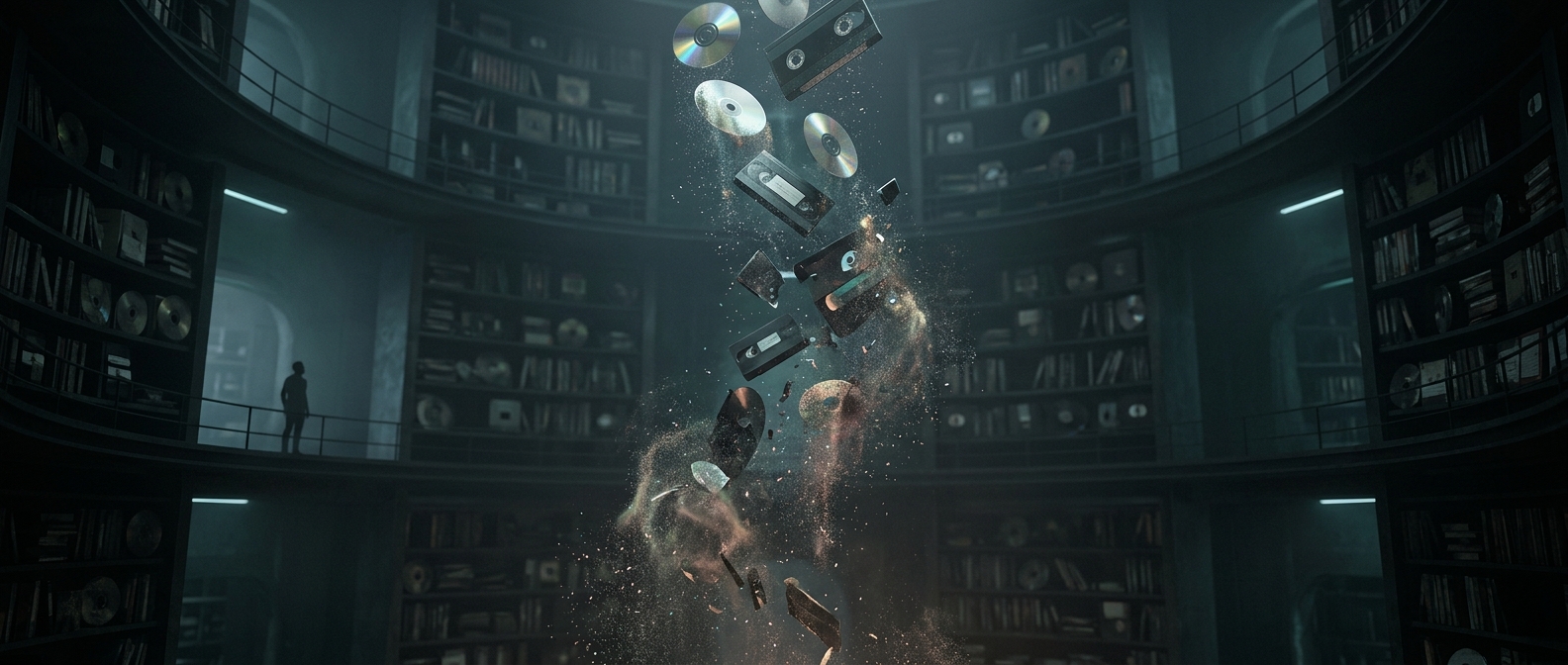
Optical discs store information differently. A laser reads microscopic marks in the disc, or changes in a light-sensitive dye, depending on the format. Aging, exposure to heat or light, and damage to the reflective layers can weaken the signal until a reader can no longer distinguish the stored pattern reliably.
Why copying matters more than a “safe” shelf
A file is recoverable only if its bits can still be read. A disc may look intact while its recording layer has degraded, and a drive can stop working because of a failed component even when some of its data remains on the platters. Keeping storage cool, dry, and out of direct sunlight can reduce avoidable stress, but it cannot guarantee indefinite survival.
For anything important, the practical safeguard is to keep another copy and periodically check that it opens. Copying files to current storage moves them away from aging hardware and media; keeping more than one copy also limits the damage if a single device fails. Long-term preservation is a process of refreshing copies, not finding a medium that lasts forever.