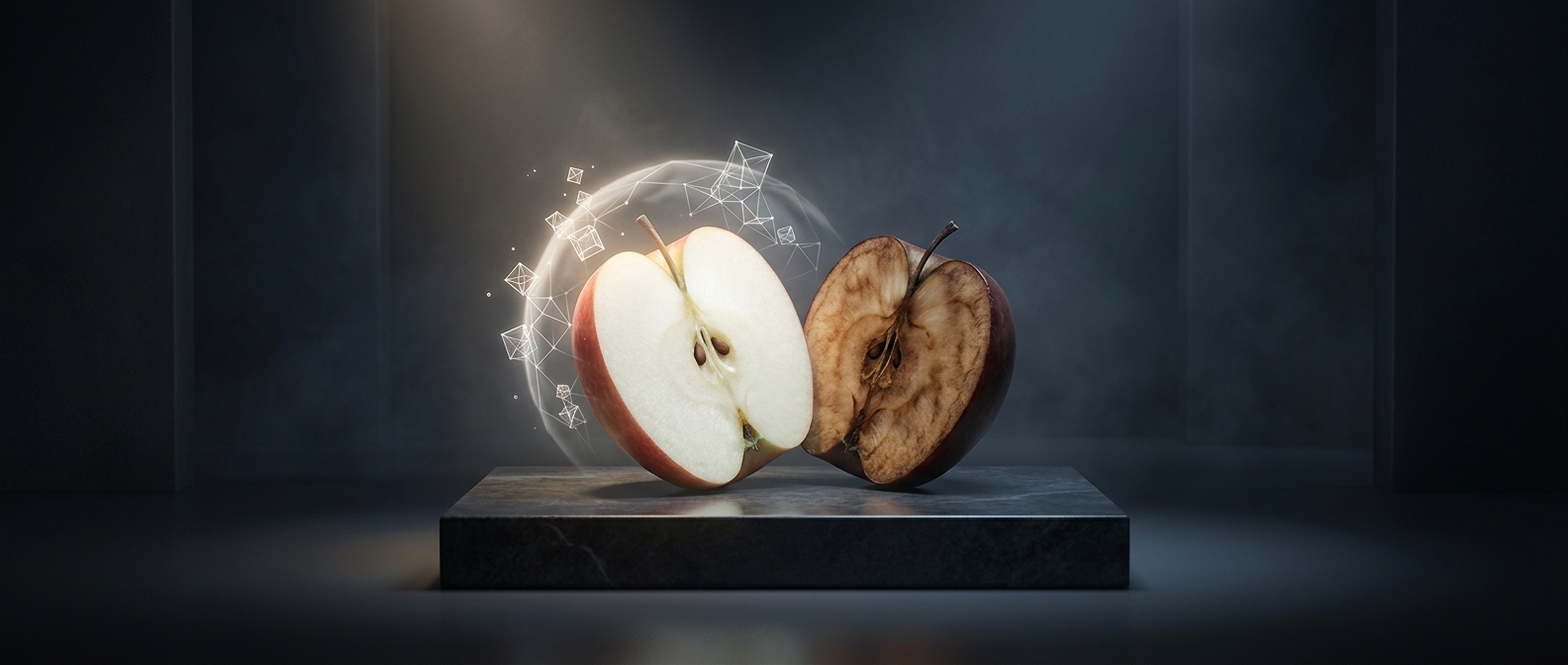
Why a cut apple changes color
An apple’s flesh stays pale while its cells keep certain ingredients apart. Slicing breaks those compartments, letting oxygen reach plant compounds called phenols. An enzyme in the apple, polyphenol oxidase, helps turn the phenols into quinones, which then react and form brown pigments. The color is a visible sign of this chain of reactions—not a coating developing on the surface.
How the treatment interrupts browning
Ascorbate, the vitamin C component of calcium ascorbate, acts as an antioxidant: it can give up electrons to the newly formed quinones and convert them back into colorless phenols. That delays pigment formation while the ascorbate remains available. It does not permanently switch off the enzyme, so browning can return as the protective ascorbate is used up and oxygen continues to reach the cut flesh.
The calcium supplies a second potential benefit. Calcium can interact with pectin, a material in plant cell walls, helping tissue retain firmness. In practice, how much this matters depends on the treatment and the apple; the main browning delay comes from ascorbate. The key is buying time in the reaction, rather than preventing the apple from ever browning.