A Shell Built for Two Opposite Jobs
A paintball is a small gelatin capsule filled with colored liquid. Its shell has to withstand a sharp acceleration as the ball is fired, then break when it strikes a player or another soft target. That balance comes from the gelatin wall: it can flex under some forces, but it is not meant to stretch and rebound like rubber.
Inside the barrel, the ball is pushed forward and pressed against the barrel’s surface. A shell that were too thin or fragile could split there, spilling paint before the shot reached its target. A shell that were too tough might survive the hit, leaving little or no visible mark.
Impact Turns the Shell’s Weakness Into the Signal
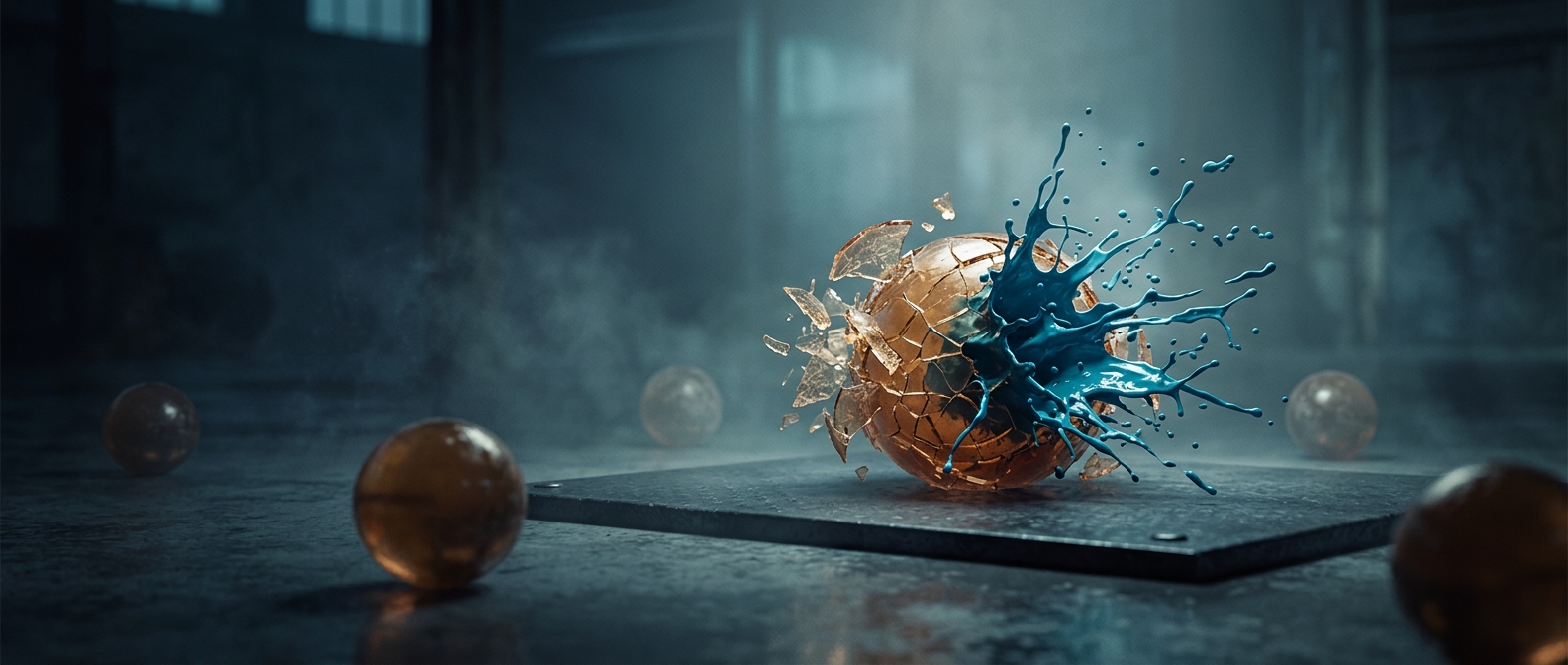
On impact, the ball slows abruptly. The shell deforms against the target, and stress concentrates in the thin gelatin wall. Once that stress exceeds what the wall can withstand, it cracks; the liquid inside escapes and spreads across the surface. The resulting splatter makes the hit visible.
This is why “brittle” does not simply mean poorly made. The shell’s controlled breakability is part of the design. It must stay intact during launch but fail at the target, turning a concealed impact into an unmistakable mark.