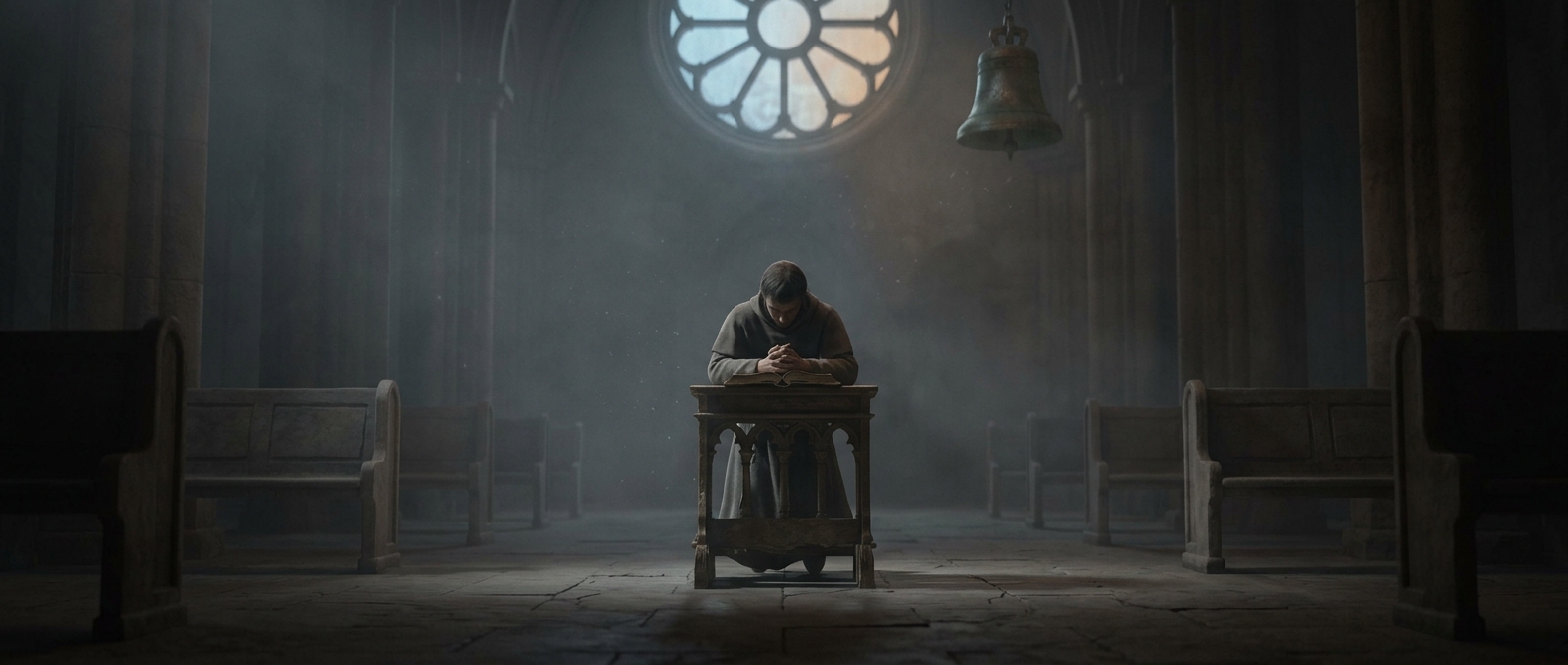
When spiritual practice feels impossible
Acedia was more than ordinary boredom in the vocabulary of early Christian monastic life. It named a heavy, restless disengagement: prayer seemed empty, work pointless, and the day interminable. A monk experiencing it might feel an urge to abandon the cell and escape the routine, even while nothing outside seemed likely to satisfy him.
The term comes from Greek and broadly suggests a lack of care. In monastic writing, it described a crisis in attention and commitment—not just a shortage of entertainment. The person could be physically present for the day’s duties but inwardly unable to invest in them.
Why monks called it a demonic attack
Monks interpreted acedia through their religious understanding of temptation. Its force lay in how it could make a chosen spiritual life feel suddenly intolerable, turning fatigue and dissatisfaction into pressure to give everything up. Calling it a demonic assault gave that experience a moral and spiritual framework: the struggle was not proof that prayer had no value, but a threat to perseverance.
That framing also shaped the response. Rather than treating every impulse to flee as a reliable guide, monastic counsel emphasized enduring the difficult stretch and returning to prayer and daily work. The aim was not to manufacture excitement, but to keep a temporary collapse of interest from deciding the course of a life.
A name for a recognizable trap
Acedia is not simply a historical synonym for depression or burnout; those modern terms describe experiences in different frameworks. Its lasting usefulness is more modest and specific: it captures the way profound boredom can become restless avoidance. The monk does not merely want something more interesting to do. He wants to escape the very commitments that give his day its shape.