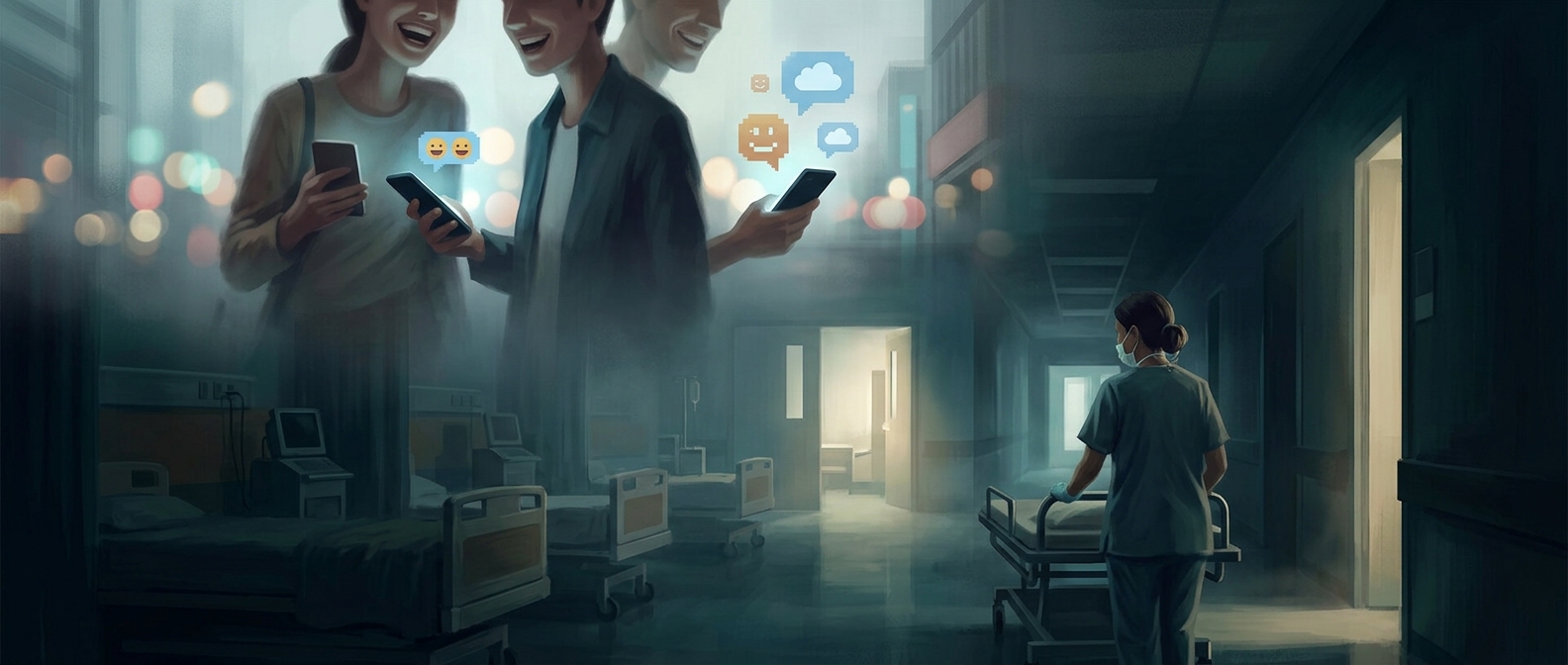
How a joke can soften a warning
Humor changes how people handle a threat. A mask joke can make an uncomfortable subject feel less serious, giving people a moment of relief—but also making it easier to dismiss the risk the joke points toward. If the punchline treats precautions as silly or outdated, it can quietly signal that taking them seriously is socially awkward.
That signal matters because respiratory viruses spread through particles people breathe out and others breathe in, especially in shared indoor air. A well-fitting mask can reduce how many of those particles leave the wearer and how many reach the wearer. It is not a guarantee, but it is one layer of protection whose value can increase when infections are circulating widely.
The warning behind the punchline
Infections do not rise in isolation. When many people become ill around the same time, some need urgent care or hospital treatment at once. Hospitals still have limited staff, beds, and time; a surge can strain those resources even when each individual case seems manageable.
A joke cannot cause that surge, and it does not prove that someone rejects masks. The risk is subtler: when humor makes a changing health situation seem irrelevant, people may stop noticing when the practical reasons for precautions have changed. The useful question is not whether a mask joke is allowed, but whether the joke has replaced attention to what is happening around it.