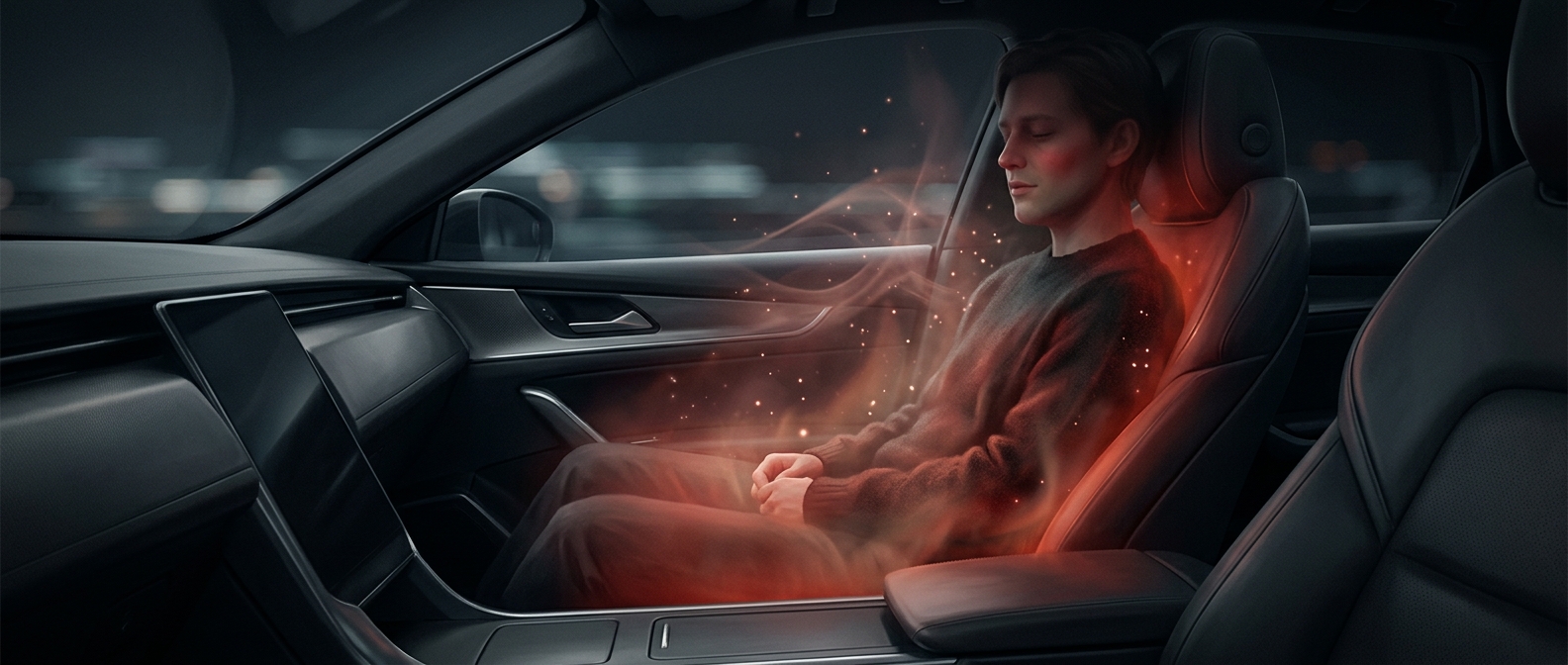
Why a warm seat can mimic feeling feverish
A heated seat transfers warmth through direct contact. Because it covers a relatively large area of your back and thighs, your skin can register a strong change even when the surrounding cabin is cool. Skin temperature sensors respond to that local heat—not to a diagnosis—so the contrast can make you feel unusually warm or flushed.
Local warmth is not the same as a fever
A fever involves a rise in the body’s internal temperature, driven by the brain adjusting the body’s temperature regulation during illness. A seat heater works from the outside in: it warms the skin where you are in contact with the seat, without necessarily raising your core temperature.
That difference explains the odd sensation. Your back and legs may feel hot while your face, hands, or the air around you still feel cool. The brain is receiving mixed signals from different parts of the body, and the heated patch can dominate your sense of comfort for a while.
A small climate zone with a tradeoff
Seat heaters are useful precisely because they warm the occupant directly rather than waiting for the whole cabin to heat up. But that focused warmth can feel intense before the rest of the car catches up. Turning the setting down—or moving away from the heated surface—reduces the skin-level signal; it does not treat or rule out an actual fever.
The memorable trick is that a seat can make one part of you feel ill-at-ease while your body’s internal temperature has barely changed.