How a lean becomes a turn
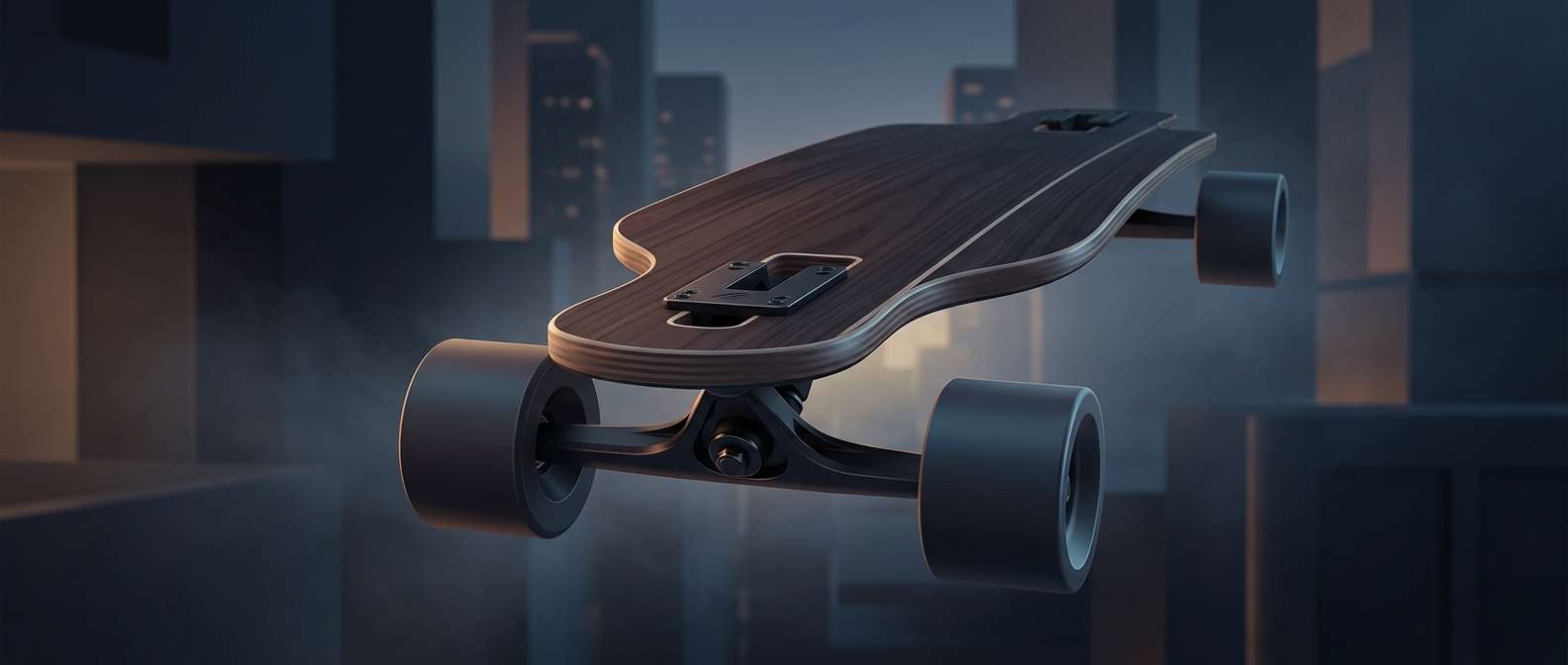
A longboard does not steer by swiveling its wheels independently. Its trucks—the metal assemblies that connect the wheels to the deck—pivot around a central bolt when the deck tilts. Flexible rubber bushings around that bolt resist the movement and then spring back, helping the board respond smoothly rather than flop from side to side.
As a rider shifts weight onto one edge, the deck tilts and the trucks turn the wheel axles slightly. The front and rear trucks steer in opposite directions, guiding the board into an arc. Lean farther and the turn generally tightens; ease off and the board straightens.
Why the ride feels wave-like
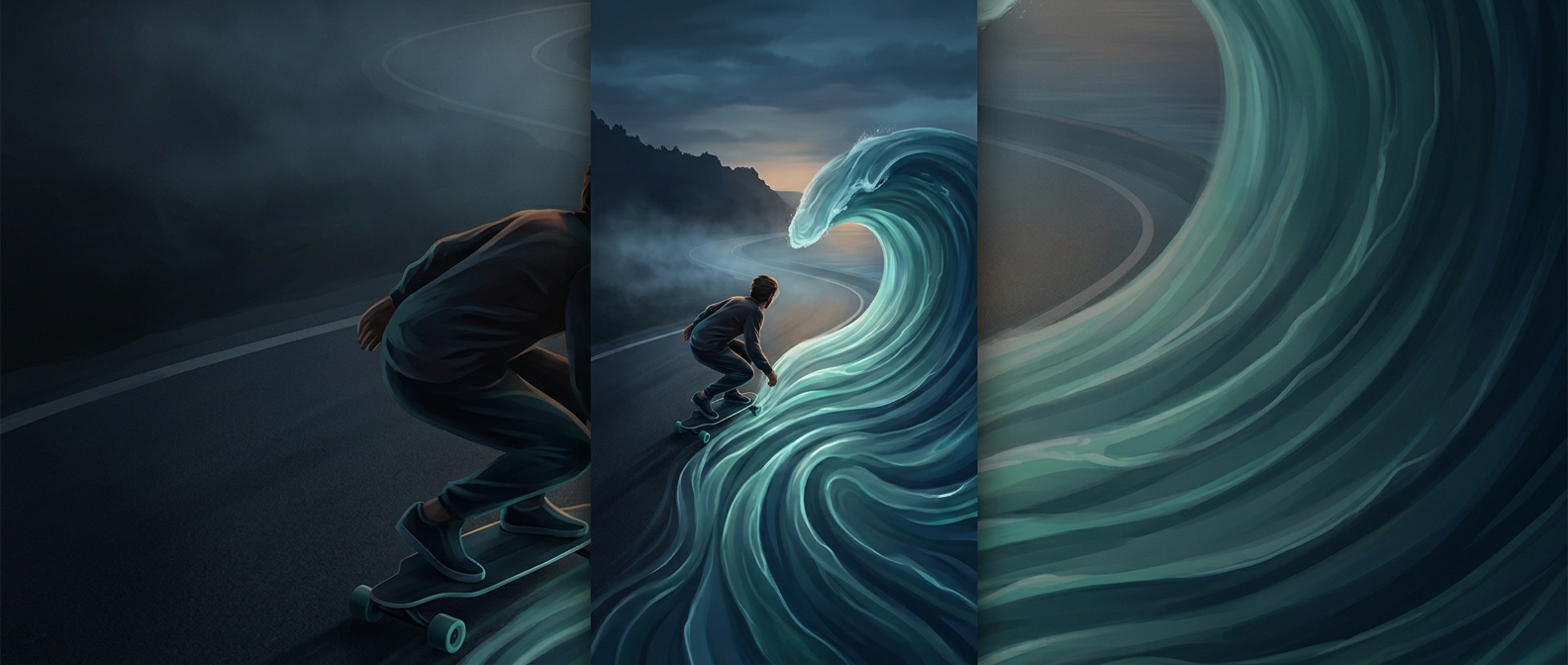
In a carve, the rider links one arc to the next: lean toward one edge, pass through upright, then lean toward the other. The board keeps rolling throughout, so its forward momentum carries it through each curve. Instead of making a sharp change in direction, the rider traces a continuous S-shaped path across the pavement.
That rhythm is what evokes surfing. The rider’s body initiates the movement, the board responds through its pivoting trucks, and momentum carries the turn forward. The resemblance is in the flowing sequence of weight shifts and arcs—not in the surface: pavement does not provide a moving wave to push against.
The tradeoff in a flowing ride
Longboard trucks are built to let the board turn, but how readily they pivot depends on their design and setup. A board that responds easily can feel loose and maneuverable; one that resists leaning more can feel steadier. Either way, a carve depends on keeping enough room to follow its broad curve. On a longboard, the turn is less a quick point-and-go maneuver than a path the rider draws with body weight and rolling momentum.