Why Early Tour Riders Reached for Smoke and Drink
In the Tour de France’s early decades, a mountain stage could mean hours of climbing on a heavy bicycle with few or no usable gear changes. Riders had to push hard against steep slopes while coping with rough roads, long distances, and limited support. Tobacco and alcohol were not side-show indulgences in that setting: some cyclists treated them as tools for getting through the effort.
A Misreading of What the Body Needed
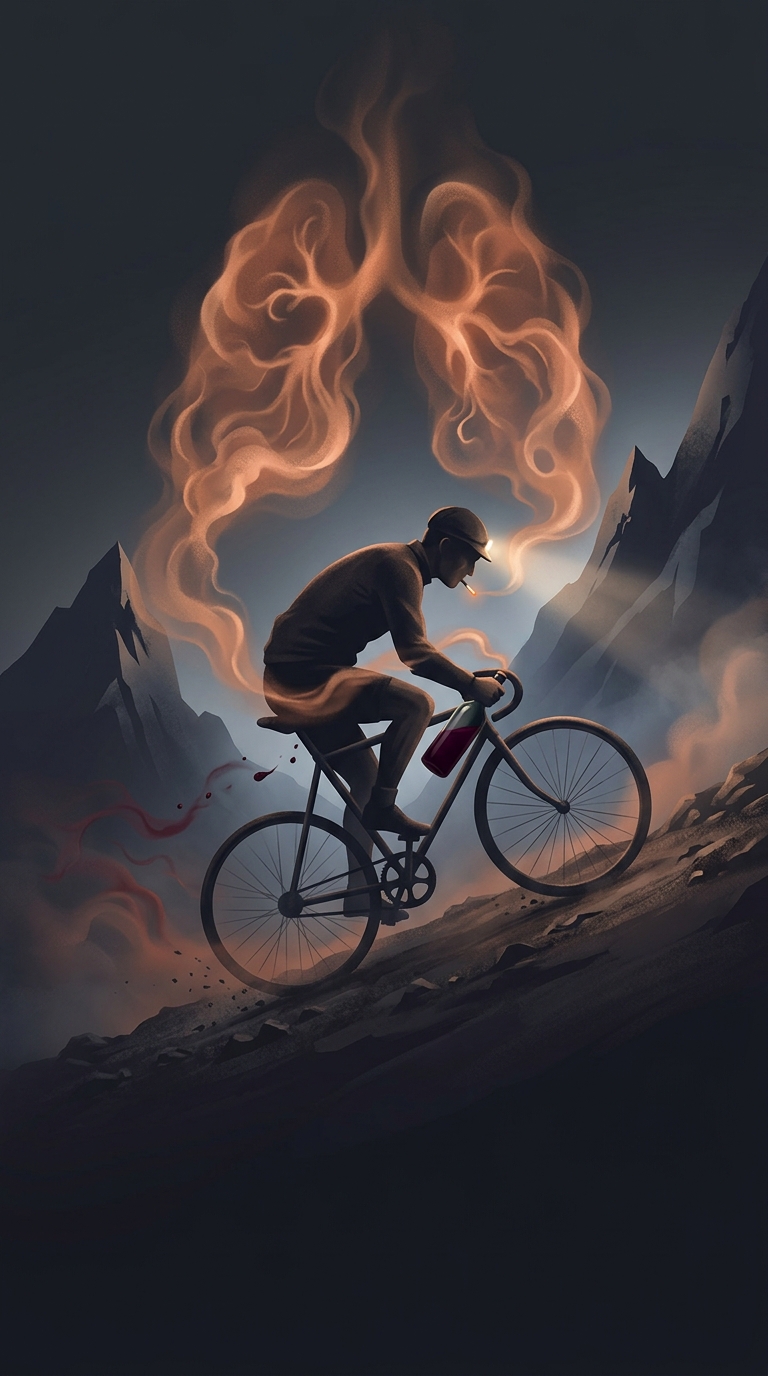
Riders believed cigarette smoke could open the lungs. It cannot; smoke irritates the airways and makes breathing harder, not easier. The idea reflected a period when endurance sport had little sound guidance about exercise physiology, and when familiar substances could be mistaken for performance aids.
Alcohol offered a different, immediate effect: it could dull pain and discomfort. Wine or champagne might help a rider feel less of the strain, but that did not make the work safer or easier for the body. Alcohol can impair judgment and coordination—dangerous costs on a steep, rough descent as well as on a crowded road. Accounts of early racing also describe stimulant use, including cocaine, though it should not be mistaken for ordinary fuel or a reliable way to sustain effort.
The Cost of Getting Through the Stage
These habits make more sense as responses to an extreme challenge than as a sensible training plan. A rider facing a long climb on a machine with limited gearing had few ways to reduce the physical demand; numbing discomfort could help him keep moving, but it could also conceal how badly he was struggling. The substances changed what the effort felt like, not what the mountain demanded.