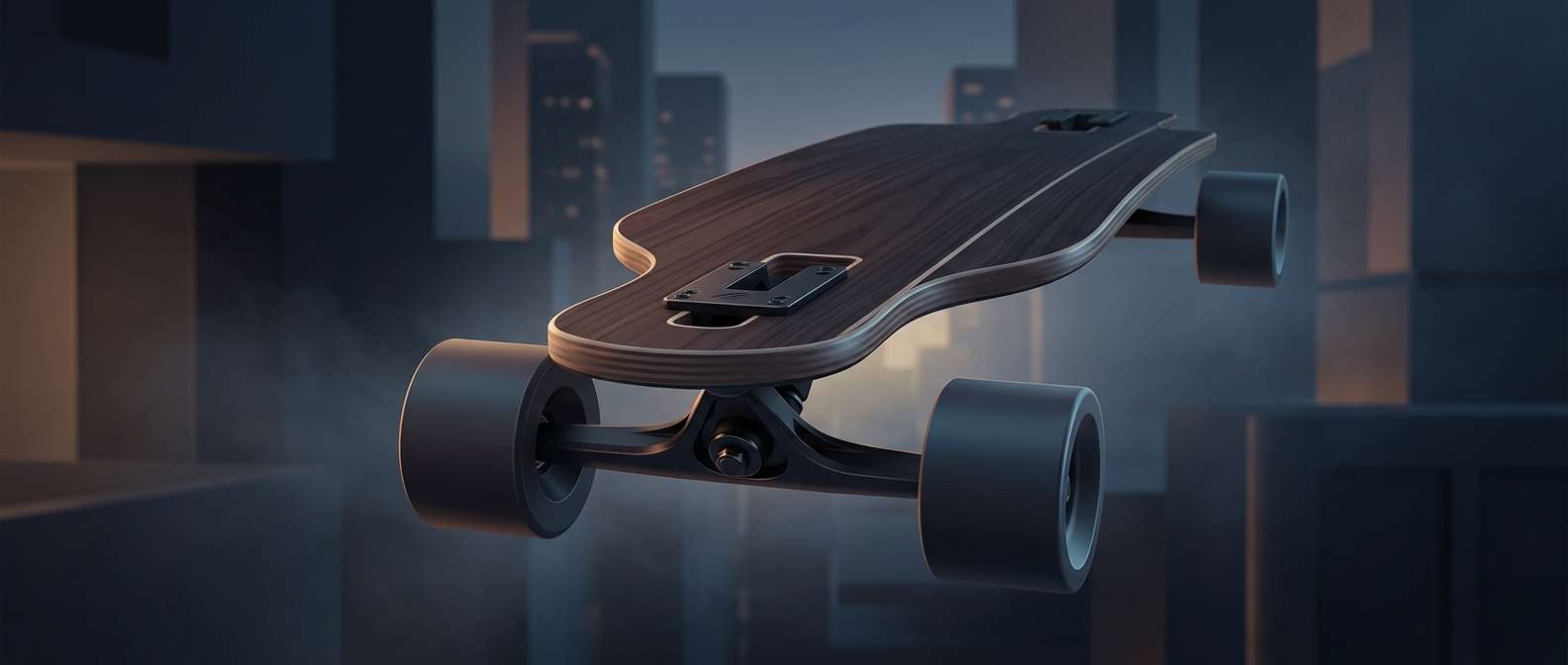
How a Drop-Through Longboard Sits Lower
On a drop-through longboard, each truck’s baseplate—the flat piece that attaches the truck to the deck—is mounted on top of the board, while the truck’s hanger and wheels sit below it. The deck has openings that let the baseplates pass through during assembly. This arrangement brings the deck closer to the pavement than a conventional top-mounted truck setup.
Why Height Changes the Ride
A lower deck means a rider’s feet are closer to the ground, so pushing takes less leg movement: the planted foot does not have to reach as far down to touch the pavement. It can also make standing still feel more settled, since the rider is balancing from a lower position.
There is a tradeoff. Longboards lean as they turn, and a low deck leaves less room between the board and the ground. On a hard turn or over a bump, the deck can scrape the pavement. The precise feel depends on the board’s shape, truck setup, and riding style, but the basic design choice is clear: drop-through mounting prioritizes a low, accessible platform over maximum ground clearance.
A Practical Fit
That makes the layout useful for riders who spend time pushing over distance or want a board that feels less elevated underfoot. It is not simply a way to make the board look different: moving the truck mounting points changes how high the rider stands, and therefore how much effort each push and balance adjustment requires.