Rubber soles changed the sound of a step
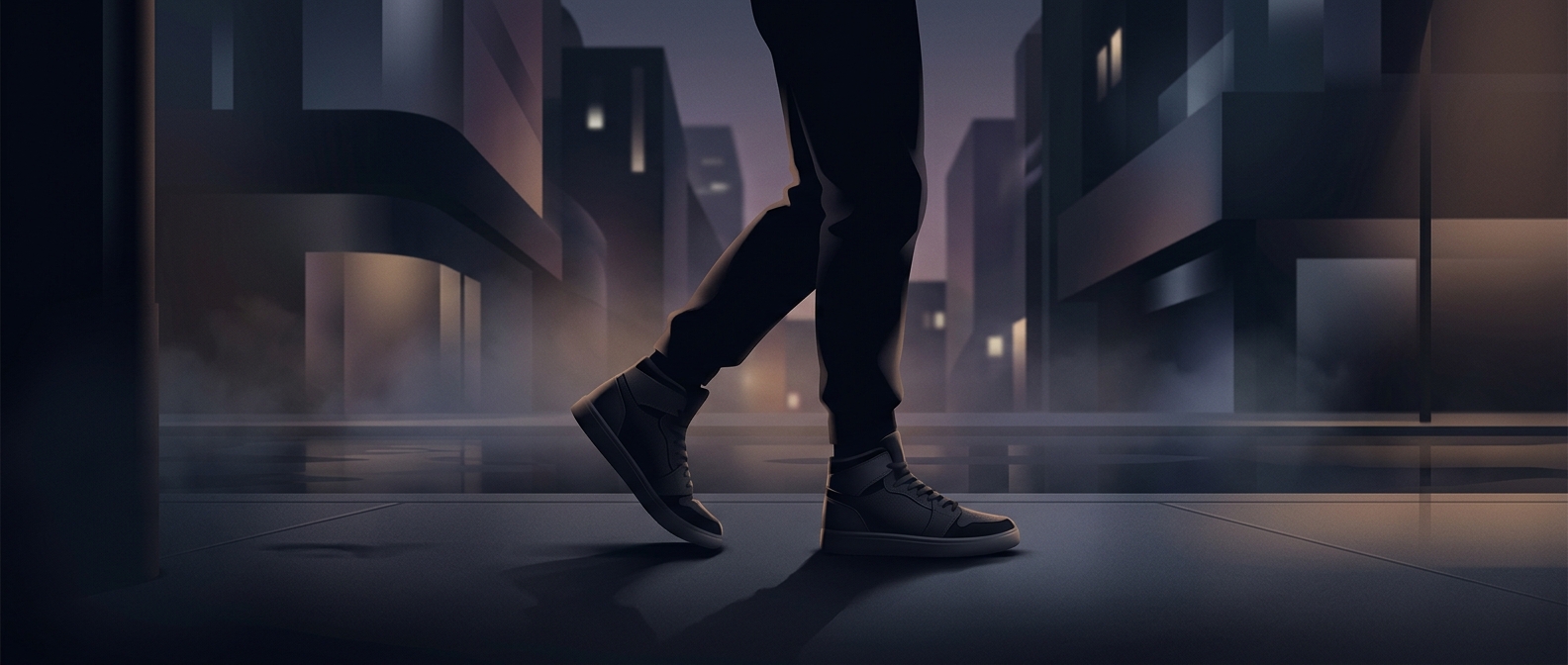
For much of the history of everyday footwear, shoes had hard soles—often leather—that struck the ground with a distinct clack. A rubber sole behaved differently: it compressed slightly on impact and made less noise on floors and pavement. That quieter step made it easier to move without announcing yourself.
A shoe named for what it let you do
The word sneaker draws on “sneak”: the shoe’s quiet sole suggested moving stealthily. The name described a noticeable advantage of rubber-soled footwear, not a special athletic feature. Early sneakers were not necessarily the cushioned, specialized sports shoes people picture today; the label grew out of the contrast between a soft, quiet sole and a hard, noisy one.
That bit of sound design is still built into the name. Put on a pair of rubber-soled shoes and the original comparison is easy to hear—or, more accurately, not hear.