A Heel Built for the Stirrup
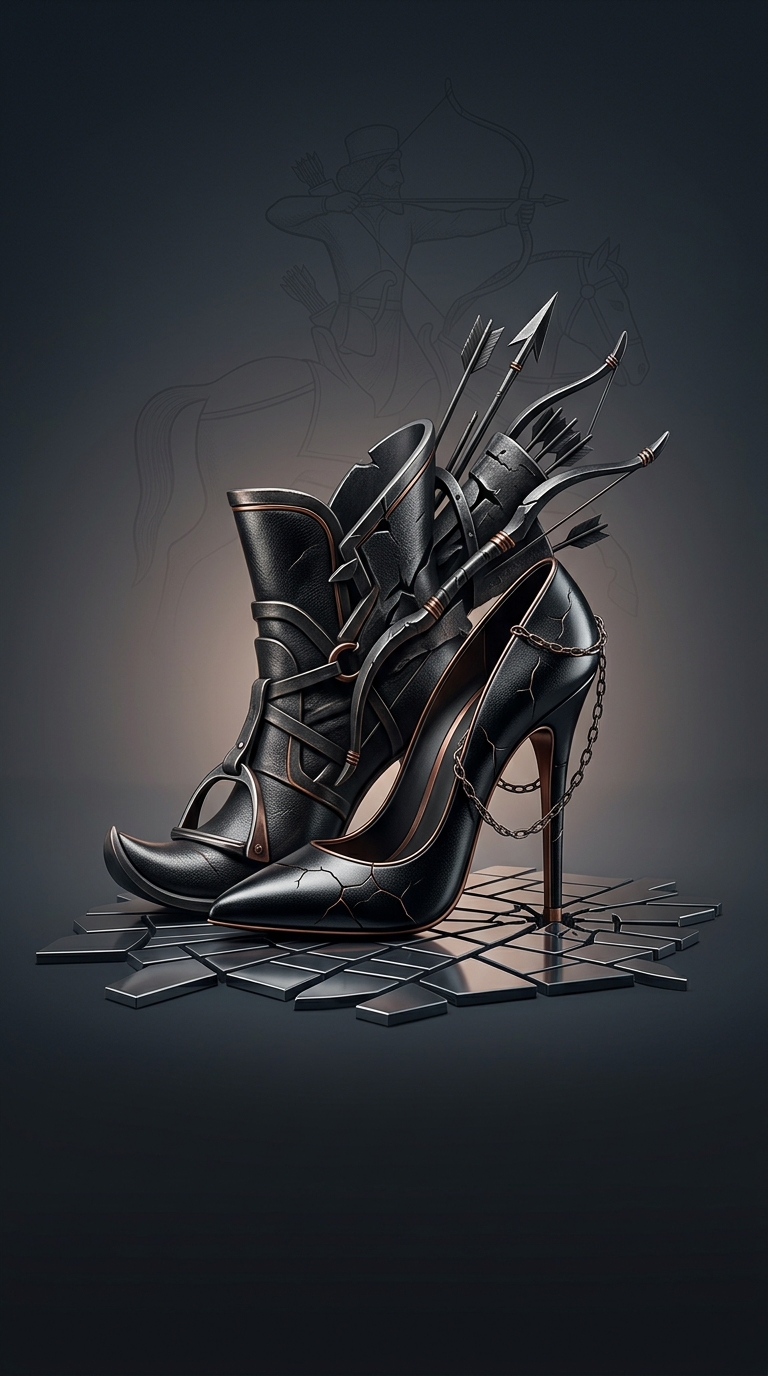
A rider shooting a bow from horseback needed more than a secure seat. To raise his body and aim, he could press his weight into the stirrups and stand briefly above the saddle. That movement made the shape of his footwear matter: a smooth-soled foot could slip forward through a stirrup under pressure.
A raised heel gave the stirrup something to catch behind the foot. It helped keep the rider’s foot in place as he rose, providing a steadier base for aiming and shooting. The heel did not lock the foot in place like a buckle; it worked through the fit between shoe and stirrup.
From Riding Gear to Fashion
In tenth-century Persian cavalry use, the heel answered a practical problem created by a particular way of riding. Its usefulness came from the combination of shoe, stirrup, and movement—not from a desire to make the wearer taller or change how a person walked.
Once a feature is associated with specialized equipment, its meaning can change when it moves into other settings. A heel that helped a mounted archer stay braced could later be worn on foot, where its purpose and symbolism were different. The same raised shape shifted from a piece of riding technology to a fashion choice. Its origin is a reminder that clothing details can begin as solutions to the physical demands of a job.