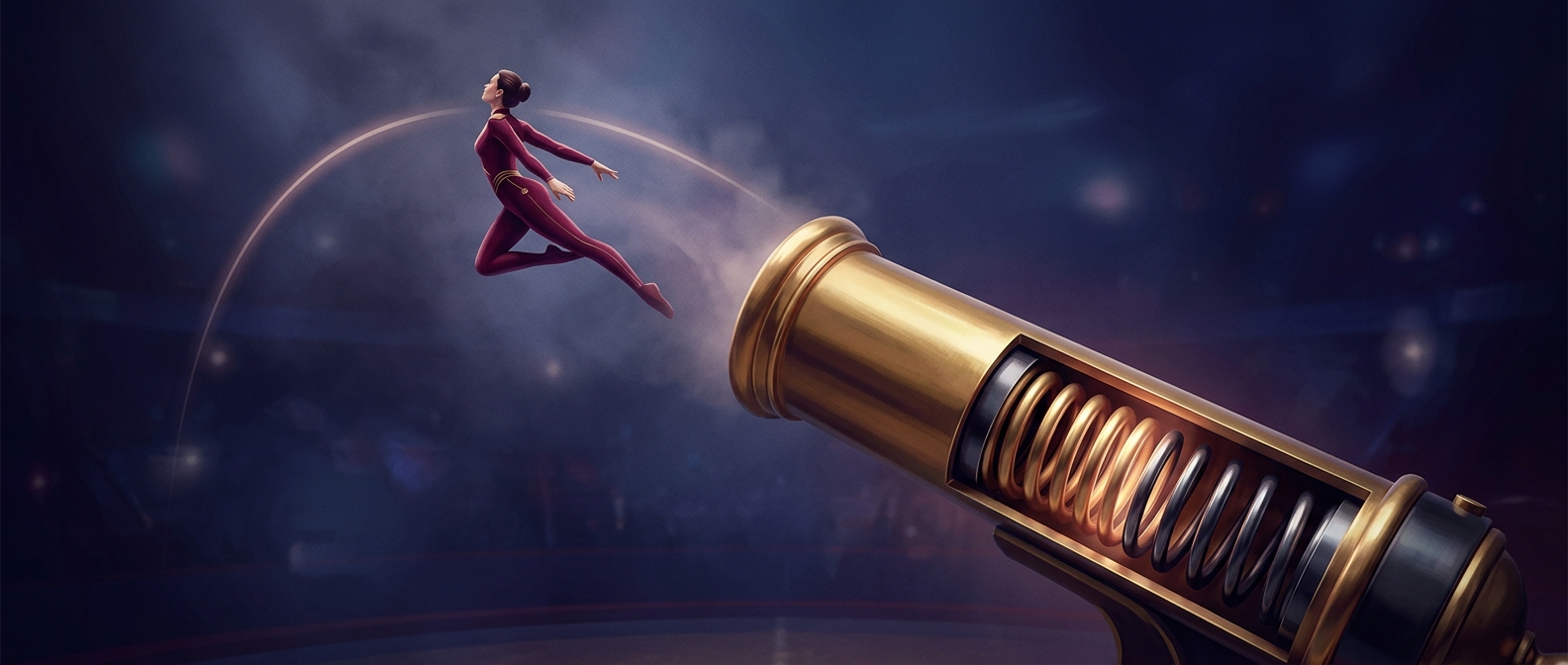
The launcher accelerates the floor beneath the performer
A human-cannonball act can look like a person being blasted out of a tube, but the force is delivered mechanically. Compressed air pushes a large piston—an airtight moving part inside a cylinder—forward. The piston drives a platform or padded carriage beneath the performer, and that moving surface carries the person into the launch path.
The key is contact: the performer is accelerated because the platform pushes against their body. The air supplies energy to the piston; the piston transfers it to the platform; the platform transfers it to the person. There is no gunpowder explosion propelling them.
A controlled shove, not a sudden blast
That arrangement makes the launcher a kind of pneumatic machine: it uses pressurized air to create motion. The moving platform can apply force over its travel, rather than relying on a burst of hot gas directly behind the performer. How the launch feels and where the performer travels depend on the machine’s design and setup, so the piston is only one part of the act’s engineering.
The distinction matters because a cannon’s familiar shape can suggest that the performer is fired like a projectile from a weapon. In this version, the device works more like a powerful air-driven actuator carrying a person forward. The surprising part is not that the performer escapes a blast, but that the “cannon” launches them by making the floor move.