How a Battery-Free Remote Sent a TV Command
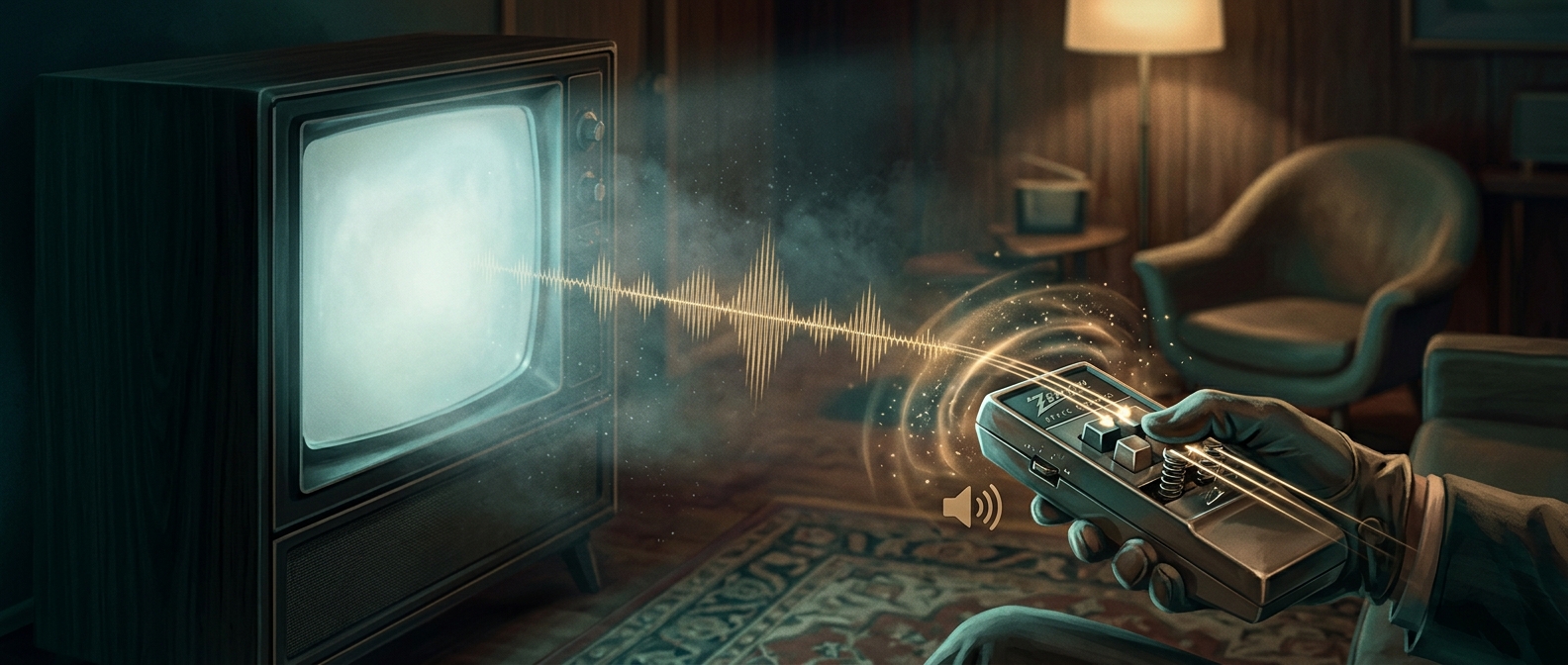
Pressing a button did more than close an electrical circuit: it released a spring-loaded hammer. The hammer struck a small metal rod inside the remote, making the rod vibrate at a particular ultrasonic frequency—a pitch above the range people can hear. Different buttons struck rods tuned to different frequencies, so each one sent a distinct sound signal through the room.
The remote needed no battery because the user’s finger supplied the energy. The button’s motion wound or released the mechanism, and the impact produced the sound directly. In effect, the remote was a tiny acoustic instrument whose notes stood for commands.
How the Television Heard the Difference
A receiver in the TV picked up the high-pitched vibration and used tuned electronic circuits to recognize its frequency. When the signal matched a command, the set acted on it—for example, changing channels or adjusting volume. The signal traveled as sound through the air, rather than as the invisible infrared light used by many later remotes.
That design made the remote simple and self-powered, but it also meant the TV had to distinguish a deliberate signal from other noises. A sharp metallic jingle, such as keys knocking together, could contain sound at a frequency the receiver recognized. If the timing and signal were close enough, the TV might react to the wrong source. A pocketful of keys could, in other words, become an accidental command generator—one reason a battery-free remote could still be surprisingly easy to confuse.