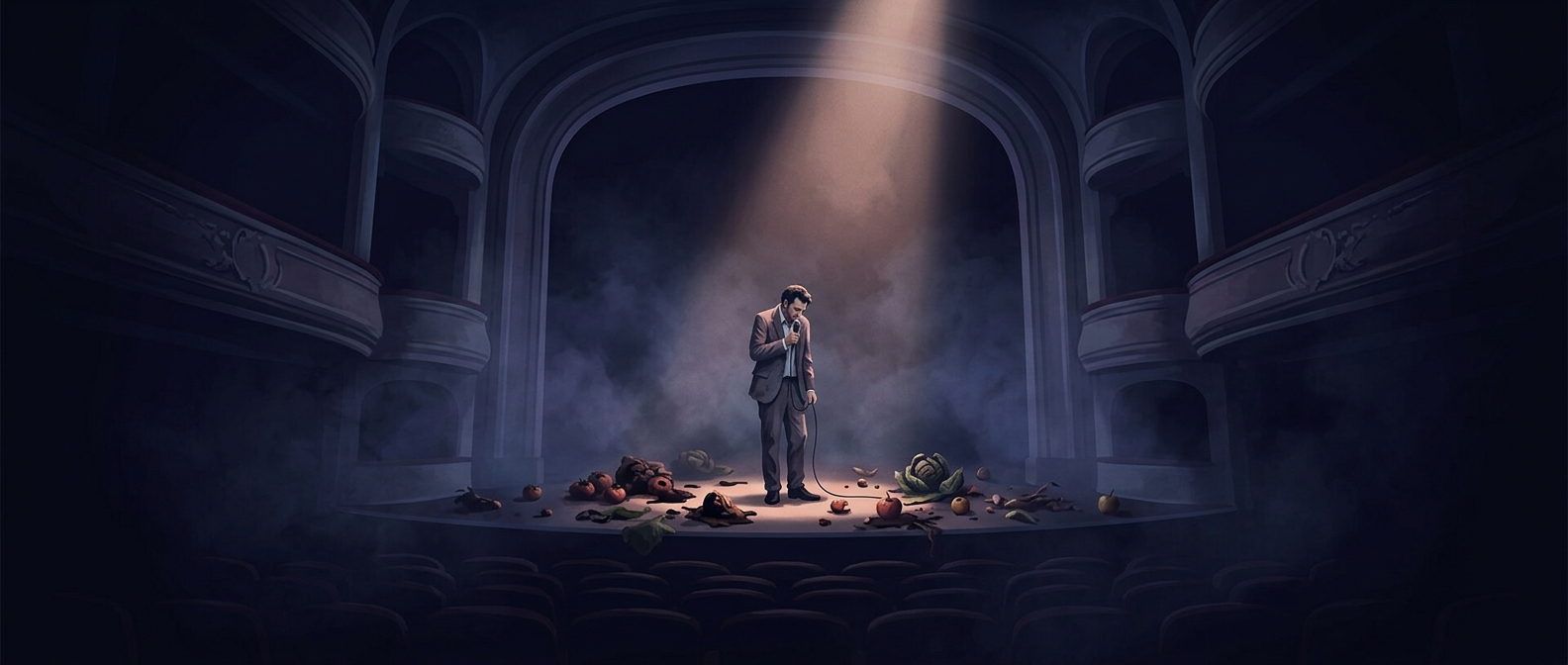
A bad joke could get a very physical review
In an ancient performance, a joke did not land in a quiet room where disapproval meant only silence. Audiences could make their reaction unmistakable by throwing refuse—including rotten fruit—at a performer. The target was not an abstract production but a person standing in front of the crowd, close enough for displeasure to become a direct, physical interruption.
The crowd was part of the event
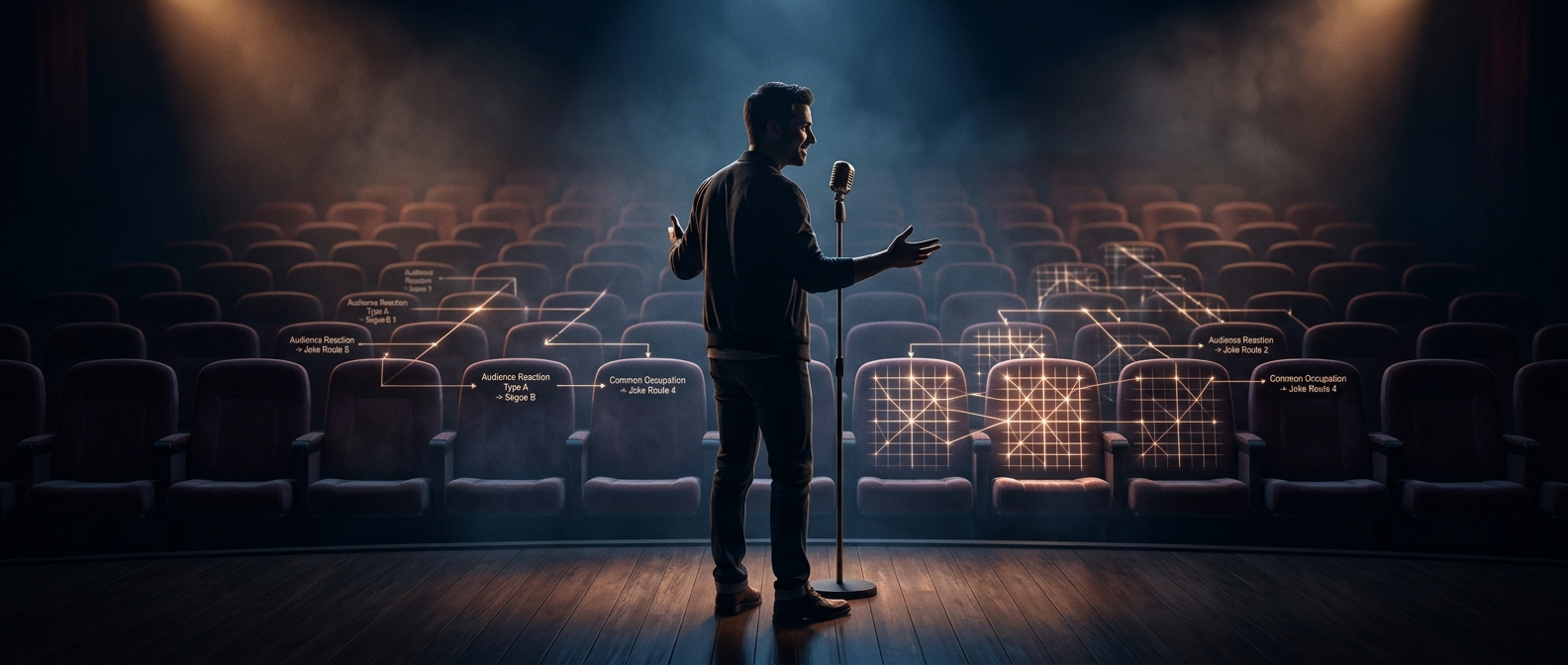
That possibility changed the stakes of performing comedy. A comedian had to hold attention in real time: laughter encouraged a performance to continue, while heckling or thrown garbage could derail it. The audience was not simply consuming a finished work; its response could shape what happened onstage moment by moment.
Rotten fruit also made a pointedly practical weapon. It was unpleasant to be hit with, but unlike a stone, it was unlikely to cause the same kind of serious injury. The image captures a rough form of audience power: if a joke failed, the crowd could answer in a way no performer could mistake for polite criticism.